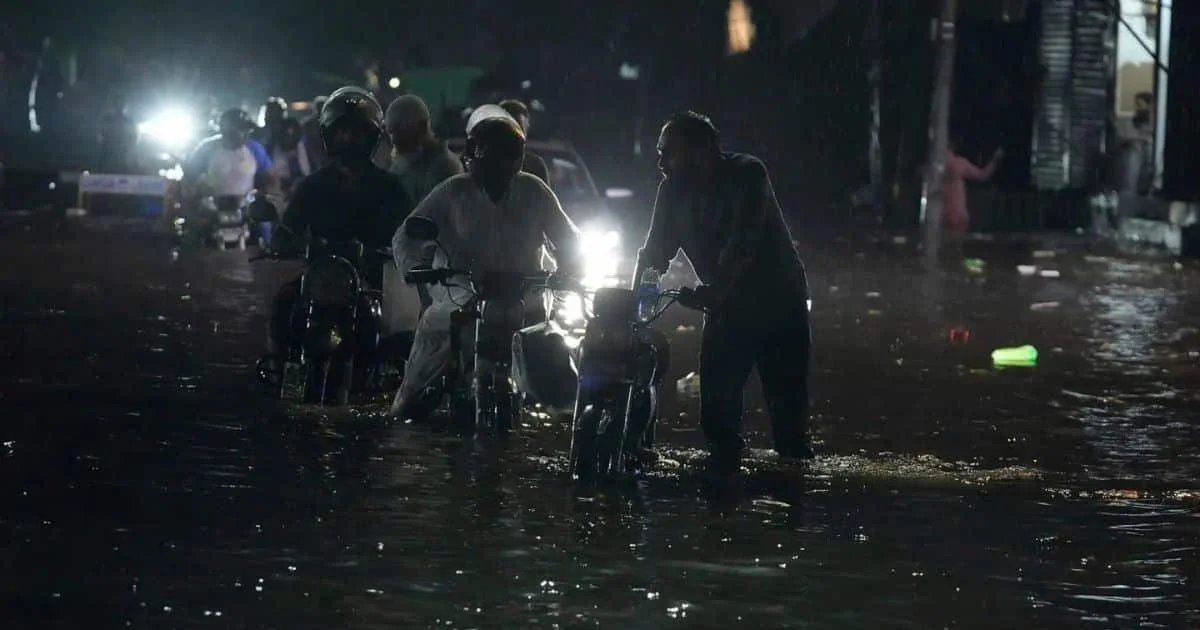





Floods have become a grim part of Pakistan’s story. Almost every year, heavy rains, melting glaciers, and weak infrastructure bring destruction. Roads collapse, crops are wiped out, and millions lose their homes. Despite the scale of past disasters, the cycle keeps repeating. This article explores why floods are so common, what damage they cause, and how Pakistan can prepare for a safer future.
The Catastrophic Floods of 2022
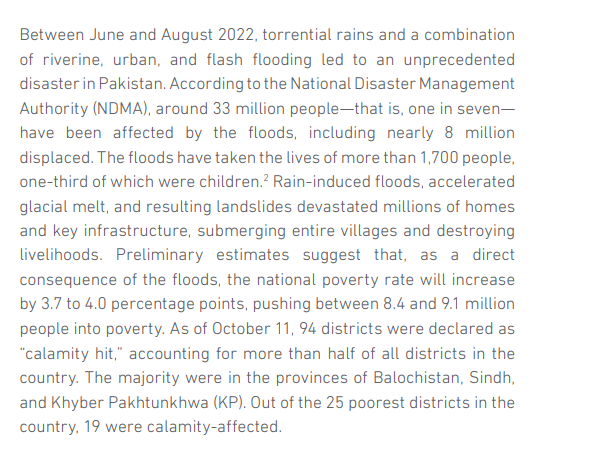
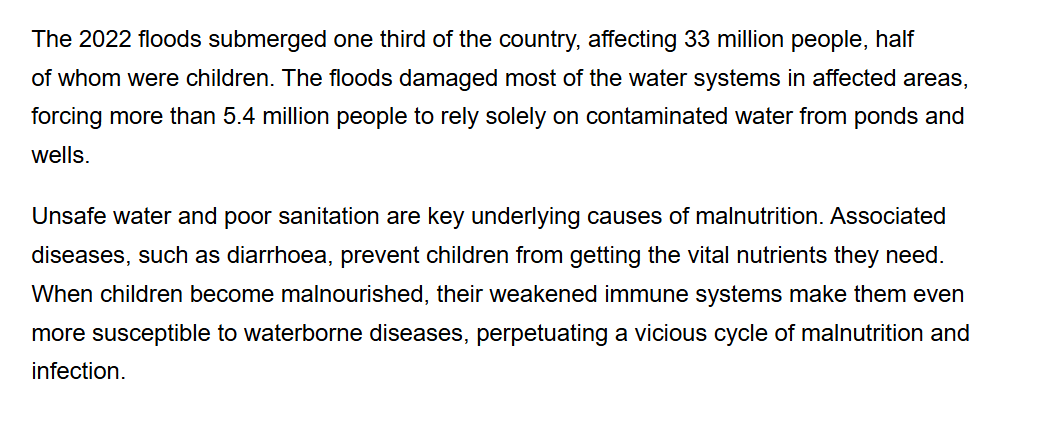
The 2022 floods were among the worst in Pakistan’s history. Torrential rains and glacial melt flooded one-third of the country, affecting 33 million people. More than 1,700 lives were lost, and 1.7 million homes were destroyed. At least 1.1 million livestock died, crippling rural families who depend on animals for survival.
The World Bank estimated losses at $15.2 billion, with reconstruction needs above $16.3 billion. The images of submerged villages and people seeking shelter on rooftops shocked the world.
Sources: World Bank
A Recurring Disaster
Unfortunately, floods are not rare. Pakistan has faced repeated devastation for decades, from the floods of 2010 to 2022 and beyond. In 2024, new floods again hit villages, showing how fragile recovery remains. These recurring disasters highlight how climate change, poor planning, and deforestation worsen the situation every year.
Source: UNICEF
Human Cost and Health Crisis
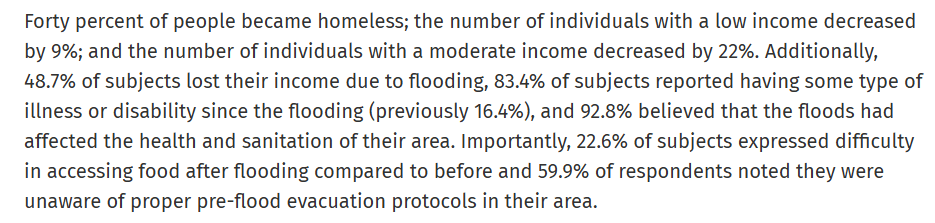
Floods take more than homes—they take lives and health. In 2022, 8 million people were displaced, many forced into camps with little food, clean water, or medical care. Diseases spread fast, including cholera, malaria, dengue, and skin infections.
According to health experts, the floods pushed nearly 9 million people into poverty. The poor and vulnerable, especially women and children, were hit the hardest.
Source: Annals
Agriculture and Food Security
Pakistan’s economy relies on farming, which is often destroyed by floods every year. In 2022, over 10 million acres of crops were lost, wiping out rice, cotton, sugarcane, and wheat fields. More than 1 million livestock were also killed, further straining rural families.
This damage not only hurt local farmers but also raised food prices across the country. The loss of exports also added to economic instability.
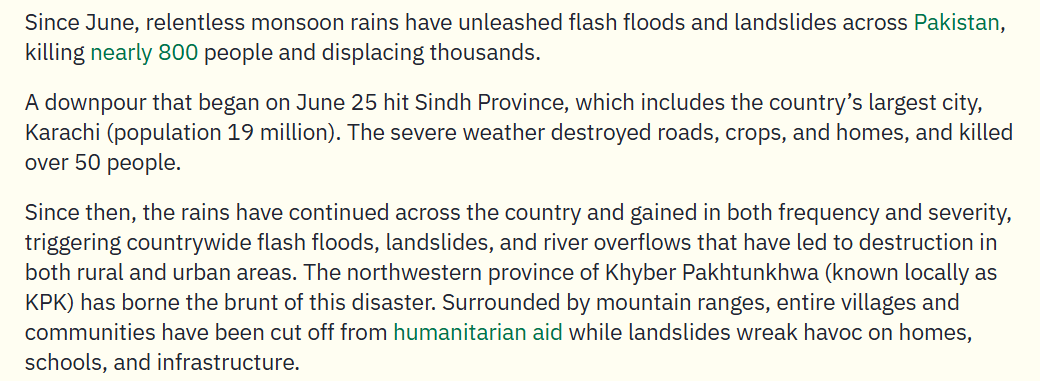
Source: ConcernUSA
Floods in 2025
Tragedy struck again in September 2025. Punjab faced catastrophic flooding after continuous rains. More than 2,000 villages were submerged, 2 million people were displaced, and 760,000 evacuated. Standing crops worth billions of rupees were destroyed.
The government deployed the army and rescue agencies to help, but the sheer scale of damage shows how Pakistan’s flood problem is far from solved.
You May Like To Read: A Daring Strike: Operation Dwarka 1965
Why do Pakistan Floods occur So Often?
Floods in Pakistan are caused by many overlapping factors:
- Monsoon rains – Heavy seasonal rains pour down from June to September.
- Glacial melt – Pakistan has thousands of glaciers in the north. Warming temperatures cause rapid meltwater flow into rivers.
- Deforestation – Fewer trees mean less absorption of water, leading to faster runoff.
- Weak infrastructure – Old dams, poorly maintained canals, and illegal construction on floodplains make flooding worse.
- Climate change – Rising global temperatures are making rains more intense and unpredictable.
These combined pressures make floods almost inevitable each year.
The Economic Burden
Floods don’t just harm people; they drag down the economy. Losses from the 2022 disaster alone equaled 10% of Pakistan’s GDP. Roads, bridges, power stations, and factories were destroyed. Farmers lost their income, and food imports increased.
According to economists, recurring floods threaten Pakistan’s vision for long-term growth, unless stronger climate resilience is built into planning.
Government Action and Global Aid
The government has made efforts to respond, including relief packages, cash support, and rebuilding programs. In 2022, Pakistan launched the Resilient Recovery, Rehabilitation, and Reconstruction Framework (4RF) with support from the World Bank and UN agencies.
International donors pledged billions in aid, though delivery has been slow. Experts stress that aid must go beyond short-term relief and focus on long-term resilience.
Building a Resilient Future
Floods will not stop, but their impact can be reduced. Experts suggest several steps:
- Better dams and drainage systems to manage water.
- Stronger housing codes to build flood-resistant homes.
- Urban planning that prevents illegal settlements on floodplains.
- Tree planting to restore forests and absorb excess water.
- Climate adaptation policies with early-warning systems for vulnerable communities.
By taking these measures, Pakistan can save lives and protect its economy.
Breaking the Cycle
Floods in Pakistan are no longer random disasters—they are part of a recurring cycle worsened by climate change. The devastation of 2010, 2022, and 2025 shows how urgent action has become. Every flood pushes millions into poverty, destroys vital infrastructure, and weakens the economy.
Yet, this cycle can be broken. With stronger infrastructure, smart planning, and international cooperation, Pakistan can turn vulnerability into resilience. The task is huge, but it is also a chance to safeguard future generations. Floods may always come, but their destruction does not have to.
You May Like To Read: Inattentional Blindness: Why We Miss What’s Right in Front of Us