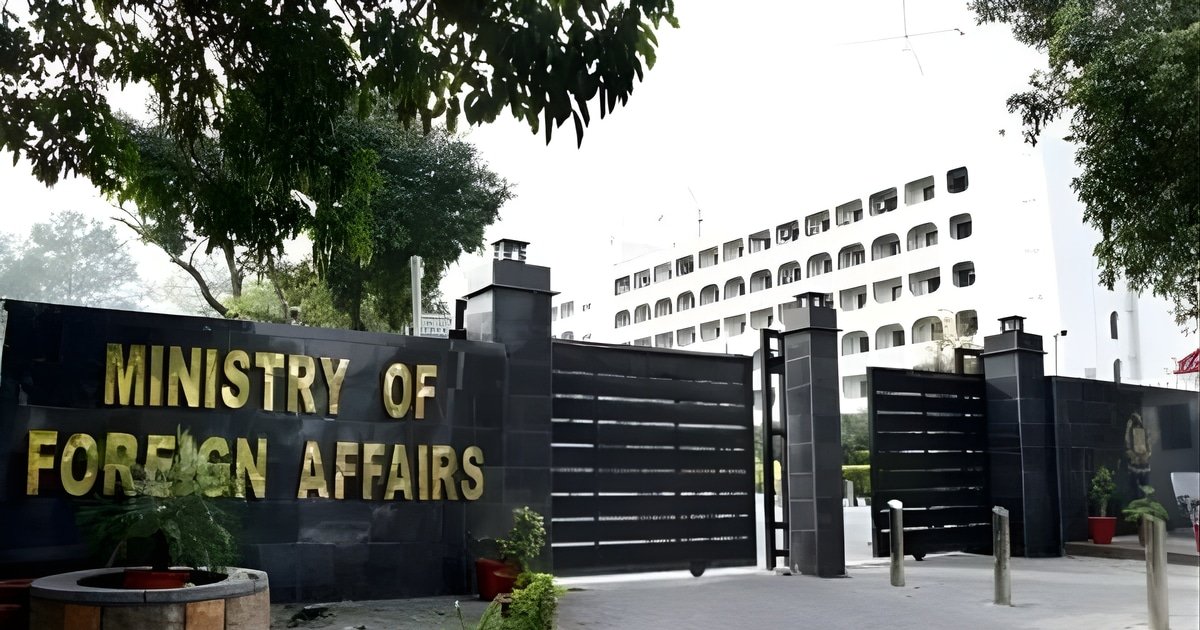





ISLAMABAD: Pakistan’s Foreign Office (FO) on Sunday issued a firm condemnation of recent statements by Indian Defence Minister Rajnath Singh, calling his comments on Sindh “delusional and dangerously revisionist” and warning that such rhetoric threatens regional peace and stability.
The rebuke followed media reports quoting Singh at a Sindhi community event in Delhi, where he allegedly said, “Today, the land of Sindh may not be a part of India, but civilisationally, Sindh will always be a part of India. And as far as land is concerned, borders can change. Who knows, tomorrow Sindh may return to India again.” According to Indian media outlets, Singh claimed that Sindhi Hindus of his generation never fully accepted the accession of Sindh to Pakistan.
In response, the FO stressed that Singh’s statements reflect an “expansionist Hindutva mindset” that directly challenges established realities, violates international law, and undermines the sovereignty of Pakistan. The statement underscored that provocative rhetoric of this nature is not only unnecessary but could exacerbate tensions in an already fragile regional environment.
🔊PR No.3️⃣4️⃣8️⃣/2️⃣0️⃣2️⃣5️⃣
Pakistan Strongly Condemns Indian Defense Minister Rajnath Singh’s Remarks About Pakistan’s Sindh Province https://t.co/wdeTkEg3xY
🔗⬇️ pic.twitter.com/qeXY0JmXgj— Ministry of Foreign Affairs – Pakistan (@ForeignOfficePk) November 23, 2025
“We urge Mr Rajnath Singh and other Indian leaders to refrain from making provocative statements that threaten peace in South Asia,” the FO said. “India should focus instead on ensuring the safety and security of its own citizens, particularly minority communities, and address long-standing grievances in its northeast, where systematic marginalisation and state-enabled violence continue to persist.”
The FO also highlighted that India must take credible steps toward a peaceful resolution of the Jammu and Kashmir dispute in line with United Nations Security Council resolutions and the aspirations of the Kashmiri people. Pakistan reaffirmed its commitment to resolving all disputes with India peacefully, on the basis of justice, equity, and established international legal norms.
Pakistan’s position comes against a backdrop of heightened tensions following a four-day military conflict in May, which marked the worst confrontation between the nuclear-armed neighbors in decades. The conflict erupted after an attack on Hindu tourists in Indian-administered Kashmir, which New Delhi falsely claimed was orchestrated by Pakistan. Islamabad categorically denied any involvement, pointing out that the Indian account was “replete with fabrications.”
During the conflict, both sides deployed fighter jets, artillery, missiles, and drones, resulting in dozens of casualties. Pakistan initially reported having downed six Indian fighter jets, including the French-made Rafale, later revising the number to seven. New Delhi acknowledged “some losses” but denied any significant damage, highlighting the conflicting narratives surrounding the clash.
In the months since the conflict, tensions have remained high, with repeated provocative statements from India’s top military and political leadership. In early October, the Inter-Services Public Relations (ISPR) warned that any future confrontation could lead to “cataclysmic devastation,” asserting that Pakistan would respond “resolutely, without any qualms or restraint” if hostilities were triggered.
The FO said such statements revealed an “expansionist Hindutva mindset that seeks to challenge established realities and stands in clear violation of international law, the inviolability of recognised borders, and the sovereignty of states”.https://t.co/boyONYyuwJ
— Dawn.com (@dawn_com) November 23, 2025
Indian Army Chief General Upendra Dwivedi, meanwhile, issued warnings aimed at Pakistan, calling on it to “stop state-sponsored terrorism” or face consequences. Similarly, Indian Air Force Chief Amar Preet Singh claimed, without evidence, that India had downed five Pakistani F-16 and JF-17 aircraft during the May hostilities. Defence Minister Singh also asserted that India possessed the capability to neutralize any challenge, including terrorism, suggesting an aggressive posture toward Pakistan.
The FO’s statement criticized such militaristic rhetoric, emphasizing that attempts to distort history and undermine Pakistan’s sovereignty are unacceptable. “Pakistan’s territorial integrity and independence are non-negotiable,” the statement said. “Statements advocating for the return of Sindh to India are not only historically inaccurate but dangerously provocative, serving no constructive purpose other than to inflame tensions.”
Highlighting the broader context of Indian domestic politics, the FO noted that Singh’s remarks were made at a Sindhi Samaj Sammelan, a community event. Analysts suggest such statements may have been intended to bolster domestic political support by invoking historical claims, rather than reflecting any realistic territorial ambitions. Nonetheless, Pakistan warned that even rhetorical aggression has consequences in a region where the potential for conflict remains high.
The FO also reiterated Pakistan’s commitment to peace and regional stability while affirming that Islamabad remains vigilant against threats to its sovereignty. “Pakistan will continue to safeguard its security, national independence, and territorial integrity,” the statement said. “At the same time, Islamabad remains committed to the peaceful resolution of disputes through dialogue, diplomacy, and adherence to international law.”
You May Also Like: How Many Indian Air Force Jets Have Crashed Over the Last Five Years? A Look at Accidents, Regional Air Power, and the PAF’s Recent Operational Record
Pakistan’s firm response comes at a time when relations between the two neighbors remain strained. Diplomatic ties deteriorated sharply following the May conflict, and a series of provocative statements from Indian military and political leaders have further worsened the situation. Pakistani authorities, however, have maintained a stance of restraint, focusing on de-escalation while emphasizing their readiness to respond decisively if provoked.
The FO’s condemnation of Singh’s remarks was echoed by various political and military leaders in Pakistan, who underscored that any claim on Sindh is a blatant affront to Pakistan’s sovereignty and territorial integrity. Analysts also noted that Singh’s statement is part of a pattern of Indian revisionist rhetoric that seeks to challenge established international norms while ignoring the realities of Pakistan’s statehood and historical legitimacy.
By issuing a strong rebuke, Pakistan has made it clear that any attempts to question its territorial integrity—whether through statements, media, or political platforms—will be met with firm diplomatic and, if necessary, defensive responses. The FO concluded its statement by reiterating Pakistan’s principled approach: committed to peace, regional stability, and justice, but resolute in defending its sovereignty and territorial rights against any external threats or revisionist agendas.
Check out our latest video: