



The tragedy of Karbala teaches many things, but at its core, it is a story of truth standing alone against a powerful machinery of deceit. Imam Hussain (عليه السلام) refused to legitimize a system built on injustice and distortion. In contrast, Yazid’s rule depended on propaganda, fabricated sermons, and the manipulation of public opinion. That battle of narratives continues to this day—and it is increasingly visible in how some political actors and their digital agents twist facts to serve temporary agendas, even at the cost of public trust.
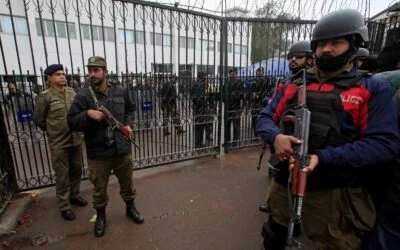
Recently, a prominent figure, Imran Riaz Khan, tweeted a news card allegedly from CNN, claiming international condemnation of Pakistan’s actions in Azad Jammu & Kashmir. On closer inspection, it turned out to be from CNN18, an Indian channel with no link to CNN International. The logo had been deliberately cropped, giving the false impression of global criticism. The tweet went viral—but the facts didn’t.
This kind of misinformation is not harmless. It’s not “just politics.” It is a calculated strategy that resembles the tactics of Yazid—not Imam Hussain.
Karbala Was a Fight for Truth, Not Manipulated Narratives
Imam Hussain stood for haqq (truth) in the face of immense pressure, even knowing the consequences. He never altered facts to suit his cause, never relied on deception to sway the public. He spoke clearly, knowing that truth often travels slower than lies—but travels farther in the end.
What we see today, unfortunately, is the opposite. Some political parties and their social media influencers manufacture outrage, amplify doctored content, and spread half-truths, often under the banner of defending “freedom” or “Islamic values.” Yet, their methods involve everything Karbala warned us against: deceit, manipulation, and playing with sacred emotions for worldly gain.
Weaponizing Misinformation: A Threat to National Unity
In a country like Pakistan, where emotions run high and religious sentiments are deeply rooted, even a single tweet can spark confusion, unrest, or mistrust in national institutions. Presenting Indian disinformation as global media coverage, especially during sensitive times like Ashura or national security operations, can undermine state efforts and embolden hostile narratives.
Let’s be clear: CNN18 is not CNN. Sharing that content as “evidence” of global concern is not just a mistake; it’s a deliberate act. And when this is done repeatedly by certain political circles, it begins to look less like incompetence and more like a campaign to destabilize public opinion.
Such behavior is not in the spirit of Imam Hussain. It aligns, tragically, with the legacy of Yazid, who relied on distortion and public confusion to justify his actions. There is no honour in misleading the public.
Truth Is Not Subjective—It Is Sacred
In the age of social media, many confuse virality with truth. But truth does not depend on likes, retweets, or well-edited graphics. It is rooted in evidence, ethics, and responsibility. If every opinion becomes a fact, and every lie is retweeted enough to be believed, then we are not followers of Hussain—we are followers of Yazid’s court scholars.
There is nothing Islamic or revolutionary about sharing falsehoods. In fact, Islam repeatedly warns against spreading unverified information. The Qur’an commands believers to “verify news when it comes from unreliable sources” (49:6). This applies even more when national interests are at stake.
What Must Be Done: A Call for Digital Integrity
Political actors have every right to critique policies, demand accountability, and share their perspectives. That is democracy. But no one has the right to hijack truth for political theatre. If public figures, especially those with mass following, continue to mix facts with fiction, they must be called out—respectfully, but firmly.
It is also time for social media platforms, news organizations, and state institutions to take misinformation more seriously. Fact-checking, timely clarifications, and legal consequences for repeated misrepresentation must become part of our collective response.
Conclusion: Defending Truth is a Hussaini Duty
The battle between truth and falsehood did not end in Karbala. It continues—on screens, in newsfeeds, and in the hearts of people. Imam Hussain’s stand was not against military power alone; it was against a regime that distorted reality to legitimize its tyranny.
Those who misuse religion, spread falsehood, and manipulate facts are not on the side of Hussain, no matter how loudly they claim to be. They are replicating Yazid’s methods in new packaging.
To truly honour Karbala, we must side with truth—even when it is inconvenient. Even when it costs us attention, influence, or popularity. That is the legacy we are meant to carry forward.