


For more than a decade, Khyber Pakhtunkhwa (KP) has stood at the heart of Pakistan’s political landscape. Its streets have been alive with chants, rallies, and slogans promising “change.” Its youth have filled the frontlines of political movements, its voters the most vocal in the country. Yet, beneath this energy lies an unsettling reality: a province that is politically conscious but administratively fragile.
From 2013 to 2025, successive governments promised transformation — better governance, transparent institutions, improved services. But as data from the Sustainable Development Policy Institute (SDPI), Pakistan Social and Living Standards Measurement (PSLM) surveys, and Gallup Pakistan reveal, KP’s governance story is one of unmet promises and growing disillusionment.
Highlights
-
KP’s political energy has not translated into effective governance.
-
71% demand corruption probes in major projects (Gallup Pakistan, 2025).
-
60% say the government focused on politics over public service.
-
Unemployment and poverty remain alarmingly high across the province.
-
Public schools struggle — over half of students lack basic reading and math skills.
-
Only 63% of residents have access to healthcare; 48% of children are malnourished.
-
Power, gas, and clean water shortages persist in most districts.
-
Billions spent on climate projects remain untracked and unaccounted (SDPI, 2025).
-
Rising fear of terrorism reflects the cost of weak governance.
A Province of High Political Energy, Low Administrative Delivery
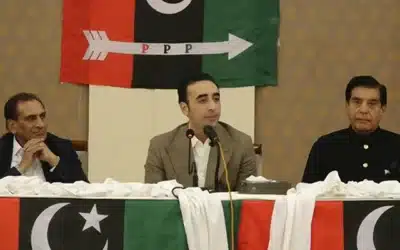
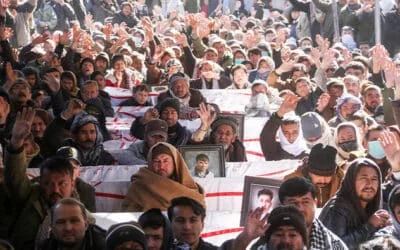
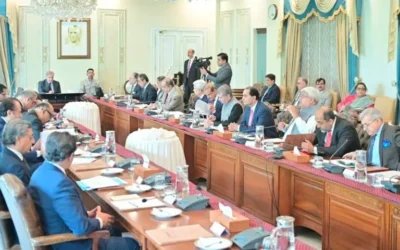
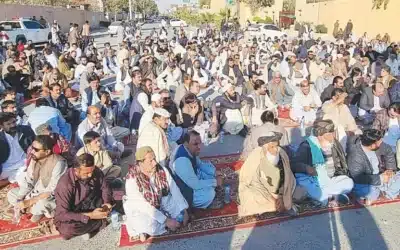
Khyber Pakhtunkhwa’s political engagement has long been its strength. But this same activism has often turned inward — consumed by protests, sit-ins, and rhetorical battles rather than policymaking. A recent Gallup Pakistan (2025) survey found that 60 percent of KP’s residents believe the provincial government “wasted time in protests and demonstrations” instead of focusing on governance.
This constant political mobilization has not been matched by administrative discipline. Public dissatisfaction is widespread. According to Gallup, 71 percent of people now support formal investigations into alleged corruption in large-scale development projects, which are commonly called mega projects. Strikingly, even 62 percent of the ruling party’s own voters back these investigations.
Nearly half the respondents (48 percent) believe corruption has increased in government departments, while 40 percent say it is more widespread in KP than in Punjab. These figures point to a deeper erosion of public trust — a province where citizens are politically alert but increasingly disillusioned with those in power.
You May Like To Read: Sugar, Flour, and Tomatoes Out of Reach as Inflation Bites Khyber Pakhtunkhwa
Institutions Built for Reform, Weakened by Politics
The province did attempt structural reforms. The Local Government Act, 2013, was meant to bring power closer to the people — enabling district and village councils to make local decisions on schools, water, and health services. In theory, it was a step toward decentralization, meaning power would flow downward instead of staying concentrated in Peshawar.
In practice, local bodies became financially starved and politically sidelined. The system that was meant to strengthen local democracy ended up highlighting the limits of provincial commitment to genuine devolution.
Similarly, the Right to Information (RTI) Act, 2013, which gave citizens the right to request official information, initially won praise. But by 2024, the KP Information Commission was struggling to process hundreds of pending complaints, citing a lack of staff and political interference.
The Ehtesab Commission, established in 2014 as an independent anti-corruption body, suffered a similar fate. Once promoted as KP’s answer to accountability, it gradually lost credibility amid reports of selective investigations and internal conflicts.
These institutions, conceived to make governance transparent, were weakened by the very politics that created them.
Economic Promise Without Progress
Despite its natural wealth and entrepreneurial spirit, KP’s economy has failed to keep pace with the rest of the country. The SDPI’s 2025 Economic Outlook notes that 87 percent of businesses in KP operate informally — meaning they are unregistered, untaxed, and outside formal financial systems.
Informality keeps the economy stagnant. Businesses that are not registered cannot access bank loans or government support. They survive, but they do not grow. Only 10 percent of deposits made in KP’s banks are reinvested within the province, meaning the local economy remains starved of capital.
Unemployment and frustration are rising together. 59 percent of residents report worsening joblessness, while 67 percent say the government has failed to create jobs or business opportunities. More troubling, 73 percent believe government employment depends on personal connections rather than merit.
Poverty, too, remains widespread. The multidimensional poverty index, which measures deprivation across income, education, and health, stands at 49 percent for KP — significantly higher than the national average of 39 percent.
This economic stagnation is particularly painful in a province whose people have shown remarkable political participation and resilience, but have received little in return.
The Human Cost in Education and Health
Despite loud reform narratives, social indicators show persistent neglect.
Education: Quantity Over Quality
Budgets for education have increased manyfold, yet outcomes remain disappointing. The Annual Status of Education Report (ASER 2023) found that more than half the children enrolled in public primary schools in KP struggle with basic reading and arithmetic.
Enrollment disparities remain sharp: 26 percent of the poorest girls are still out of school, compared to 15 percent of boys. The proportion of children in private schools has risen from 20 percent in 2021 to 24 percent in 2023, indicating a slow withdrawal of trust from the public system.
Health: Financing Without Delivery
The Sehat Card program — a health insurance scheme providing free treatment in partner hospitals — improved access to emergency care, but it could not fix the broken foundations of the public health system.
According to Gallup Pakistan (2025), only 63 percent of KP’s population reports access to healthcare. In rural areas, this figure drops sharply.
The Multiple Indicator Cluster Survey (MICS 2016-17) revealed that 30.5 percent of pregnant women received no professional antenatal care — meaning they were never examined by a trained doctor, nurse, or midwife during pregnancy. Immunization coverage for children under two was just 60.6 percent, leaving nearly 40 percent unprotected from preventable diseases.
The province also faces a silent nutrition crisis. Nearly 48 percent of children are stunted — their physical and mental development hindered by chronic undernutrition. Malnutrition is not merely a health issue; it limits educational achievement and future productivity.
Infrastructure and Everyday Deprivation
In the daily lives of KP’s residents, the failures of governance are visible in flickering lights and dry taps.
49 percent report poor or no access to electricity. 66 percent say gas is unavailable. 26 percent still lack clean drinking water.
Beyond utilities, the absence of public spaces reflects a deeper neglect of community life. 77 percent of residents lack access to parks, 81 percent to libraries, and 70 percent to community centers. For a young and politically aware population, the lack of such spaces leaves few outlets for healthy engagement, education, or recreation.
Climate Governance and the Accountability Void
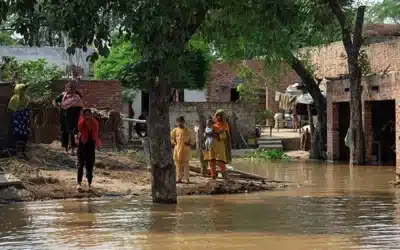
Khyber Pakhtunkhwa has suffered disproportionately from floods, landslides, and dengue outbreaks — all symptoms of a changing climate. Yet its institutional response remains fragmented.
In 2023–24, the provincial budget earmarked Rs. 41.1 billion for mitigation (reducing emissions and disaster risks) and Rs. 93.7 billion for adaptation (helping communities cope with climate impacts). But a 2025 SDPI report found that KP has no Climate Budget Tagging system — a basic financial tracking tool that identifies how much of the budget actually supports climate-related work.
Without such a system, funds become difficult to monitor, accountability weakens, and opportunities for international climate finance are lost.
Security and the Return of Fear
The most painful repercussion of weak governance may be the gradual re-emergence of insecurity.
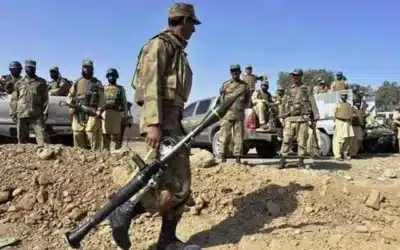
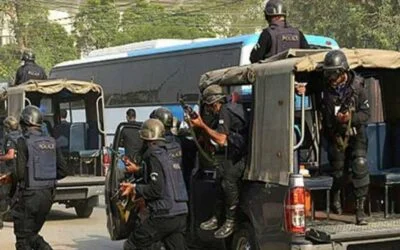
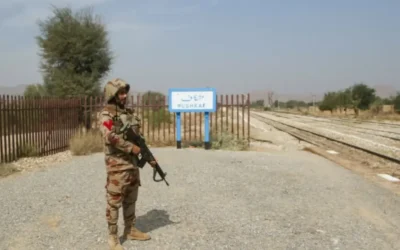
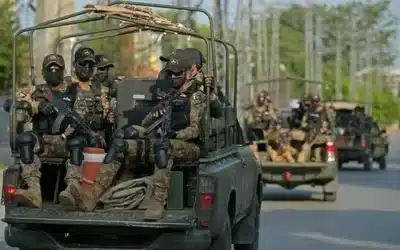
While the province had witnessed relative peace in recent years, fear has crept back. 57 percent of residents told Gallup they now feel afraid of terrorism; in southern KP, that figure rises to 72 percent.
Analysts and local observers increasingly link this trend to administrative weakness — police under-resourced, development delayed, and youth left without economic or social opportunities. When governance retreats, extremism fills the vacuum.
A Province That Deserves Better
Khyber Pakhtunkhwa’s people are politically mature, resilient, and proud of their identity. They have braved wars, displacement, and poverty with courage. But over-politicization — the obsession with power struggles and non-issues — has cost them dearly.
The slogans that once promised reform now ring hollow against the daily realities of corruption, unemployment, and insecurity. KP has become a province where politics thrives, but governance lags; where debates are loud, but development remains slow.
The lesson from the past decade is clear: no amount of political passion can substitute for effective governance. The people of KP — who have carried Pakistan’s democratic spirit through their activism — deserve not just to be heard during elections, but to be served every day afterward.
You May Like To Read: PAF’s JF-17 Block-III Jets Arrive in Azerbaijan for Bilateral Aerial Combat Drill