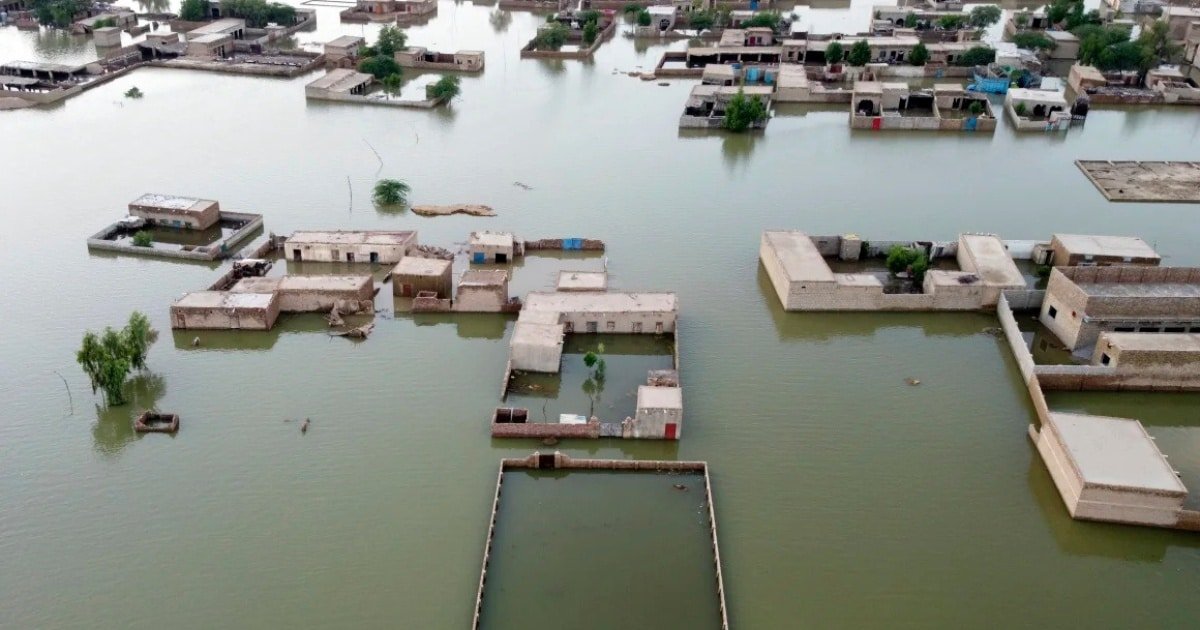
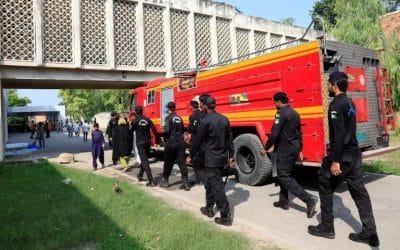


As floodwaters continue to devastate parts of Khyber Pakhtunkhwa, where rivers have breached their banks and villages are left isolated without food or clean water, a painful question arises: why are our political campaigns focused more on front pages in foreign newspapers than on the frontlines of disaster relief?
Last month, a full-page advertisement appeared in The New York Times, purchased by a diaspora group to amplify a political cause back home. That single page, printed in color, likely cost between $125,000 and $150,000—the equivalent of emergency food packs for thousands of families. While this may have been framed as “raising awareness,” the timing was impossible to ignore. As KP floods deepen, political forces—rather than rallying support for victims—are busy fighting image battles in foreign newsrooms.
KP’s Crisis: Too Real to Be Ignored
Khyber Pakhtunkhwa has long suffered the brunt of Pakistan’s climate challenges. From the mountains of Swat to the plains of Dera Ismail Khan, floods have become a tragic routine—but this year, once again, the system appears overwhelmed.
- Emergency services are under-equipped.
- Makeshift shelters are overcrowded.
- Roads to key areas have been washed away.
- Health units lack medicine, and in some cases, electricity.
In such moments, one would expect political parties—regardless of affiliations—to mobilize funds, volunteers, and attention toward these crises. But instead, we’re watching campaign money flow into public relations exercises abroad.
Flooded Villages, Full-Page Ads
The economics are stark. Based on publicly available rate cards, a full-page advocacy ad in The New York Times on a Sunday costs roughly:
| Format | Cost Estimate (USD) |
| Weekday Full-Page Ad | $107,000 – $125,000 |
| Sunday Edition (Color) | $125,000 – $150,000 |
This money could have funded:
- 500+ tents for displaced families
- 10,000 water purification tablets
- Emergency rations for an entire tehsil for one week
- Mobile medical units across three districts
The question isn’t about political beliefs. The question is priorities.
Diaspora Support: A Tool for Relief, Not Drama
Let’s be clear—our overseas Pakistanis are a national asset. They are generous, loyal, and eager to help during crises. In past emergencies—from the 2005 earthquake to COVID-19—they’ve donated millions toward relief and rehabilitation. But today, their trust is being diverted.
You May Like To Read: Monsoon Fury and Broken Treaties: Pakistan’s Climate Crucible
Instead of pooling diaspora resources for rescue missions in KP or rebuilding homes in Gilgit-Baltistan, we see political groups channeling that goodwill into PR campaigns and sponsored content in Western outlets. Ads, editorials, and even lobbying contracts are being paid for in the name of “saving democracy,” but rarely do they speak about saving lives.
If you can mobilize $150,000 for a media campaign, why not direct those funds to NDMA or the PM Flood Relief Fund? If political supporters abroad are ready to give, why not offer them transparent relief channels, not just slogans?
Narrative vs. Nation
Many of the same groups behind these foreign campaigns have long criticized “Western interference” in Pakistani politics. They speak of sovereignty, regime change, and standing up to foreign powers. Yet their strategies betray that very narrative.
If we truly want to be sovereign, we must first learn to solve our problems at home. Running to foreign newspapers to narrate our political grievances, while ignoring the humanitarian emergency unfolding in KP, sends the worst possible message: that optics matter more than people.
The international media isn’t the solution to Pakistan’s challenges. That responsibility rests on us.
A National Moment, Not a Political One
This editorial isn’t about one party or one side. All political actors share blame. Over the years, each has spent more time on campaigns than on capacity-building. Pakistan’s inability to deal with climate disasters is not new—but neither is the neglect. Instead of building long-term flood defenses, we build election-year narratives. Instead of early warning systems, we invest in media cells.
The people of KP, particularly in flood-prone districts like Chitral, Swat, and Dera Ghazi Khan, deserve better. They don’t want slogans. They want drainage, shelters, and roads that don’t collapse after every monsoon.
You May Like To Read: Why Pakistanis Are Rejecting Anti-State Rhetoric in Favor of Stability
Time for Real Leadership
Real leadership isn’t proven in headlines—it’s built in relief camps. If political groups wish to raise awareness, they should start by raising funds for flood victims. If they truly believe they’re being silenced, let their actions for the people speak louder than editorials in foreign papers.
We urge political leaders and their diaspora supporters to redirect their energy and resources toward what really matters:
- Restore damaged schools.
- Support small farmers who’ve lost their crops.
- Create community-level climate resilience plans.
If they do this, they won’t need to buy a page in The New York Times—their actions will be reported for free.
Final Word
Pakistan is at a crossroads—economically, politically, and environmentally. But while we argue over narratives abroad, nature doesn’t wait. It floods our fields, destroys our homes, and drowns the future of our children.
Let us ask ourselves: Are we building a legacy of service—or a legacy of slogans?
Because when the floodwaters recede, what will remain is not who got featured in an American newspaper. What will remain is who stood by the people when they needed them most.