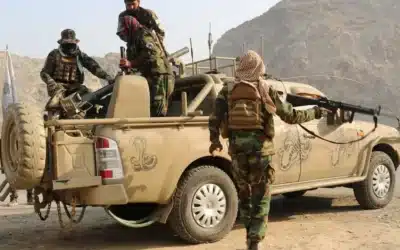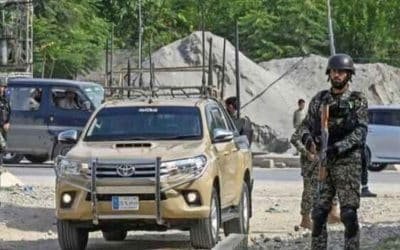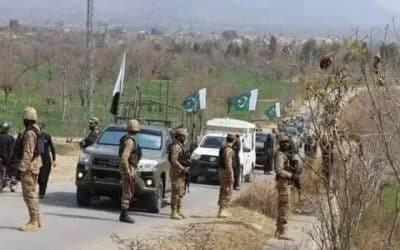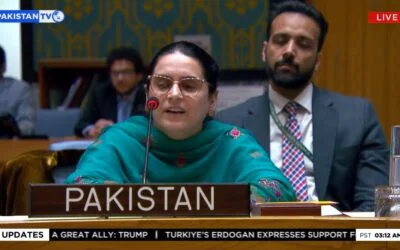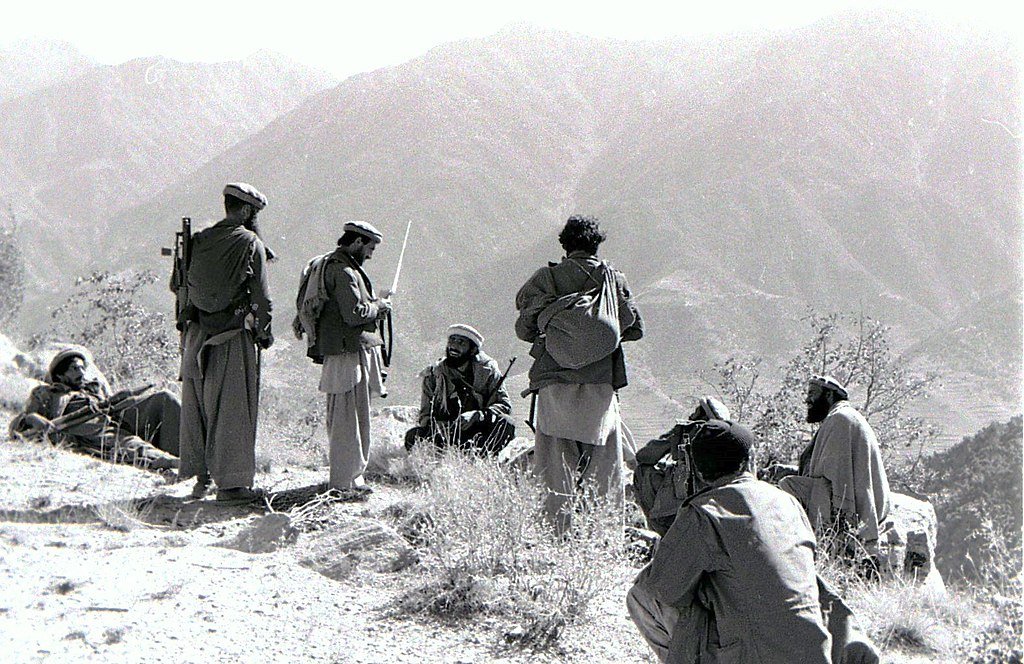


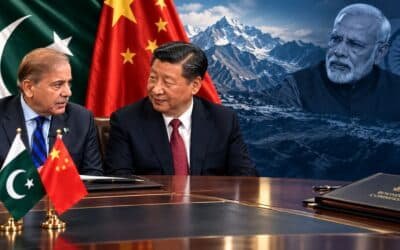


The 1980s proved to be one of the most pivotal decades for Pakistan, characterized by shifts in power, a refugee crisis, and national security concerns and policies. At the core of this transformation was the Afghan War, which began due to the Soviet invasion of Afghanistan in 1979. Taking into consideration the foreign invasion of a neighboring country, Pakistan feared a threat to its national security. Therefore, to mitigate possible dangers and secure financial and military aid (to protect itself), Pakistan supported the Afghan mujahideens that fought against soviet forces in Afghanistan. Pakistan’s decision aimed to bring about profound changes in its political apparatus, internal stability, and foreign policies. The focus of this article is to review the effects of the Afghan War and how it shaped national security, whose legacy lasts to this day.

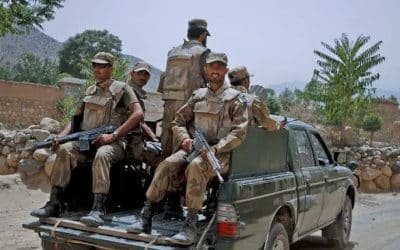
Reference: Chicago Tribune
Background
When the Soviet Union sent its troops to Afghanistan in 1979, it came as a shock to the whole world. For Pakistan, this was an imminent threat to its existence. Soviet forces in Afghanistan were just across Pakistan’s North-Western border, meaning that they could potentially expand into Pakistan’s strategically significant warm-water ports. Furthermore, if the Soviet Union were to join forces with the Indian military, Pakistan’s security situation could have gone from dire to grave. The threat of invasion and war surrounded the country. For the rest of the World, the Soviet entry into Afghanistan was linked to the Cold War, but for Pakistan, the threat was much too close and a matter of survival.
General Zia-ul-Haq, who held power at the time, had to take swift and decisive action. Pakistan could not afford to cower before a World superpower as its sovereignty was at stake. Not only that, but the freedom and lives of the Afghan people were also in danger. Geopolitically, Pakistan could counter soviet troops in Afghanistan. This opportunity was recognized by the United States (US) and Saudi Arabia, who joined hands with Pakistan in a historical alliance.
The Strengthening of the National Security Apparatus
Above all, the Soviet invasion posed a significant national security threat, and the military assumed a leading role. Primary responsibilities fell to Pakistan’s military intelligence division. Inadvertently, the conflict became the catalyst that strengthened Pakistan’s national security apparatus. Although already a disciplined and professional force, the Pakistani army underwent rapid modernization due to the US and Saudi military aid. Pakistan’s intelligence also developed extensive networks and effectively navigated a complex network of alliances. Military logistics were improved, and a narrative of national security was built.
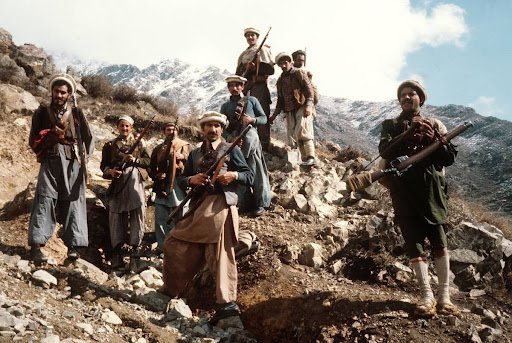
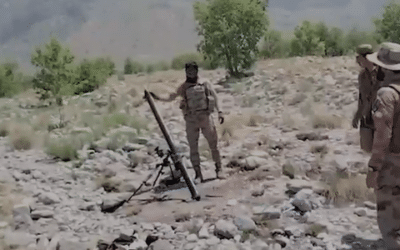
Source: Arabnews
In addition, the Afghan Jihad also infused the nation with a sense of solidarity. Afghan Jihad is the term used to describe the Afghan mujahideen resistance movement against the Soviet occupation of Afghanistan and the Soviet-supported Afghan communist regime between 1979 and 1989. The war was part of the larger Cold War and witnessed extensive international intervention, led in particular by the United States, Pakistan, and other nations backing the mujahideen. Pakistan was, at the same time, attempting to protect the Afghan people as well as resist foreign occupation. It provided refuge to three million Afghans and accepted them as their brethren. The public stood united behind its government and military.
Islamization of State and Security
Since the military had the support of the people, General Zia-ul-Haq gained popularity and was able to further his domestic policies focusing on Islamization. Both Pakistan’s state and security institutions saw a profound shift. Jihadist movements, framed in an Islamist context, earned support from the public. Legal and education systems were reformed, the latter mainly through the proliferation of Madrassas. Countries like Saudi Arabia extended diplomatic and financial support in funding these madrassas, recognizing Pakistan’s efforts in defending Muslim interests on a global stage. Zia’s period also saw Pakistan recognized for its Islamic principles, which informed its national and security policies.
Strategic Depth Doctrine
The Strategic Depth Doctrine was one of the most significant ideas to arise during the 1980s. It saw Afghanistan as a possible buffer state against India. This would ensure greater security for Pakistan against encirclement by its hostile neighbors. Therefore, it was necessary that, given the prospect of the Soviet retreat from Afghanistan, another authority be established to prevent it from falling prey to external influences. Authorities in Islamabad reasoned that Pakistan would be better served if a structured alternative were to replace the Kabul government, giving Afghanistan better chances for stability and liberation. It would be an advantage if it were pro-Pakistan. To ensure this, Pakistan was involved in cultivating groups like Hizb-e-Islami, which could govern Afghanistan in case of Soviet withdrawal.
Impact on Internal Security
Although the Afghan jihad initially supplemented Pakistan’s security by discouraging Soviet expansion and strengthening connections with the West, it also introduced new and unexpected threats to internal stability. The massive exodus of Afghan refugees — more than three million at its height — taxed Pakistan’s economy and infrastructure, especially in the North-West Frontier Province (now Khyber Pakhtunkhwa) and Balochistan. Refugee camps allegedly became centers for arms and drugs smuggling and militant recruitment. The spread of weapons and drug trafficking incited crime and violence throughout Pakistan. Sectarian violence between Shias and Sunnis also worsened. Pakistan received international financial support, but it still faced challenges in maintaining internal security and stability.
Conclusion
For Pakistan, the Soviet invasion was both an existential threat and a defining moment. The Afghan Jihad fundamentally shaped Pakistan’s security policy. The legal and educational reforms made possible by General Zia-ul-Haq’s support, gained through Pakistan’s strong stance against foreign forces in Afghanistan, have a lasting legacy. The military strength that Pakistan gained through involvement and sacrifices during the war has enabled it to become the strong force that it is today.
References
- The Editors of Encyclopaedia Britannica. (2025, July 4). Soviet invasion of Afghanistan. In Encyclopædia Britannica. Retrieved July 10, 2025, from
- Schöch, R. (2008). Afghan refugees in Pakistan during the 1980s: Cold war politics and registration practice (New Issues in Refugee Research No. 157) [PDF]. UNHCR Policy Development and Evaluation Service. Retrieved July 10, 2025, from
- Kepel, G. (2002). Jihad: The trail of political Islam (A. F. Roberts, Trans.). Belknap Press. (Original work published 2000)
- War and Peace in Afghanistan: The Pakistani Role by Marvin G. Weinbaum (JSTOR)