




Since the 2000s, Pakistan has been developing an evolving counter-terror framework, which led to the establishment of the National Counter Terrorism Authority (NACTA) in 2008 (as amended in the 2013 Act) to standardize planning. NACTA is the supreme controlling organization of CT strategy. In August 2023, the Interior Minister observed that NACTA had become a “fully functional organization” with its “statutory coordination role” moving towards data-driven policies and strategies.
Source: The News
The NACTA Board of Governors consists of the top intelligence and police chiefs (DGs of IB, ISI, MI, FIA, and provincial IGPs) to provide extensive inter-agency integration. NACTA is tasked with developing comprehensive CT strategies and with overseeing the implementation of the Pakistan National Action Plan and security policies. To facilitate law enforcement, its analysts prepare databases of terrorism and trend evaluations. Overall, Pakistan utilizes the NACTA to develop national CT strategies and synchronize the activities of the army, intelligence agencies, and provincial Counter-Terrorism Departments.
Pakistan’s counterterrorism approach is multi-dimensional:
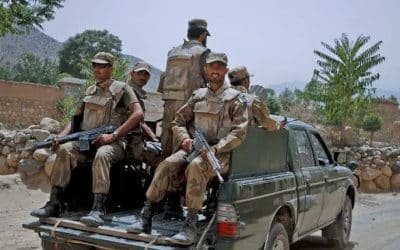
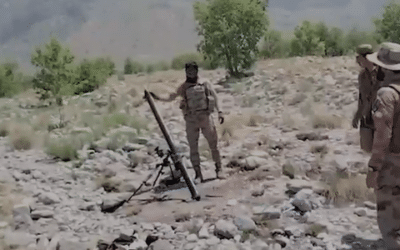
- Military Offensives: Large-scale operations have cleared militant bases in the tribal belt. Military operations such as Zarb-e-Azb (2014) and Radd-ul-Fasaad (2017) cleared residual networks and Taliban sanctuaries within tribal regions. As a result, the number of acts of terror decreased considerably by 2018.
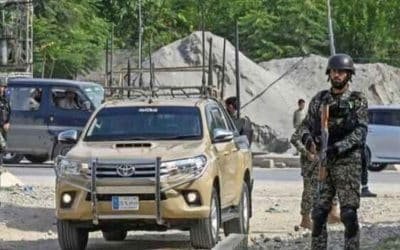
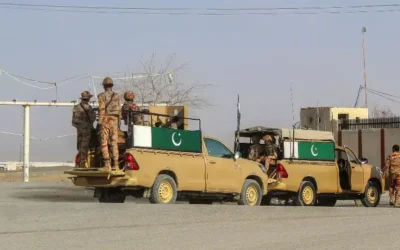
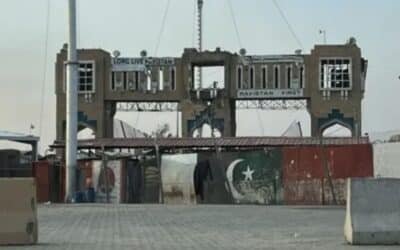
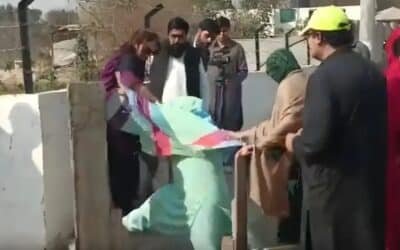
- Border Fortification: About 94 percent of the 2,600km Durand line is fenced to help stop cross-border infiltration. More than 673 security forts and biometric identity systems (NADRA IBMS) at major crossings such as Torkham and Chaman, and an increased Frontier Corps presence, enhance security at the borders, legal trade, and interception of militants. Pakistan’s press reported that Chaman alone has 14 biometric lanes, allowing 20,000 people to pass daily without delays.
Source: Business Recorder
- Intelligence & Coordination (NACTA): NACTA is an inter-agency organization that advocates national policy and inter-agency coordination with the civil and military CT departments. NACTA leads to data-driven security planning with skilled analysts and routine supervision by the Ministry of Interior.
- Legal and Financial steps: Pakistan created the Financial Monitoring Unit (FMU), a data collecting unit to cut terror funding through the National Action Plan 2014 and FATF-compliant programs. Such efforts involve asset freezes and the prosecution of facilitators.
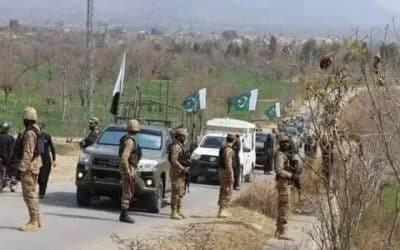
These layers of fence, forts, patrols, and gates serve the purpose of depriving the militants of an easy cross-border sanctuary, as was the case in the past. In July 2025, the Pakistan army said it killed 30 Taliban militants who had tried to sneak back into Pakistan via Afghanistan and seized arms caches in what it called a prevented infiltration attempt. The prime minister, Shehbaz Sharif, publicly hailed the forces and promised to end all forms of terrorism in Pakistan. Recurring rhetoric by top leaders continues to affirm that the Durand Line is the internationally recognized border and that fencing and regular check-ups on the border are there to stay. ISPR spokesmen emphasize that this is done with the intent of peace and safety, not division: the DG gave a warning that foreigners who provoke incidents along the borders will be dealt with warily, and stated that Islamabad and Kabul cooperate to mitigate any local hostilities.
Pakistan’s army has said it has killed 30 fighters who tried to cross from Afghanistan, just days after a suicide attack in the same region killed 16 Pakistani soldiers ⤵️ https://t.co/ynXFVy3zl4
— Al Jazeera English (@AJEnglish) July 4, 2025
Pakistan’s Afghan border security cannot be separated from regional politics. The Taliban’s return in Kabul (2021) and resurgent FAK groups have complicated the threat picture, but Islamabad continues to seek diplomatic solutions. In public, Pakistani officials emphasize “very good relations with the current Afghan government” and that issues (such as fence incidents) will be handled through “understanding, talks and good neighbourliness”. Regardless, Pakistan’s strategy remains defensive: it has upgraded its border management regime (cameras, drones, biometrics) and accelerated CT operations at home. For example, what had been a one-month ceasefire with the outlawed Tehreek-e-Taliban Pakistan (TTP), now Fitna al Khwarij (FAK), was rescinded in late 2023, and Pakistani forces resumed targeted strikes against militant hideouts, underscoring that counterterrorism vigilance is unrelenting.
The counterterrorism policies that include effective military operations and strengthened border areas in Pakistan after 2014 are centered on the NACTA-coordinated strategy. According to official sources, thorough measures produce tangible results: the number of attacks has significantly decreased, and funding sources have been uncovered; militant leaders are under pressure. Although there are still obstacles, such as shifts in local power dynamics, the government presents a united front and believes that well-secured borders, biometric immigration, and intelligence cooperation can help contain instability in Afghanistan before it spreads to Pakistan. NACTA, as the inter-agency framework itself, as well as such policies, demonstrate Pakistan’s willingness to defend its western border and to achieve long-term peace.
YOU MAY INTRESTED IN: