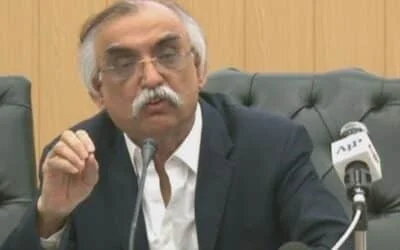



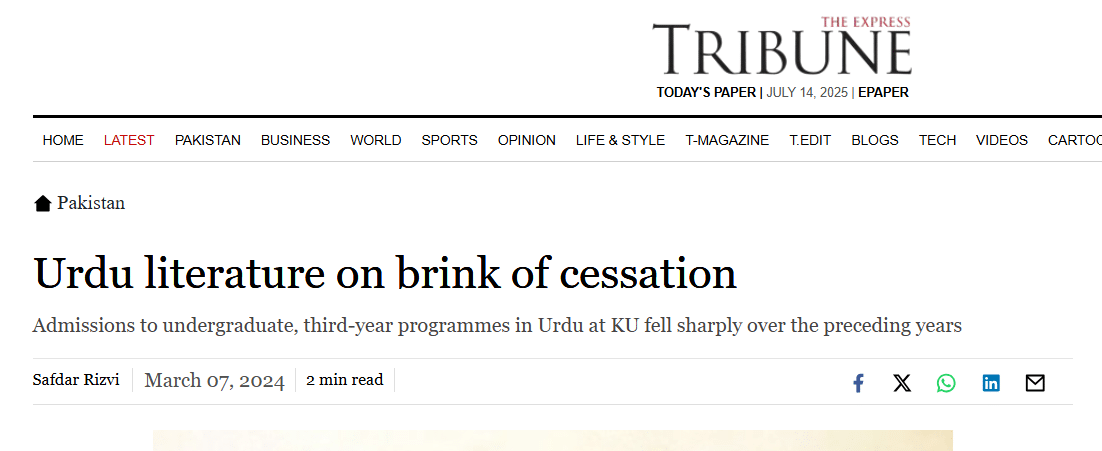
In recent years, Pakistani universities have experienced a significant decline in enrollment in Urdu literature. At the University of Karachi, undergraduate admissions declined by approximately 50%, and the intake of third-year programmes plummeted by 75% in just one year, with only 45 students enrolling in Urdu bachelor’s programmes and seven in the advanced programme during the 2023–24 academic year, according to official figures. The university’s vice-chancellor and noted poet, Dr. Khalid Irani, cited the pursuit of financially rewarding degrees as a leading factor. He added that contemporary writers have failed to bridge the gap with younger readers, leaving many disinterested in prose and poetry.
Urdu’s decline isn’t just a language shift—it signals a cultural gap only thoughtful education and creative revival can bridge.
Similarly, scholars like Dr Hilal Naqvi have attributed the decline to societal fixation on money over intellectual exploration. In a candid illustration of this shift, he joked that a literature graduate would struggle even when proposing marriage, highlighting a perceived socioeconomic bias against the humanities.
Source: The Express Tribune
Educational System Favouring English over Urdu
Pakistani education has long shifted towards English as the primary medium of instruction. Government schools, once strongholds of Urdu and regional languages, declined over time, while expensive private schools mandated English-only communication, even for subjects like Islamiyat. Urdu libraries are rare in these institutions. Scholars warn that this system has alienated students from Urdu language and literature across generations. Prominent poet and scholar of the Arabic language, Prof. Khurshid Rizvi of GCU Lahore, has emphasized that the social acceptance of literature has progressively eroded over the past 150 years, resulting in its confinement to a niche literary circle. He cited the rise of materialism as undermining the spiritual value once associated with literary discourse.
The Digital Age: Opportunity or Obstacle?
Technology provides convenient shortcuts but also undermines book culture. A 2024 report noted that youth prefer bite-sized digital media, such as Instagram, TikTok, and Twitter, over lengthy reading. E‑books and audiobooks have not gained traction in Pakistan. Economic constraints and lagging public libraries further dissuade youth from acquiring excessive literature.
Between digital trends and institutional neglect, Urdu risks fading—but the right interventions can reawaken its relevance.
Beyond preference, the technical treatment of Urdu itself poses barriers. The Urdu script, especially its ornate Nastaliq style, lacks accessible digital tools. Many Pakistanis resort to Roman Urdu, typing Urdu words using Latin letters, for ease of use. Initiatives like Pakistan’s Matnsaz iOS keyboard app and Rekhta’s digital library aim to improve this, but gaps remain.
Cultural Relevance: A Disconnect with New Generations
Past generations grew up with literary traditions rooted in dastān‑goi (storytelling) and poetic gatherings. Today, both university and online communities lament the near‑absence of literary circles or reading companions. Reddit users discuss how once‑popular poetry events and literary societies have died out, and individuals now rely on Instagram reels of old ghazals to claim literary appreciation. One wrote:
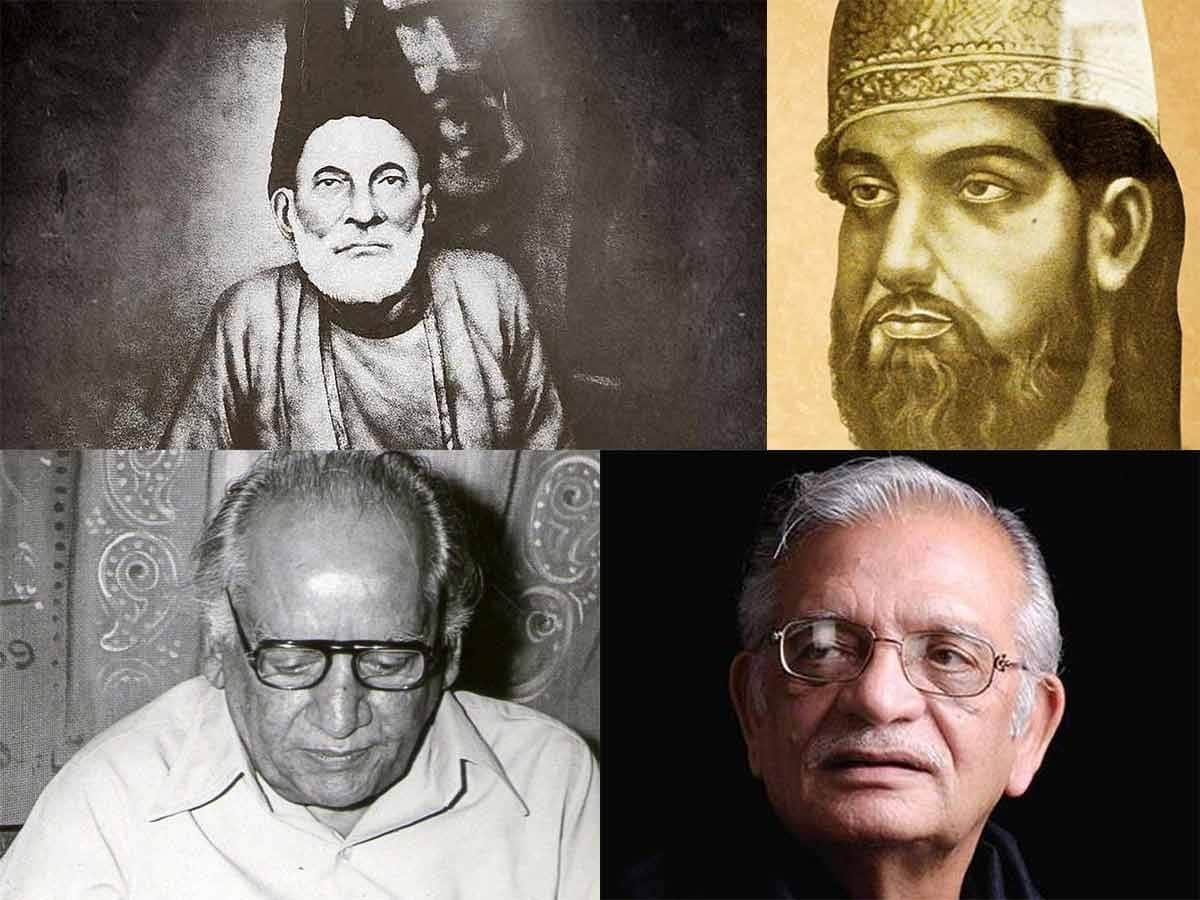
People now memorise the same Ahmed Faraaz or Faiz lines seen on Instagram reels… claim to be literary.
Another reflected on campus culture:
I can’t find people who enjoy literature or talk about deep topics… libraries and book clubs just aren’t a thing anymore.
These sentiments reflect a widening gap: youth increasingly prefer relatable, immediate content over the deeper, more challenging Urdu literature.
Language or Relevance: Why Modern Writing Misses the Mark
While Urdu retains its emotional richness and spiritual depth, readers often find its literary vocabulary to be distant from everyday speech. According to a survey of Pakistani youth, many cite Urdu literature’s strong vocabulary and emotional resonance as attractions, but criticize modern Urdu writing for outdated romantic tropes or unfamiliar diction.
Is It Educational Failure, Language Shift, or Relevance Issue?
All three factors —education, language, and relevance —intersect. Declining Urdu enrollment and institutional emphasis on English, combined with digital tools favoring Roman Urdu and youth preference for modern media, contribute to the fading relevance of Urdu literature.
Reconnecting youth with Urdu literature isn’t nostalgia—it’s a cultural necessity that demands bold, modern solutions.
On one hand, the educational system doesn’t foster critical reading; students study Urdu as rote memorization rather than exploration. On the other hand, Urdu writers and publishers have not consistently produced content that appeals to urban youth, who are accustomed to gripping storytelling and multimedia formats. On yet another layer, technical neglect of Urdu’s digital usability deters engagement.
Efforts to Reconnect Youth with Urdu
Despite challenges, promising developments are supported by state institutions and cultural advocates. In Peshawar, the Enlight Lab study circles have experienced about 25 percent year-over-year growth in youth participation since their launch. These gatherings bring together scholars, writers, and young graduates to discuss books and global ideas, an effort aimed at making literature more relevant to societal progress. Additionally, digital platforms like Rekhta and apps like Matnsaz provide extensive Urdu collections, predictive typing, and resources for both poets and readers. These tools can lessen the barriers of using Urdu in a technology-driven age.
What does this reveal about cultural disconnect?
The decline of Urdu literature among young people indicates more than just a shift in language; it reveals a growing cultural divide between national identity and modern aspirations. When students, families, and schools favor English for its perceived status and economic benefits, they unintentionally distance themselves from hundreds of years of literary tradition.
Urdu literature, once central to patriotism, critical thinking, and national introspection, is now relegated to nostalgia or the realm of elite hobbyists. As a result, future generations risk losing not only poetic nuance but also the ethical, emotional, and intellectual frameworks embedded in Urdu storytelling.
The decline in interest in Urdu literature among Pakistan’s youth is largely attributed to educational neglect, shifting language trends, and a lack of relevance. However, the language still holds emotional depth, expressive richness, and cultural significance. It is now the responsibility of educational planners, cultural organizations, writers, and technology developers to make Urdu literature accessible, relatable, and meaningful again.
Ensuring Urdu’s survival is not just about saving words on a page; it’s about maintaining a shared heritage, intellectual identity, and national unity. In an era when global content prevails, investing in Urdu means investing in Pakistan’s cultural legacy and identity.
You May Like to Read:
- Media Manipulation: The Guardian’s Skewed Narrative on Pakistan
- Crisis vs. Response: How AP News Frames July’s Events in Pakistan
- Pakistan’s Sovereignty, Sustainability, and Struggle Against Sensationalism: A Response to BBC Narratives
- Drying Beneath Our Feet: Lahore’s Water Crisis and What We Must Do Now
- Role of Social Media in Warfare: The Digital Battleground