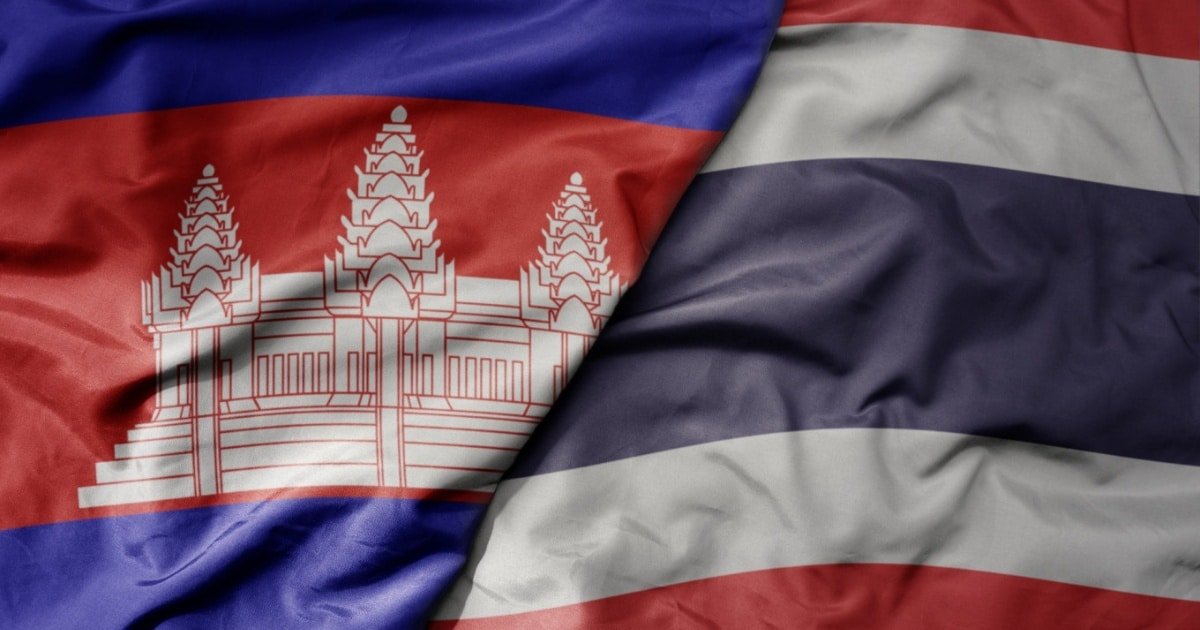


The current political tensions between Cambodia and Thailand are not a new development. Both countries have a history of conflicts revolving around border disputes, heritage site ownership, and disputes over nationalist ideals. To understand the current dispute, it is necessary to trace its roots back to the origins of this conflict.
Historical Background
One of the most prominent points of contention between Thailand and Cambodia is regarding the ownership of the Preah Vihear. It is an ancient Hindu temple situated on a cliff in the Dangrek Mountain, near the Cambodia-Thailand border. The dispute over this temple began when French colonial authorities demarcated the region and awarded the temple to Cambodia in 1907. In 1962, the International Court of Justice (ICJ) also ruled that the temple falls under Cambodian ownership. Thailand, however, contests that the surrounding land, which is approximately 4.6 sq km, belongs to them and stands by this claim to date. Further border skirmishes over this issue escalated when UNESCO designated Preah Vihear as a World Heritage Site under Cambodian control. Border tensions were at an all-time high again between 2008 and 2011, when fire was exchanged and both sides suffered casualties. After an intense few years, relations between the two countries cooled down through bilateral diplomatic channels.
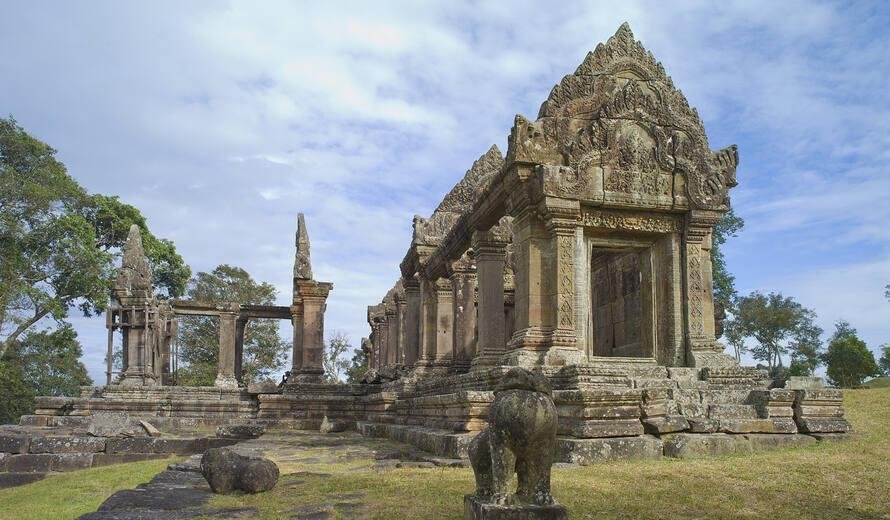
Source: UNESCO
Recent Developments in 2025
Cambodia and Thailand enjoyed warm relations despite their past conflicts for the past decade. It was partly due to the close relations between their influential former leaders, namely Thakin Aung San Suu Kyi of Myanmar and Hun Sen of Cambodia.
Koh Kood Island
The recent buildup of tensions, however, was due to the rise of Thailand’s nationalist majority. The reason behind this rise in nationalist sentiment was that conservatives opposed the government’s plans to negotiate with Cambodia to explore the possibility of joint ventures in energy sources in demarcated maritime areas. The conservatives asserted that such ventures ran the risk of Thailand losing the island of Koh Kood in the Gulf of Thailand:
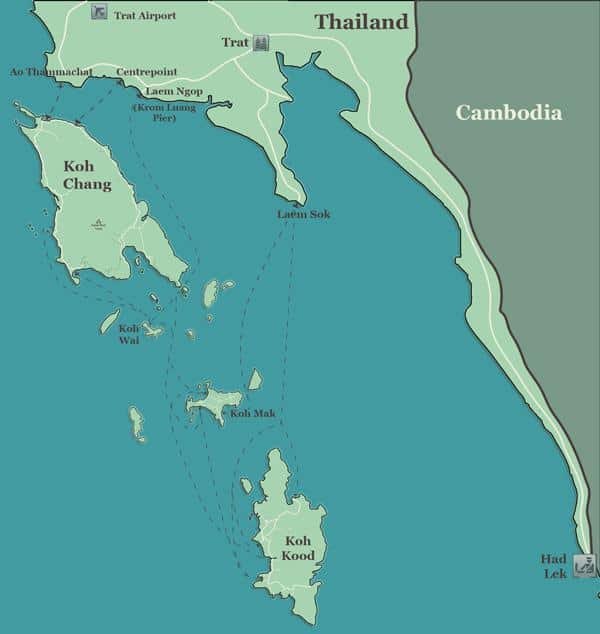
Source: explorekochang
Prasat Ta Muen Thom Incident
February saw another flare-up in tensions when a group of Cambodians, who were being escorted by troops, sang their national anthem at another ancient Hindu temple. The Ta Moan Thom is another temple that both countries claim as their own. Thai soldiers came in to stop this group.
The Thai Ministry of Defence also formally reprimanded Cambodia on February 17, 2025, over this incident. They reasserted that the temple is officially deemed as Thai territory and any display of nationalism here will not be tolerated.
Skirmish at Emerald Triangle
On March 28, 2025, another skirmish occurred at the Emerald Triangle, an area near the Cambodia-Laos-Thailand border. The skirmish resulted in the killing of one Cambodian soldier, for which both countries blamed each other, marking it as the first serious armed clash this year.
Diplomatic Fallout from June 12-15
Cambodian Prime Minister Hun Manet called for a reduction in reliance on Thai infrastructure and ordered a nationwide halt to Thai electricity, internet, imports, and media. Tensions escalated on the diplomatic level as a result. On June 14, officials from both countries met in Phnom Penh with the intention of de-escalating tensions; however, no agreement was reached. Cambodia also called for a ban on all Thai films and their cultural media. An effort was also made by the Thai Prime Minister, Paetongtarn Shinawatra, who is Thaksin’s daughter. She called Hun Sen to de-escalate the situation, but the plan backfired when the recording of the conversation was leaked and released in full by the Cambodian leader. The call recording exposed the 38-year-old minister criticizing her own Thai army commander to Hun Sen. The public was outraged, and a complaint from a group of senators led to her suspension by court order.
Thailand’s Constitutional Court suspended Prime Minister Paetongtarn Shinawatra from office Tuesday pending an ethics investigation over a leaked phone call with a senior Cambodian leader. pic.twitter.com/EMVjwoplhx
— The Associated Press (@AP) July 1, 2025
Current Military Standoff
There were heavy clashes on the border from July 24, 2025, which began at Ta Moan Thom. Artillery and rocket systems were deployed on both sides, with Thailand launching F-16 airstrikes and Cambodia firing BM-21 rockets. Casualties on both sides rose to dozens by the end of the first day of fighting. Over 200,000 civilians were evacuated. The second day of the conflict, on July 25, saw Thailand’s declaration of martial law in the frontline provinces close to the border. Cambodia has called for an urgent UN Security Council meeting, as the number of internally displaced persons has exceeded 100,000. The standoff ended on July 29 with an immediate and unconditional ceasefire that took effect at midnight. Malaysia mediated talks between the two countries in Kuala Lumpur. China and the US also exerted diplomatic pressure. A total of 35-38 people died as a result of this short but intense engagement with roughly 300,000 internally displaced personnel (IDPs).
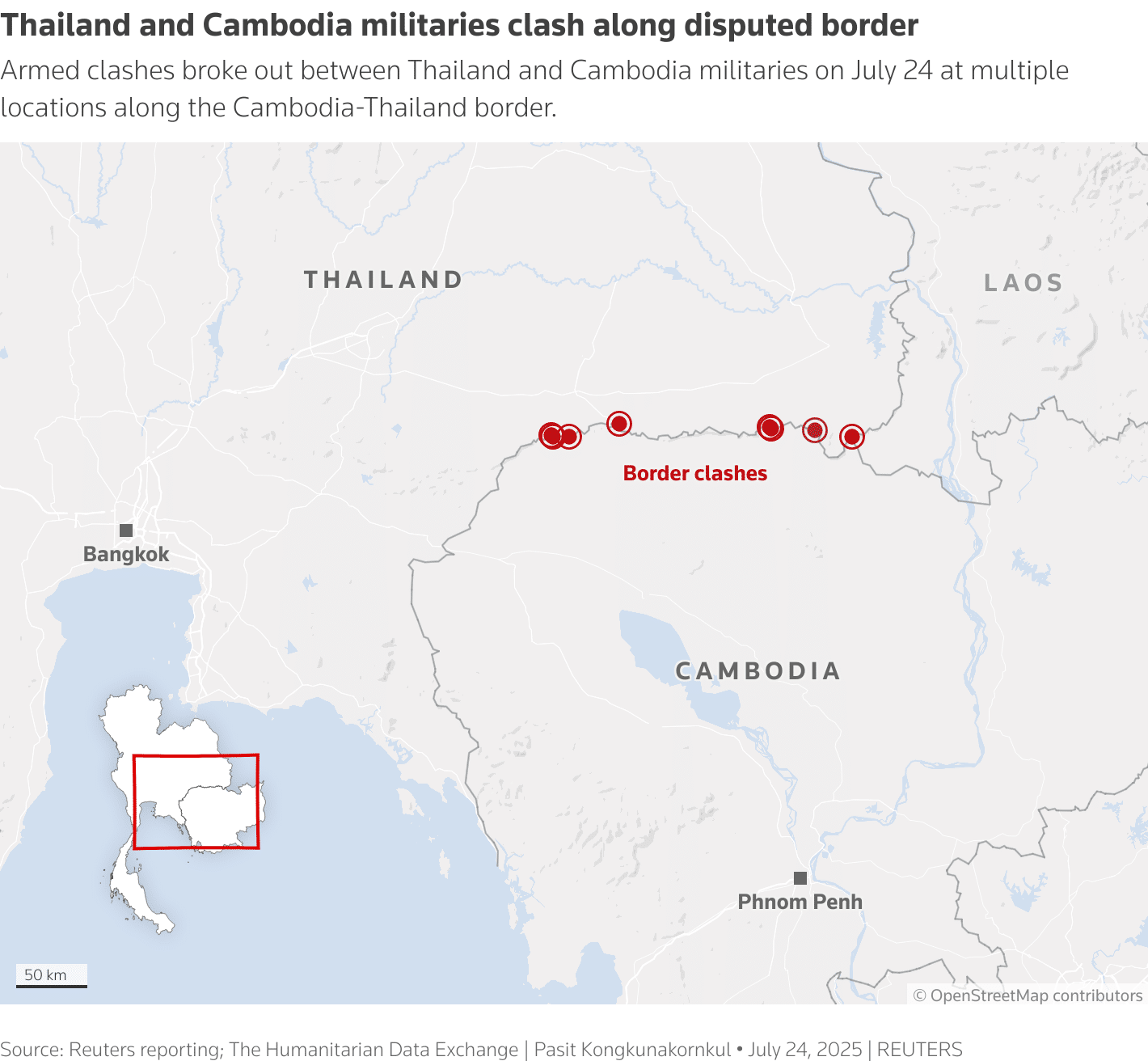
Source: REUTERS
The very recent border conflict between Cambodia and Thailand is an example of the repercussions of unresolved territorial claims and historical issues. It also highlights how extreme forms of nationalism can further escalate tensions. This flare-up also reveals a growing pattern of modern-day conflicts that last not more than a week but disrupt the lives of millions of people for years to come, as observed in the Iran-Israel conflict last month۔