
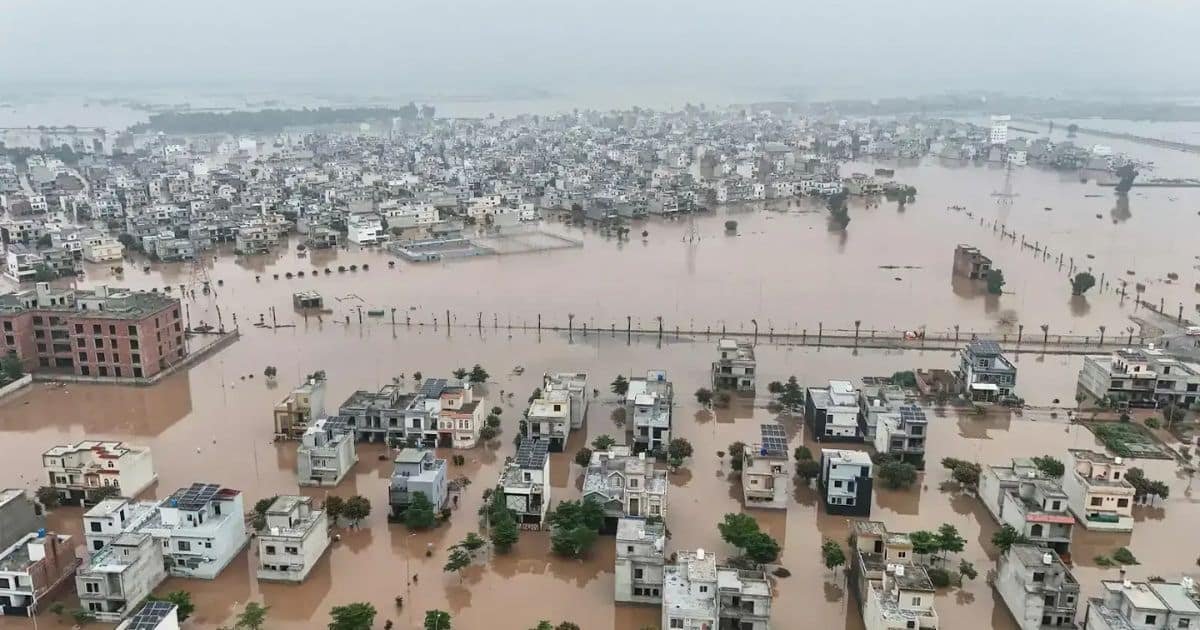





ISLAMABAD, September 26, 2025: Pakistan is grappling with one of the worst monsoon disasters in recent history, as floods have damaged thousands of schools, submerged villages, and destroyed millions of acres of crops across Punjab, Khyber Pakhtunkhwa, Azad Jammu and Kashmir, and Sindh, leaving millions displaced and communities struggling to recover.
The recent floods across Pakistan have caused severe damage to the country’s agriculture sector, destroying approximately 2.5 million acres of crops —equivalent to 7.7 % of the total cropped area.https://t.co/9S7EU9zl6d#floods2025 #floodsinpakistan #brecordernews pic.twitter.com/6OGOWv2bSI
— Business Recorder (@brecordernews) September 26, 2025
Key Highlights
- Over 4,700 villages inundated in Punjab, with crop damage exceeding 2 million acres.
- Khyber Pakhtunkhwa reports up to 266 schools destroyed and vital roads washed awa.y
- AJ&K confirms 37 deaths, dozens injured, and significant infrastructure loss.
- Sindh braces for a “super flood,” with tomato, rice, sugarcane, and cotton crops devastated.
Widespread Destruction Across Provinces
In Punjab, the floods have wreaked havoc on agricultural belts, submerging more than 4,700 villages and destroying between 1.05 to 2.2 million acres of crops. Cotton, wheat, and sugarcane fields lie under water, with more than 4.7 million people affected. Relief camps, many set up in damaged school buildings, are housing displaced families.
In Khyber Pakhtunkhwa (KP), between 93 and 266 schools have been destroyed according to varying reports, alongside 3,233 acres of farmland. More than 437 kilometers of roads and 52 bridges have collapsed, leaving over 1.6 million residents cut off from vital supplies.
Azad Jammu and Kashmir (AJ&K) has recorded 37 deaths and 31 injuries so far, along with widespread infrastructure damage. Officials say the final tally of school and crop losses will only be available once floodwaters recede.
WATCH: Massive floods in Pakistan have struck both the rural heartland and industrial centers for the first time in decades, causing billions of dollars in damage while straining food supplies, exports and a fragile economic recovery https://t.co/uWQAY8neiw pic.twitter.com/pDzcTThCNa
— Reuters Asia (@ReutersAsia) September 23, 2025
Sindh Braces for Downstream Surge
In Sindh, authorities warn of a “potential super flood” as Indus waters surge downstream. So far, 224 houses have been destroyed, and up to 80 lives lost. Agricultural losses are severe, with reports indicating 70–80% of Badin’s tomato harvest was wiped out, alongside major destruction of rice, sugarcane, cotton, and vegetable crops. Transportation routes have slowed, with cargo delays of two to three days as infrastructure struggles under the pressure.
Record monsoon rains since late June, amplified by dam releases from India, have submerged large swathes of Punjab and Sindh, causing billions of dollars in damage while straining food supplies, exports and a fragile economic recovery https://t.co/KYtWk85WGQ pic.twitter.com/B7omp05p4G
— Reuters (@Reuters) September 23, 2025
A National Challenge Requiring Urgent Response
Officials caution that comprehensive figures will only be released after provincial disaster management authorities complete assessments. Yet the available data already reveals the enormous human, economic, and agricultural toll of the 2025 floods.
With millions displaced and livelihoods destroyed, Pakistan faces the urgent task of rehabilitation—restoring education, rebuilding infrastructure, and protecting communities from future climate-driven disasters.
You May Like To Read: