




Water is vital in South Asia. Yet it is scarce. Pakistan, as the lower riparian in the Indus basin, depends heavily on these waters. The Indus and its tributaries provide about 80% of the country’s irrigated agriculture and hydropower. In 1960, the Indus Waters Treaty (IWT) was signed. The World Bank brokered it. The treaty gave Pakistan control of the three “western” rivers – Indus, Jhelum, and Chenab. India received the “eastern” rivers – Ravi, Beas, and Sutlej.
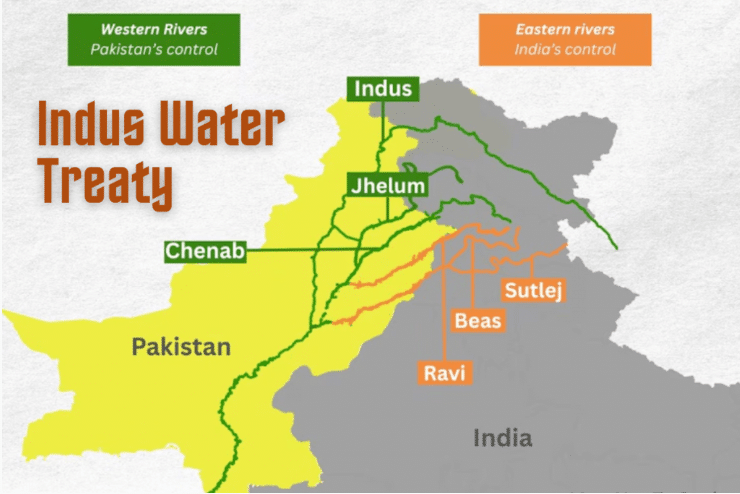
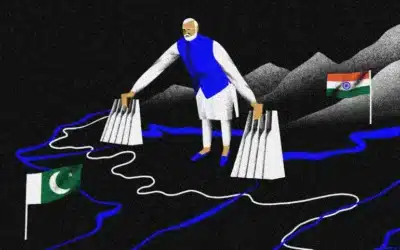
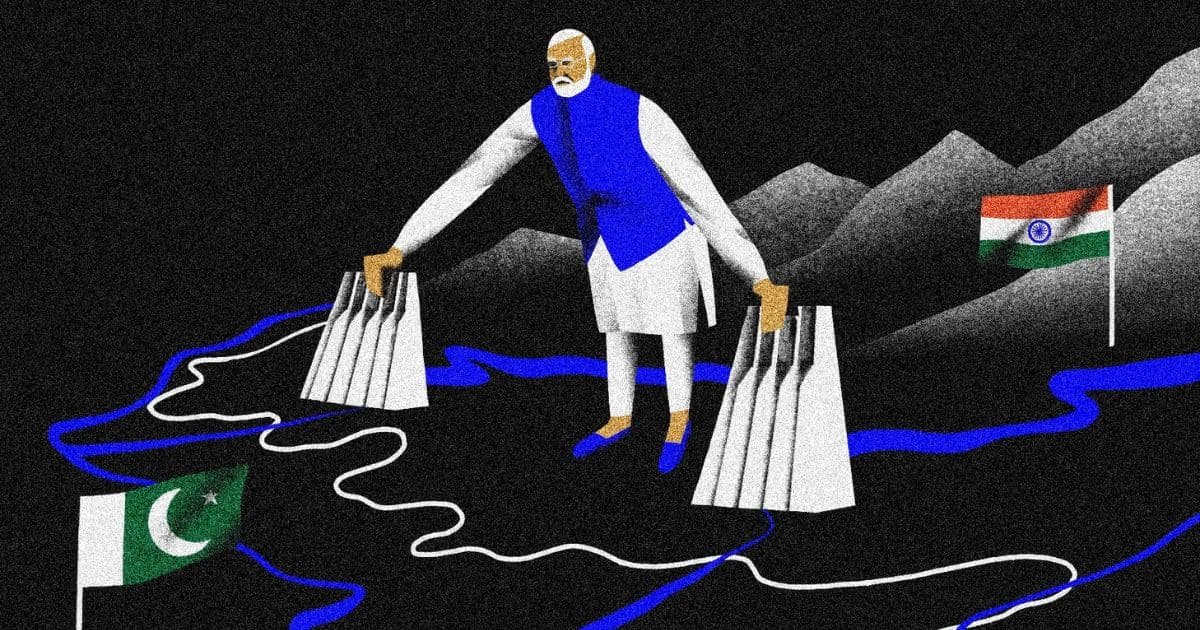
Source: Insight UK
Indus Water Treaty
The IWT is often called one of the most durable bilateral agreements in the region. It has survived three wars. It has endured decades of political tension. Even during deep diplomatic rifts, the treaty worked as a backchannel. It proved its resilience as a legal framework. Year after year, the IWT ensured a steady allocation of water. For Pakistan, this meant the survival of its farms and food security. For more than sixty years, the system held firm, even in times of crisis.
India’s Treaty Suspension Sparks Water Security Crisis for Pakistan
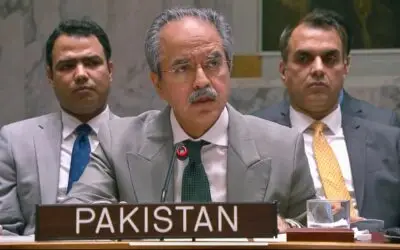
Water diplomacy in South Asia is under strain. Political crises now link directly to water-sharing. In April 2025, after a Pahalgam incident in Illegal Indian Occupied Kashmir, New Delhi declared it would place the Indus Waters Treaty “in abeyance” until Pakistan ended cross-border terrorism. Islamabad rejected the move, calling it “an act of water warfare.” Pakistan’s Power Minister Awais Leghari stated that “every drop is ours by right, and we will defend it with full force, legally, politically and globally,” describing India’s unilateral suspension as both “cowardly” and unlawful.
The treaty does not contain a clause for unilateral suspension. India cannot place it in abeyance on its own. Islamabad is preparing legal action at the World Bank, the PCA, and the ICJ. Pakistan’s position is firm. The Indus waters are vital for food, industry, and daily life. Any cut or diversion is seen as a threat to national security. A Pakistani analyst warned, “This is a true war.” The warning comes as flows are already shrinking. Climate change has resulted in a 20-25% reduction in water compared to last year.
India’s foreign secretary has announced:
-Indus Waters Treaty suspended
-Attari-Wagah border to be closed
-India to reduce diplomatic presence in Pakistan
These are highly consequential retaliations, esp. #1. In 2019, India threatened to suspend IWT but didn’t follow through.— Michael Kugelman (@MichaelKugelman) April 23, 2025
Pakistan is facing one of its worst flood disasters. At least 849 people have died, and more than 1,130 are injured. Millions are affected nationwide. Khyber Pakhtunkhwa has suffered 465 deaths and mass displacement. Punjab is enduring its largest flood in history, with over 2 million people impacted. Sindh is bracing for a “super flood.” Tensions with India have worsened the crisis. In April 2025, New Delhi suspended the Indus Waters Treaty. In August, the Madhopur barrage gate collapsed, sending water into Lahore. Pakistan condemned the incident as a breach of international law. Troops are distributing rations, clearing roads, repairing bridges, and running medical camps across the affected regions.
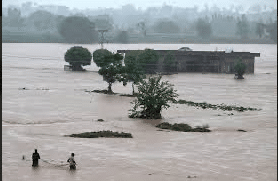
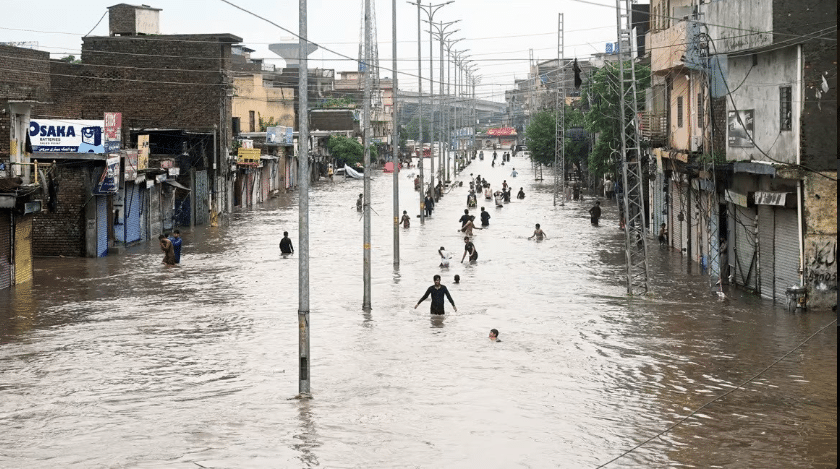
Pakistan Flood Disaster 2025
Climate Change and Rising Risks to Pakistan’s Water Security
Climate stress is raising the stakes of water diplomacy. South Asia now faces erratic monsoons and melting glaciers. For Pakistan, the risks are severe. Nearly 80% of its farmland relies on water from the Indus Basin. Even brief disruptions can cripple crops and food supply. In May 2025, water at a major canal intake in Pakistan dropped by almost 90% during Indian dam maintenance. The head of Pakistan’s agricultural research warned that unstable flows pose a threat to the future of farming. Wheat, rice, and sugarcane are most at risk. Farmers’ leaders share this alarm. They call any stoppage an act of hostility, especially as rainfall declines and snow reserves shrink.
You May Like To Read: Countering Indian Influence in the Gulf: Soft Diplomacy or Strategic Presence?
Treaty Mechanisms and Limited Space for Cooperation
Despite conflict, cooperation has also surfaced. The Indus Waters Treaty created a permanent Indus Commission. Over the years, it has resolved numerous disputes related to dam design and water flows. The treaty remained in effect even during the 2019 Pulwama crisis and the 2021 skirmishes. Experts stress that India cannot easily stop flows. Treaty limits keep its storage on the western rivers very small. This makes sudden stoppages technically hard. In practice, the suspension of data sharing would have the biggest impact. Maintenance alerts, release schedules, and flow reports might stop. Pakistan would still get its allocated share, but with more uncertainty. Indian experts note that projects like Kishanganga and Ratle are allowed. Yet they must follow strict rules. Pakistan has used neutral experts and arbitration to check compliance.
Source: Reuters
The Future of Water Diplomacy: Conflict, Cooperation, and Climate Resilience
This mix of conflict and cooperation defines water diplomacy. Pakistan views unilateral Indian steps and threats of water cuts as acts of aggression. At the same time, it calls for the treaty to be respected and adapted for climate resilience. Analysts suggest joint mechanisms could help. Real-time data sharing, joint water-management bodies, and neutral facilitation by the World Bank or regional forums are among the options. The IWT has been “a tool of stability in a volatile region.” Today, it must evolve into a dynamic cooperative mechanism to meet the challenges of climate change.
From Pakistan’s perspective, stronger water diplomacy means protecting treaty rights and pursuing wider engagement. The issue has global attention. Failure to agree even on data would deepen mistrust in other areas. Success, however, could build confidence. Transparent data-sharing, efficient basin management, and joint projects in dams or irrigation were part of the treaty’s original vision. If revived, these steps could show that the Indus is a source of unity, not division.
India’s suspension of the Indus Waters Treaty marked a dramatic escalation, the first of its kind. Pakistan, however, swiftly launched legal and diplomatic responses. Both sides still seek to avoid a “water war” on the ground. Pakistan’s foreign ministry declared that “every drop is ours by right, and we will defend it, politically and globally.” For Islamabad, the way forward is clear. Water diplomacy must be based on cooperation and respect for sovereignty, rather than unilateral brinkmanship. Courts and dialogue remain the primary tools for managing shared rivers.
You May Like To Read: India’s “Democracy” in Crisis: Election Commission Faces Mounting Allegations