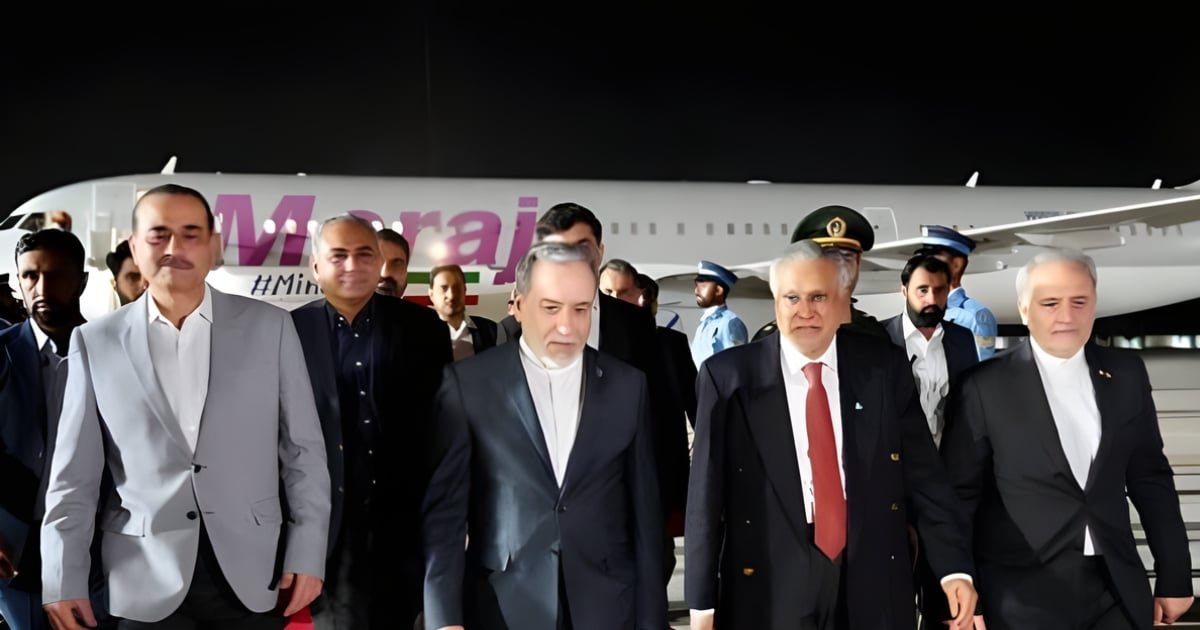





SAINT PETERSBURG (April 27, 2026) — Iranian Foreign Minister Abbas Araghchi arrived in Russia on Monday, marking the latest stop in a high-velocity “shuttle diplomacy” mission. Over the past 48 hours, Araghchi’s movements have centered on Pakistan as the primary mediator in the US-Iran stalemate. In a statement issued upon his arrival in St. Petersburg, the Foreign Minister provided a detailed breakdown of his intensive consultations, aimed at redefining the “path and conditions” for continued engagement with Washington after the previous round of talks failed to meet Tehran’s goals.
Highlights
- Araghchi visited Islamabad twice in 48 hours, sandwiching a strategic trip to Oman in between.
- Iran confirmed Pakistan remains the central mediator for conveying written “red lines” to the United States.
- Talks in Muscat focused on the Strait of Hormuz, where both countries share coastal jurisdiction.
- Following the cancellation of US envoys’ visit to Pakistan, negotiations have transitioned to a remote, document-based format.
- The tour concluded in Russia for high-level consultations with President Vladimir Putin on regional war developments.
Iran’s FM Araghchi TOUCHES DOWN in Saint Petersburg ahead of talks with President Vladimir Putin pic.twitter.com/seWWqqCEmg
— RT (@RT_com) April 27, 2026
The First Islamabad Leg: Setting the Terms
The mission began with an urgent arrival in Islamabad late Friday. Araghchi met with the Chief of Defense Forces, Field Marshal Asim Munir, and the Foreign Minister, Ishaq Dar, to deliver Tehran’s formal response to U.S. proposals. During this initial phase, the Iranian side reviewed the “wrong approaches” of the previous negotiating rounds. Araghchi emphasized that for dialogue to continue, the U.S. must move away from “excessive demands” that had previously stalled progress.
The Muscat Intervention: The Hormuz Factor
Between his Islamabad stops, Araghchi flew to Oman, a “friendly and close” neighbor. This leg was dedicated almost exclusively to the crisis in the Strait of Hormuz. As the two coastal states overlooking the world’s most vital energy chokepoint, Iran and Oman held “expert-level” talks to coordinate on maritime safety. Araghchi noted that any action taken in the Strait directly involves the interests of both nations, seeking a common ground to manage the global economic shockwaves caused by the current blockade.
Appreciative of my gracious hosts in Oman.
Important discussions on bilateral matters and regional developments. As only Hormuz littoral states, our focus included ways to ensure safe transit that is to benefit of all dear neighbors and the world.
Our neighbors are our priority pic.twitter.com/QffTsjCWgW
— Seyed Abbas Araghchi (@araghchi) April 26, 2026
Return to Islamabad: Finalizing the “Written Track”
Returning to the Pakistani capital for a second time, Araghchi solidified the “Islamabad Channel” as the primary vehicle for indirect communication. With President Trump scrapping the visit of his envoys, Steve Witkoff and Jared Kushner, the focus shifted to a written exchange. Iran utilized this return visit to ensure that “friends in Pakistan” were fully briefed on the “red lines”—specifically regarding nuclear sovereignty and the lifting of naval blockades—before these messages were relayed to the American side.
Arrival in Russia: Aligning the Strategic Front
The diplomatic marathon concluded in Saint Petersburg on Monday. Araghchi is scheduled to meet with President Vladimir Putin to synchronize positions following the “Ramadan war” hiatus. By briefing Moscow on the outcomes of his Pakistan and Oman visits, Araghchi aims to ensure that regional allies are fully coordinated on the current situation. This stop signals that while Tehran remains open to the “Pakistan-mediated” path, it is simultaneously reinforcing its traditional strategic alliances.
You May Like To Read: President Zardari departs for a week-long China visit to anchor CPEC 2.0
Check out our latest video: