



Over the last few days, BBC Urdu has published two articles that have sparked debate among Pakistan’s political and security communities. One featured a caution by the Baluchistan government against civilians dealing with militants, and the other highlighted the contribution of Salman Akram Raja, a senior lawyer who became a representative of the Pakistan Tehreek-e-Insaf (PTI). Although the two articles may seem analytical and informative at first glance, they are selectively framed, slightly biased, and lack sufficient context. The BBC’s approach is also critically evaluated, but this piece presents a pro-Pakistan argument based on realism and national interest.
Security or Suppression? Interpretation of the Baluchistan Warning
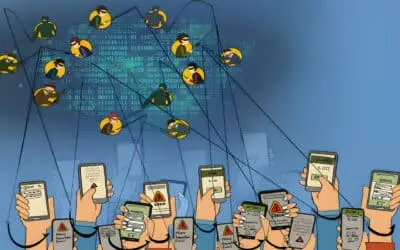
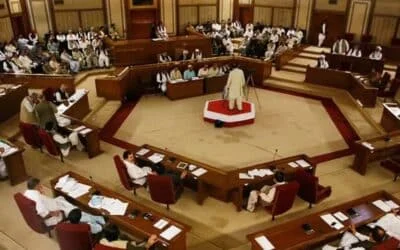
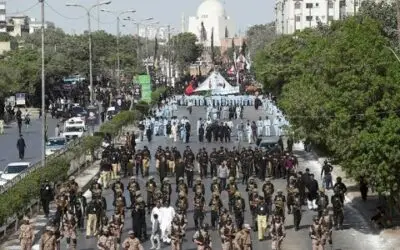
The first article condemns the preventive warnings issued by the government of Baluchistan, asking civilians not to make selfies or videos with the representatives of proscribed militant groupings. These messages, which are published in national newspapers, detail that anyone interacting with militants could be viewed as involved and would be held responsible in the event of military action.
The BBC depicts this action as blatant and invokes state panic. Such reading, however, is too basic to describe a highly complex security landscape. Baluchistan is a state where separatist violence has been taking place for more than twenty years. The Fitna-al-Hindustan (FAH), formerly known as BLA and other militant groups, have repeatedly attacked civilians, civilian infrastructures, and law enforcement.
You May Like To Read: Framing Under Question: Gaza, BBC, and Al Jazeera
Nowadays, these groups employ various tactics, and in recent years, they have expanded their presence into cities, blocking highways and making their presence known publicly. Videos of civilians communicating with armed rebels cannot be perceived as some innocent manifestation of curiosity. Still, they are propaganda tools that spread misinformation and pose a risk to the lives of ordinary people. The warnings of the state, thus, are not only preventive but also protective. They are similar to comparable measures taken by Western democracies in cases of domestic upheavals or terrorism.
This BBC storyline is more dominated by criticism. It cites analysts who define the warning as a fear of and failure by the government. What it does not say, though, is that in conflict areas, the state is supposed to be on the offensive. In terms of hybrid warfare, with information and perception being used as a weapon, the glorification of militant organizations poses significant threats to national security. This is not authoritarianism; this is responsible governance that informs and educates the population.

Source: BBC Urdu
Salman Akram Raja: Between Civility and Chaos
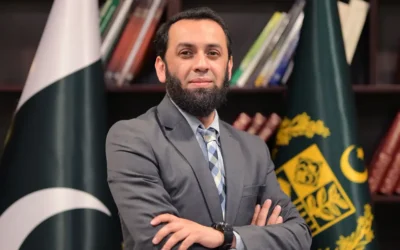
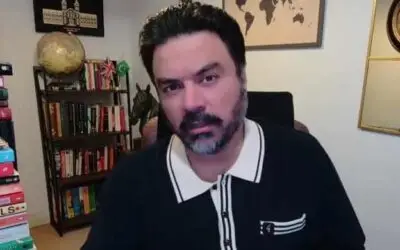
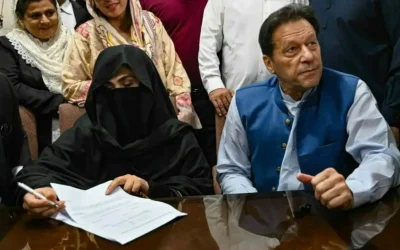
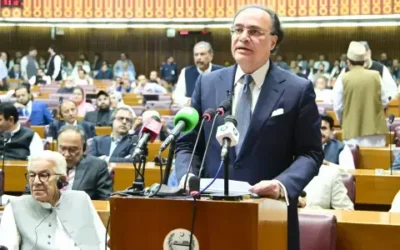
The second article romanticizes Salman Akram Raja, a familiar constitutional lawyer who has recently been elected Secretary General of PTI. The BBC presents Raja as a strong, civilized voice, which does not align with the politically volatile PTI environment. The article indicates that the frustration and lack of control by Raja show how unhealthy the PTI is and, by extension, Pakistani politics.
Although it is quite logical to admire the relaxed and intellectual image of Raja, the article capitalizes on it. It makes an unreasonable generalization about PTI, thereby impairing its legitimacy. Raja is not a politician of the masses. He was not invited to lead rallies and dictate the internal party discipline; he is here to assist PTI in managing its legal difficulties. His weak power does not stem from a political failure; rather, it is a matter of role mismatch.

Source: BBC Urdu
What BBC Misses: A Transition Nation
Neither of the articles provides the bigger picture of Pakistan. The country faces immense challenges, including political instability, economic constraints, regional insecurity, and hybrid warfare. The judgment of state decisions, legal, administrative, or political, in such a climate can be considered valid only in terms of peacetime liberal standards.
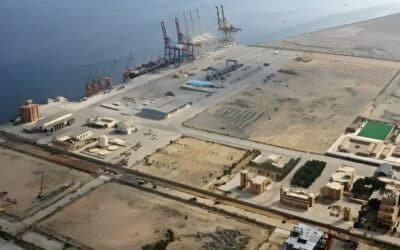
Development projects, including CPEC, infrastructure development, and security missions, are underway in Balochistan. However, the BBC article focuses on the sensational part of the public warnings, without paying any attention to the groundwork progress. Likewise, the Salman Akram Raja article overlooks the fact that legal experts have become vital stakeholders in a political environment where judicial conflicts appear to be more significant than elections.
You May Like To Read: Sting Operations in Journalism: A Blunt Tool That’s Getting Risky in Pakistan
The way courts, media, and opposition parties in Pakistan are continuing to work, though under pressure, is not mentioned despite the huge magnitude of the crisis. By leaving out these dynamics, the BBC portrays only one side of the story: a weak state being vindictive toward opposition.
Conclusion
State criticism is crucial in a democracy. However, it should be fair, balanced, and contextual. Both BBC articles ignore significant security concerns and Pakistan’s political structure. Public advisories in Baluchistan reflect a focus on national security rather than authoritarianism. This is particularly evident in conflict zones. Oversimplifying these events can mislead people and create negative stereotypes about Pakistan. International media must point out that Pakistan is still a democracy, even if some politicians are trying to weaken it. The political process continues, even with arrests, bans, and censorship. There is still interest among the public, and the desire for justice and stability remains strong. This duality needs to be reflected in international narratives. The media should stop being cynical and offer constructive criticism based on facts. Pakistan does not seek external validation, but it deserves fair representation. Only then can journalism truly have an impact in a connected world.