




MUZAFFARABAD: High-level talks between the federal government and the Jammu Kashmir Joint Awami Action Committee (JAAC) began on Thursday in a bid to ease the tense situation in Azad Jammu and Kashmir (AJK). But progress was immediately hampered by a continuing communication blackout, which has not only paralysed daily life but also delayed negotiations aimed at de-escalation.
The meeting continued until late in the night on Thursday and talks with the government’s high-level committee were expected to resume on Friday morning.https://t.co/bRFDWkbd5m
— Dawn.com (@dawn_com) October 3, 2025
Key Highlights
- Federal ministerial team met JAAC leaders to address the ongoing crisis in AJK.
- Talks stalled after protest leaders demanded the lifting of the communication blackout.
- The blackout has disrupted coordination, fuelled misinformation, and complicated relief efforts.
- PM Shehbaz sent senior ministers to Muzaffarabad, urging peaceful dialogue and restraint.
- At least nine people, including three policemen, have died in recent clashes.
- Strikes continue across AJK as convoys and crowds gather under information restrictions.
- Rights groups have urged the government to restore communications as a confidence-building step.
Talks Begin but Stumble Over Blackout
The federal delegation, comprising senior ministers from both PML-N and PPP, met JAAC leaders in Muzaffarabad on Thursday. While both sides described the initial atmosphere as “constructive,” negotiations did not continue after JAAC leaders demanded the restoration of mobile and internet services before further engagement.
Leaders explained that the information blackout has prevented core members from Poonch and Mirpur divisions from fully participating in consultations. Without connectivity, coordination between different regional chapters remains fragmented, slowing the path to meaningful dialogue.
“Before anything else, communications must be restored so that all sides can consult transparently,” said JAAC’s Shoukat Nawaz Mir.
You May Like To Read: Nine Dead Amid AJK Protests; Communication Blackout, Delays Undercut Trust in Negotiations
Blackout Deepens Uncertainty
The communications shutdown — imposed since Monday — has left large parts of AJK cut off from real-time information. Residents have struggled to verify reports from other districts, fuelling confusion and mistrust. Authorities, too, face hurdles in conveying security updates and relief measures, as well as countering misinformation spreading through informal channels.
The blackout has also paralysed the region economically and socially, with shutter-down and wheel-jam strikes entering their fourth consecutive day. Attendance in government offices is low, and movement between districts remains restricted.
You May Like To Read: CTD, Army Kill 21 Terrorists in Quetta, Sherani, Kech; 4 Captured in Khuzdar
Government Calls for Dialogue, Urged to Lift Restrictions
Prime Minister Shehbaz Sharif dispatched the ministerial team, urging both sides to resolve grievances through dialogue. He called on law enforcement agencies to exercise restraint, ordered investigations into the recent deaths, and expressed solidarity with the people of AJK.
Lifting the blackout, observers say, would send a strong signal of goodwill and help create an environment conducive to serious, transparent negotiations. It would also allow both sides to counter rumours and misinformation, which have escalated amid the information void.
Ground Realities Remain Volatile
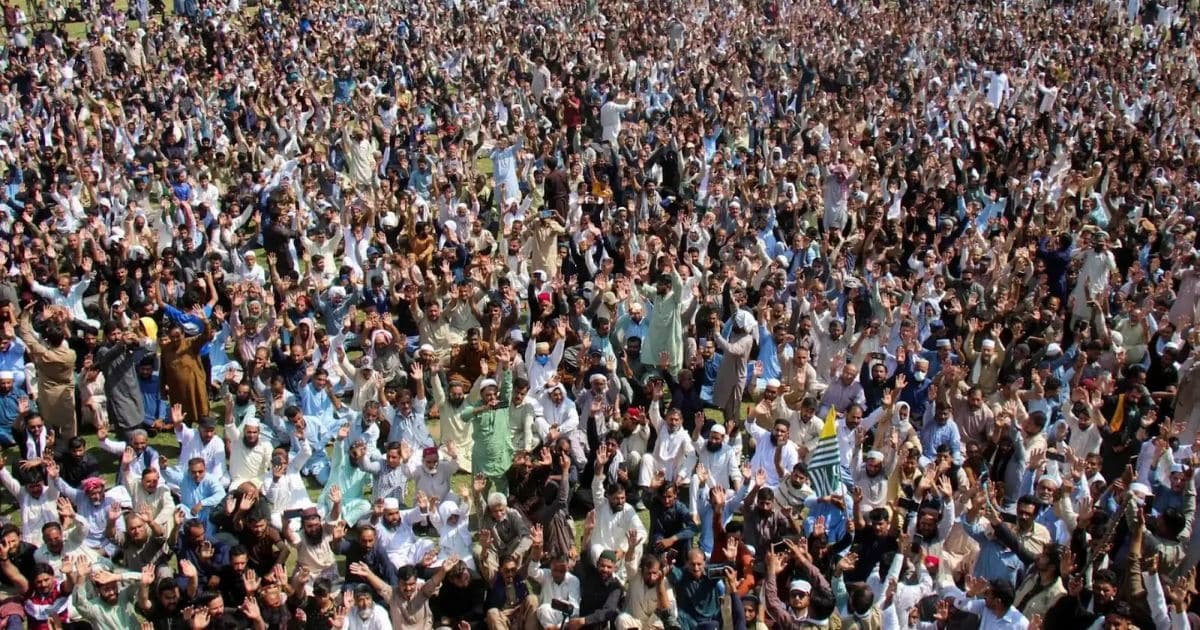
On the ground, convoys and crowds continue to converge on Muzaffarabad, where funerals of victims have drawn large gatherings demanding justice. The government has confirmed nine deaths, including six civilians and three police personnel, while JAAC claims the toll among protesters is higher. These figures remain difficult to independently verify due to the blackout.
You May Like To Read: Islamabad Students Protest CDA Crackdown on Private Hostels, Reach Settlement
Path Forward
Talks are expected to resume once JAAC completes its internal consultations, though the timeline remains uncertain. Rights organisations, including Amnesty International, have urged authorities to restore communications immediately, safeguard the right to peaceful assembly, and prioritise transparency to rebuild trust.
Restoring communication, many analysts believe, is not just a technical decision but a political gesture that could help lower tensions and demonstrate the government’s seriousness about resolving the crisis through dialogue rather than confrontation.
You May Like To Read: Pakistan Condemns Israeli Attack on Gaza Aid Flotilla, Demands Release of Detained Activists