



Pakistan stands at a critical crossroads in global narcotics trafficking. Afghanistan remains the largest opiate producer. More than 90 percent of global opium comes from Afghanistan. Pakistan serves as the primary transit corridor. The Durand Line borders span 2,640 km between the two countries. Pakistan’s terrain is rugged and porous. From an intelligence perspective, it is crucial to understand trafficking routes, networks, and weak points. This helps stop cross-border crime that threatens regional stability.
Afghanistan’s Production and Trafficking Trends
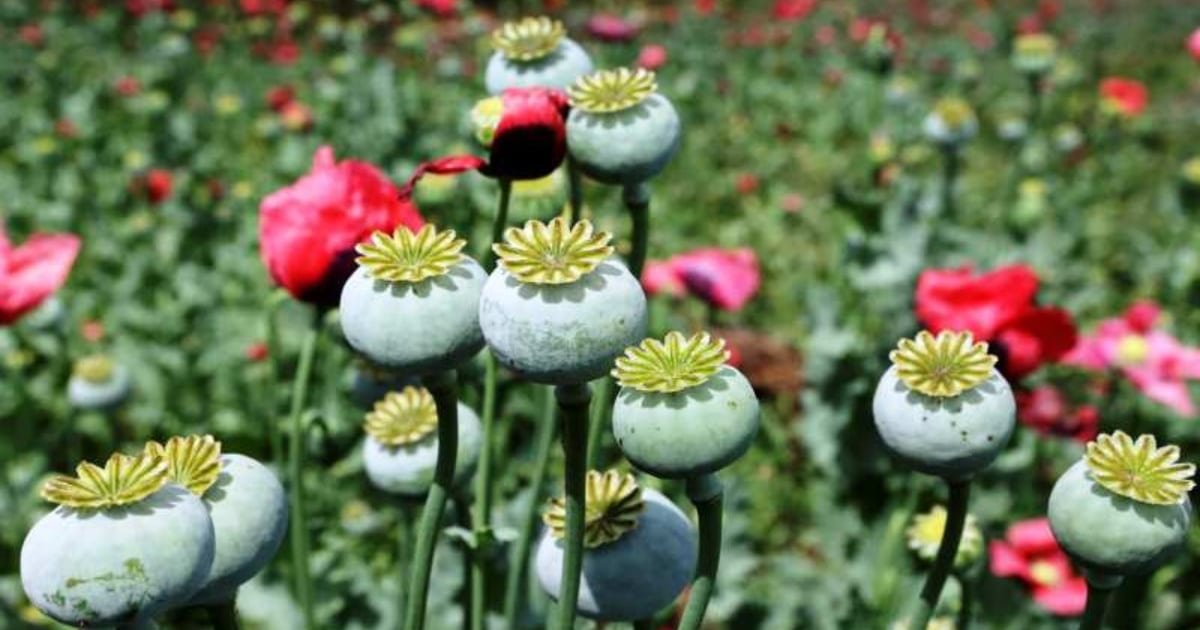
The Taliban banned poppy cultivation in April 2022. That caused a steep decline. Cultivation dropped by 95 percent in 2023, down to roughly 10,800 hectares. The Taliban pledged to take action against narcotics. The Taliban government issued a clear ban on the production and sale of illegal drugs. However, enforcement has been weak, and Afghanistan’s drug trade continues to thrive under their rule. In 2024, cultivation rose by 19 percent, reaching about 12,800 hectares. The center of cultivation shifted from the southwest to the northeast, especially in Badakhshan province. High opium prices have incentivized farmers to resume cultivation. Meanwhile, methamphetamine production has surged. UNODC notes rising meth supply and demand across the region. Meth often flows along the same routes used for heroin.
Source: Reuters
Overland Trafficking Routes
Main routes pass through southern Helmand and Kandahar provinces. They enter Pakistan via the tribal zones in Khyber Pakhtunkhwa. The terrain allows informal crossings. Tribal connections ease smuggling. Enforcement is weak. There are many unofficial border crossings in Khyber Pakhtunkhwa. Strong family and trade ties among tribespeople ease cross-border movement. They often move freely, making smuggling easier. A second corridor runs from southwestern Afghanistan into Balochistan, via Nushki, Chaman, and Chaghi near Quetta. Smugglers exploit sparse policing and remote terrain. The historic Khojak Pass remains a routable artery. Local networks use it to circumvent formal checks.
You May Like To Read: Legislation to Protect Minorities in Pakistan
Maritime Diversions via Makran Coast
From Balochistan’s Makran coast, traffickers ship meth and heroin via fishing boats or containers. Orders vary from small kilogram loads to container-scale exports. Most drug-trafficking routes from Afghanistan into Pakistan pass through Balochistan. The province shares long borders with Afghanistan and Iran, and has a wide coastline along the Arabian Sea. These borders provide many openings for smugglers. Large quantities of drugs enter Helmand from Balochistan’s Chagai district. From there, they are moved south to small fishing towns on the Makran coast. The drugs are then loaded onto boats or dhows headed for the Gulf and East Africa. Europe may be the final destination. These routes bypass land checkpoints.
Precursor Flow and Financial Channels
Traffickers depend on precursor chemicals like acetic anhydride. Pakistan served as a key transit route for precursor chemicals such as acetic anhydride, which are smuggled into Afghanistan to convert opium into heroin. Taliban labs and smuggling networks profit from this. Revenues from illegal trade can reach hundreds of millions each year. Drug money is transferred through hawala networks via the Gulf. These informal financial channels make it harder to enforce anti-money laundering laws.
Source: Dawn
Pakistan’s Intelligence and Enforcement Measures
Pakistan built a barrier along the Durand Line from 2017 to the end of 2023. It includes 2,640 km of fencing and trenches. It features razor wire, trenches, watchtowers, forts, and drone surveillance. The infrastructure deters traffickers and militants.
Pakistan’s Anti-Narcotics Force (ANF) leads enforcement. In 2024, ANF seized over 5,346 kg of drugs via ports, airports, and parcels. That included 745 kg of meth alone. Arrests and rehabilitation campaigns expanded. ANF operations increased regional visibility. Pakistan’s Anti-Narcotics Force (ANF), supported by intelligence agencies, increased operations in 2024. It conducted raids on land, at ports, and at airports. ANF seized over 113,798 kg of illegal drugs. The drugs were worth around USD 6.5 billion. Over 1,400 suspects were arrested. Among them, 184 were Afghan nationals. This shows cross-border networks remain active. ANF also destroyed poppy fields. It held thousands of awareness and rehab sessions. ANF worked closely with the Gulf states. In 2025, Pakistan hosted the Pak-GCC Counter-Narcotics Conference. Intelligence-sharing improved. Oman appointed a liaison officer in Islamabad. This step helped coordinate anti-drug actions.
Pakistan also partners with UNODC under a Triangular Initiative with Iran and Afghanistan. The three states agreed to boost intelligence sharing, build physical barriers, conduct joint operations, and track precursors and labs. Pakistan handles nearly 29 percent of regional heroin seizures; Iran accounts for about 47 percent.
Source: UNODC
Intelligence-Based Recommendations
- Border Fusion Cells. FC, ANF, intelligence, and locals should share data on informal crossings.
- Precursor Tracking. Monitor chemical inputs at industries and shipping channels.
- Maritime Surveillance and Cooperation. Work with Gulf and African partners to track shipments from the Makran coast.
- AML Regulation and Hawala Oversight. Strengthen tracking of value movement via informal channels.
- Economic Alternatives in Border Zones. Promote livelihood programs. Tie awareness and rehab services to community outreach.
- Adaptive Patrolling. Shift surveillance in line with shifting cultivation zones in Afghanistan.
You May Like To Read: Karachi’s Fight to Reclaim Its Streets
Conclusion
Pakistan lies at the frontline of narcotics transit from Afghanistan. It plays a dual role: transit hub and enforcement actor. Pakistan’s intelligence posture is robust. It includes border barriers, coordinated operations, and regional agreements. Still, evolving meth threats, adaptive smugglers, terrorist funding links, and trade-route abuse require ongoing vigilance.
With strong intelligence networks, proactive surveillance, community engagement, and regional coordination, Pakistan remains central to global efforts to curb Afghan-origin drugs. Its determined stance not only protects domestic security but also strengthens regional resilience against the complex, shifting landscape of drug trafficking.