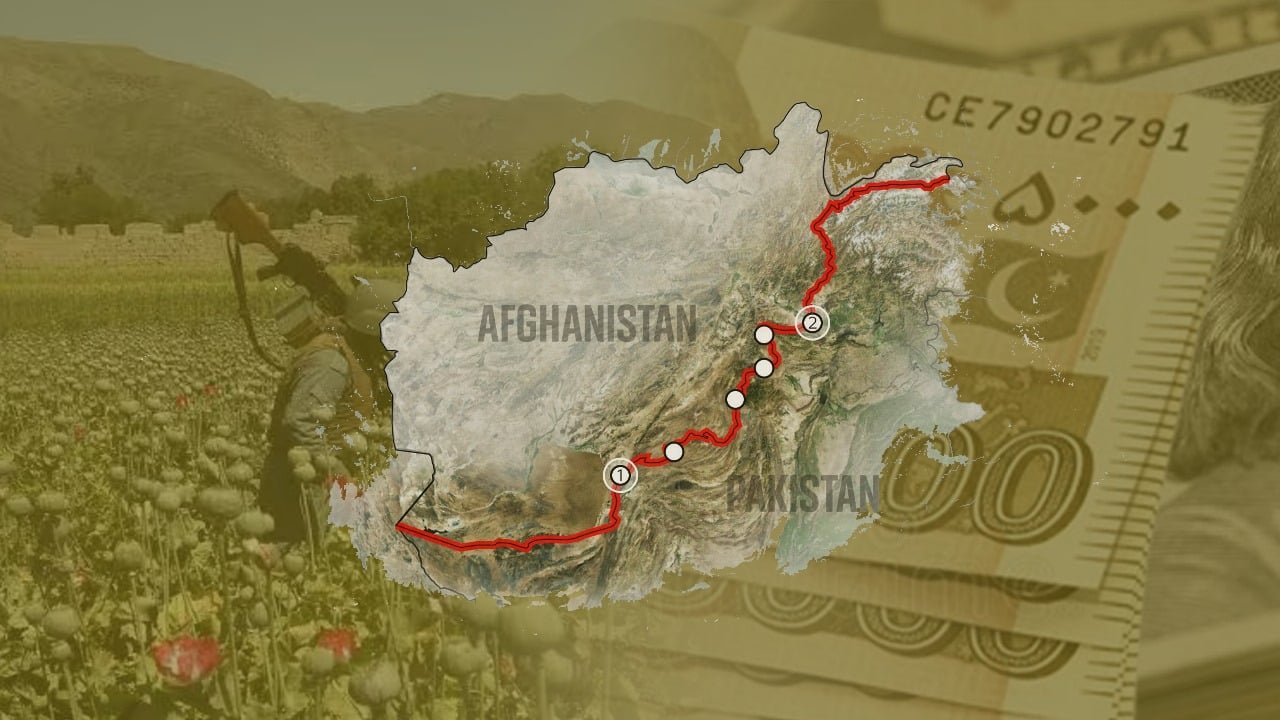
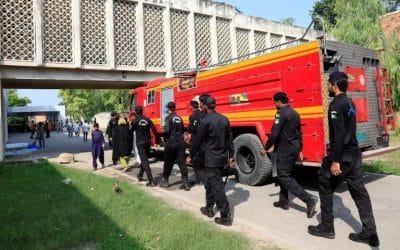


Following 2001, the war and Afghan opium boom led to a massive drug movement in Pakistan. According to the estimates provided by the UN agencies, Afghanistan is the major supplier of heroin in the world, and about 45 per cent of its opium (heroin) products pass through Pakistan to be supplied to destinations including the Middle East, Africa, and Europe.

Source: Al Jazeera
The Anti-Narcotics Force (ANF) in Pakistan started to intercept unprecedented amounts of opium/opiates, e.g., 24 metric tons of heroin/morphine in 2005 (27% of the global total), increasing to 35 tons in 2006 as a result of the opium boom. This narcotics business has been financing militant groups for a long time, and heroin still is moving freely across this porous border and making Pakistani cities a significant transit hub.
The trafficking of arms has also increased as a result of the wars in Afghanistan, as well as post-war. As US troops moved out in 2021, huge stockpiles of US weapons ended up in the possession of the Taliban. Analysts point out that although there has been a clampdown on small arms smuggling within the Taliban ranks, a substantial number of Afghan weapons have also seeped into the markets of Pakistan. Drugs and arms are often trafficked by insurgent and criminal networks together.
And lastly, there has been a rapid increase in human smuggling and trafficking due to the rise of conflict. There have been long cases of Afghan refugees flowing across the border seeking employment or refuge, and the smugglers and traffickers have targeted weak and vulnerable migrants. These human movements are more challenging to measure, but they add greater human and security burdens to Pakistan.

Source: UNHCR
Geopolitics and Conflict Dynamics
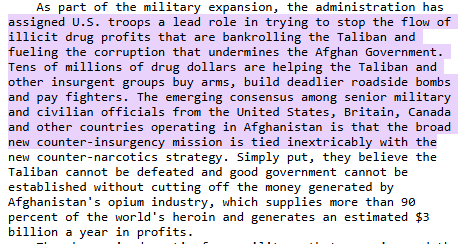
The change in geopolitics has had a profound impact on Pakistan’s border. The effort to counter narcotics was viewed as an important step in undermining the Taliban during the U.S./NATO operation in Afghanistan between 2001 and 2021, but results were minimal. Pakistan became more concerned recently after the withdrawal of NATO forces and the return to power of the Taliban in 2021, who are accused of sheltering the anti-Pakistan rebels (Fitna al Khwarij/FAK). Even though the Taliban banned poppy cultivation in 2022, experts are highly skeptical because there is no enforcement and no alternative activities to do.
Source: US Government Publishing Office
Shortly after the Taliban took control in 2021, Pakistan temporarily closed official crossings (e.g., Torkham, Chaman) and enhanced security activities. The persistent mutual distrust on each side, with Pakistan accusing Kabul of giving haven to militants, and the Taliban accusing Islamabad of interference, remains an obstacle to coordinated anti-smuggling activities.

Source: Amu TV
Pakistan’s Border Security Measures
Pakistan has significantly intensified its border security to stop the movement of illicit flows. Since 2017, Pakistan has already constructed a two-layer fence along the 2,640 km Durand Line. In early 2022, around 94 percent of the fencing was finished. The steel fence (3.6-4m high) is wired with coils and motion sensors and is reinforced by hundreds of fortified posts and watchtowers. Altogether, Pakistan has more than 1,200 border check-posts and hundreds of forts: 164 new forts were constructed in 2021 alone, bringing the total to 673 in the northwest.
The Frontier Corps (paramilitary troops) has been enlarged to include dozens of new battalion wings patrolling the rugged terrain along Baluchistan and Khyber-Pakhtunkhwa. Pakistani commanders say fencing and patrols have severely curtailed the ability of militants to move freely, with cross-border attacks into Pakistan by forces based in Afghanistan falling from 82 in 2019 to just 11 in 2020 after fencing began.

Source: DG ISPR
Customs and Trade Control
Islamabad has reformed the Afghanistan-Pakistan Transit Trade Agreement (APTTA) to reduce smuggling in trade. The new measures include expanded lists of prohibited trade items, known as “negative lists,” which ban the transport of goods prone to smuggling, and allow quotas on essential products. Each cargo vessel is monitored by a special department called the Directorate General of Transit Trade. Additionally, port officials claim to have a complete, real-time reconciliation of transit cargo data with Afghan customs through electronic track-and-trace surveillance, enabling them to monitor containers from the port to the border. Officials admit that despite these devices, goods still find their way back into Pakistan through informal channels. However, Islamabad credits these measures with reducing rampant smuggling and protecting local industry.
Continued Challenges and Cooperation
The Pak-Afghan border is still tense, with cases such as the May 2024 artillery conflict at Chaman because Pakistan planned to construct security checkpoints. Such skirmishes demonstrate the strong connection between the area of smuggling and militancy. Despite these flare-ups, Pakistan is operating efficiently daily, with major drug seizures and arrests. Peace talks, including the 2019 APTTA talks, have been ongoing, but a persistent political mistrust has repeatedly halted progress.
 Sources: Recorder
Pakistan insists that reducing smuggling would necessitate the cooperation of Afghanistan and international help. It has offered training and support to Afghanistan, but instability and the lack of cooperation due to accusations among the two countries of harboring extremists limit long-term collaboration.
Conclusion
Pakistan emphasizes that it is making substantial progress towards securing its Durand Line, particularly in terms of fencing, patrolling, customs reforms, and international collaboration. Although the infiltration by militants has reduced, versatile smuggling networks still pose a serious threat. Islamabad urges Talibans to implement anti-drug policies and embrace intelligence sharing to limit cross-border instability.