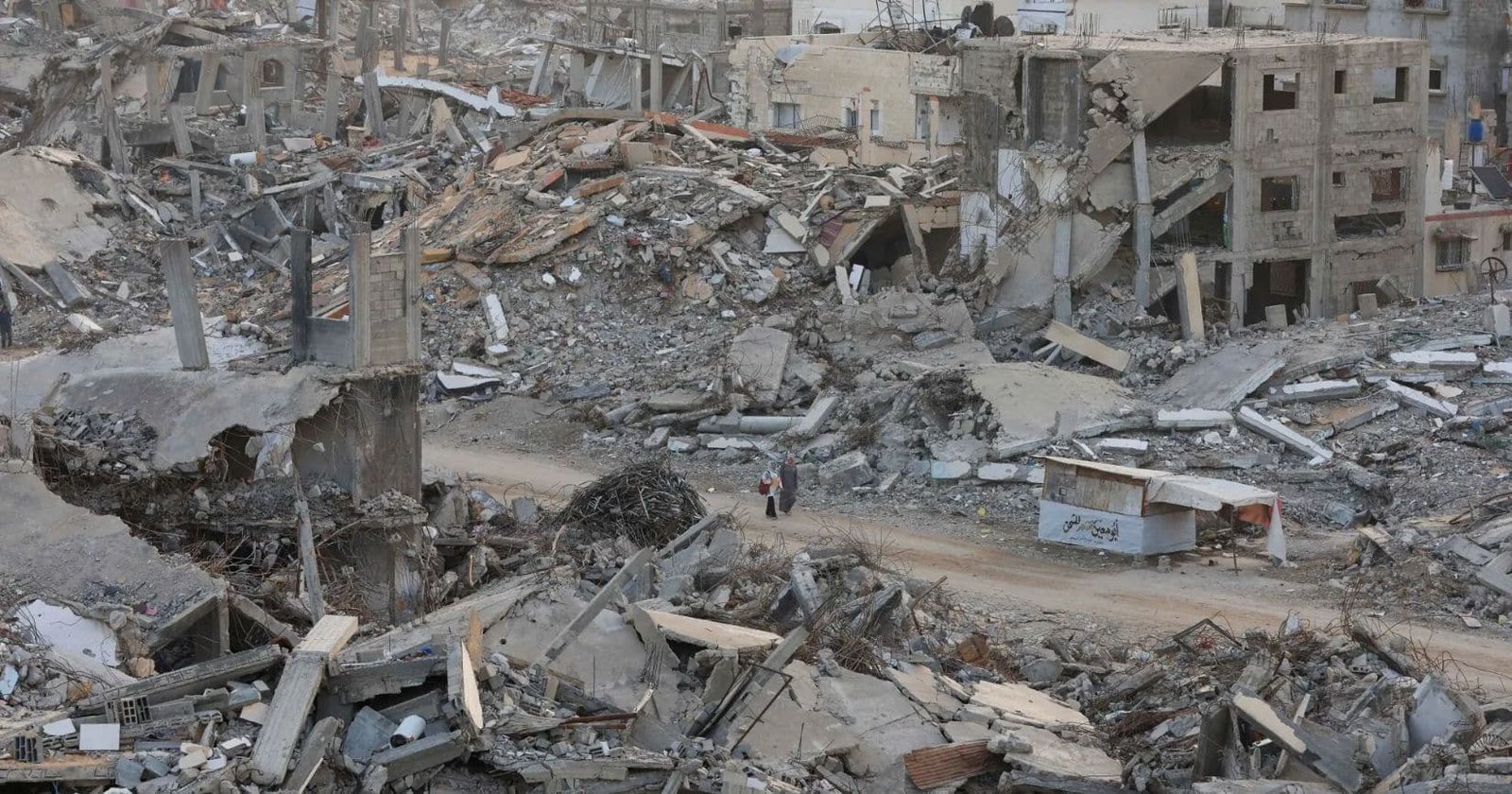





WASHINGTON: International troops could be deployed to the Gaza Strip as early as early 2026 to form a United Nations-authorised International Stabilisation Force (ISF), according to two US officials cited by Reuters, as diplomatic and military planning continues for the next phase of the Gaza peace process.
The officials, speaking on condition of anonymity, said the proposed force would not be tasked with fighting Hamas. Instead, its mandate would focus on stabilisation and security coordination following the initial phase of a US-backed peace plan. Discussions are under way regarding the size, composition, housing, training and rules of engagement of the force, with several countries reportedly expressing interest in contributing troops.
An American two-star general is being considered to command the ISF, though no final decision has been made, the officials said.
You May Also Like: SBP Confirms Receipt of $1.2bn IMF Tranche After Successful Programme Reviews
The deployment of the stabilisation force is seen as a central component of the second phase of US President Donald Trump’s Gaza peace initiative. Under the first phase, a fragile ceasefire in the two-year conflict took effect on October 10, during which Hamas released hostages and Israel freed detained Palestinians.
“There is a lot of quiet planning that’s going on behind the scenes right now for phase two of the peace deal,” White House spokesperson Karoline Leavitt told reporters on Thursday, adding that the goal was to ensure a durable and lasting peace.
Indonesia has publicly stated that it is preparing to deploy up to 20,000 troops as part of the ISF, primarily to carry out health services and construction-related tasks in Gaza. Indonesian Defence Ministry spokesperson Rico Sirait said preparations were still at an early stage, with work ongoing on the organisational structure of the proposed deployment.
Under the UN Security Council mandate, the ISF is authorised to operate alongside newly trained and vetted Palestinian police forces. Its responsibilities include supporting security stabilisation and facilitating the demilitarisation of Gaza, including the dismantling and prevention of rebuilding military infrastructure and the decommissioning of weapons held by non-state armed groups. However, questions remain about how this mandate would be implemented in practice.
🔊PR No.3️⃣7️⃣5️⃣/2️⃣0️⃣2️⃣5️⃣
Joint Statement by the Foreign Ministers of Pakistan, Egypt, Indonesia, Jordan, Qatar, Saudi Arabia, Türkiye, and United Arab Emirates
🔗⬇️https://t.co/OcZxvZlvxr pic.twitter.com/o8JAydWlq6
— Ministry of Foreign Affairs – Pakistan (@ForeignOfficePk) December 12, 2025
US Ambassador to the United Nations Mike Waltz said the force was authorised to demilitarise Gaza “by all means necessary,” including the use of force, though he noted that rules of engagement would be discussed with participating countries.
Hamas has said it has not been formally approached by mediators — the United States, Egypt and Qatar — on the issue of disarmament, reiterating its position that it will not disarm until a Palestinian state is established.
Separately, the foreign ministers of eight Muslim and Arab countries — Saudi Arabia, Egypt, Jordan, the UAE, Indonesia, Pakistan, Turkey and Qatar — issued a joint statement reaffirming support for the UN Relief and Works Agency for Palestine Refugees (UNRWA). The statement followed reports that the Trump administration has discussed designating UNRWA as a terrorist organisation, a move the ministers warned against, describing the agency as indispensable for Palestinian refugees.
Check out our latest video: