




Drone warfare is usually associated with the 21st century. However, it originated in the Cold War period. The U.S. used the Ryan Model 147 Lightning Bug drones in 1964 to spy over China and North Vietnam, making a record 3,400 sorties. The 1982 Lebanon War also saw Israel employ drones strategically to counter Syrian air defenses. By the Gulf War in 1991, drones were also used for reconnaissance, paving the way for the armed drones that followed.
Types of Drones and Their Battlefield Roles
Reconnaissance UAVs
These drones are primarily used for surveillance and intelligence purposes. Some examples include the hand-launched RQ-11 Raven and the AeroVironment Wasp. They offer real-time situational awareness to forces in the forward.
Combat / Strike Drones (UCAVs)
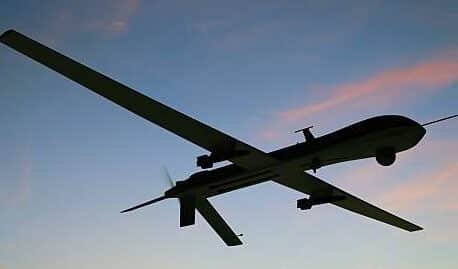
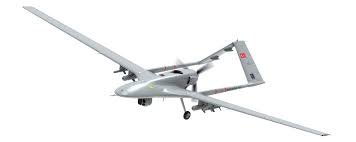
Medium- or high-altitude combat drones are equipped with precision-guided ammunition. The MQ-9 Reaper (US) and Bayraktar TB2 (Turkey) are most commonly used for tactical attack.
Loitering Munitions (Suicide Drones)
Loitering Munitions destroy themselves on impact. Some examples are the Harpy, Switchblade 300, and the Ukrainian improvised quadcopters. They combine surveillance with end-strike capability.
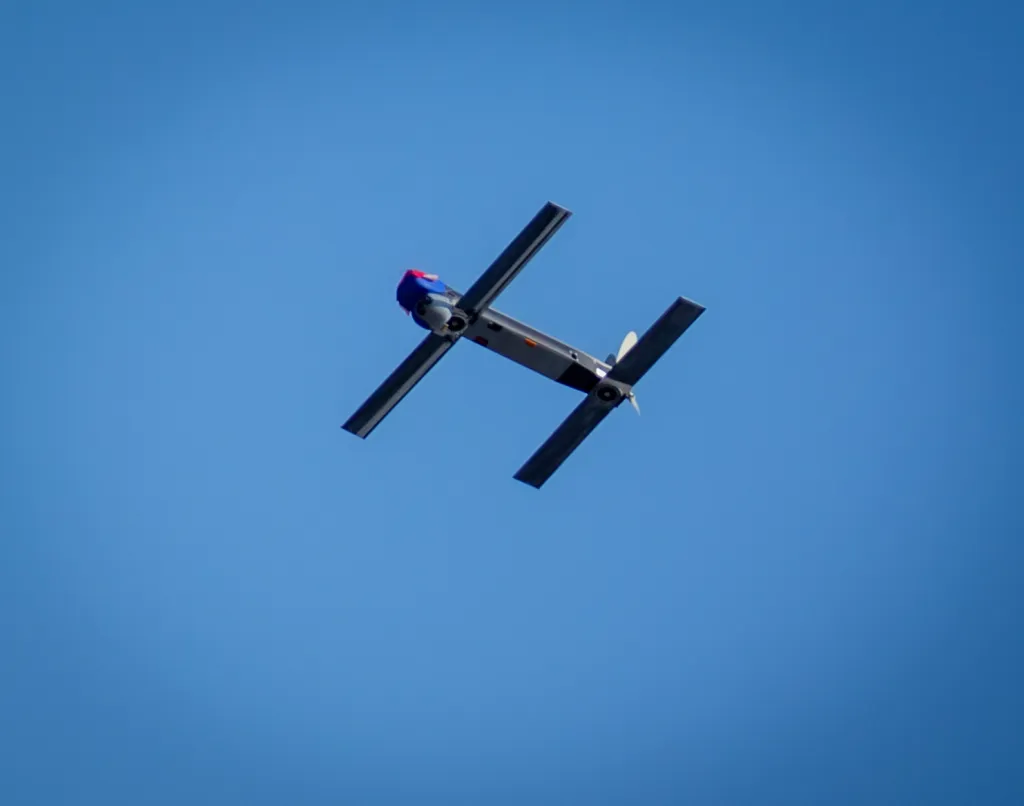
Source: FEDSCOOP
Swarm Drones
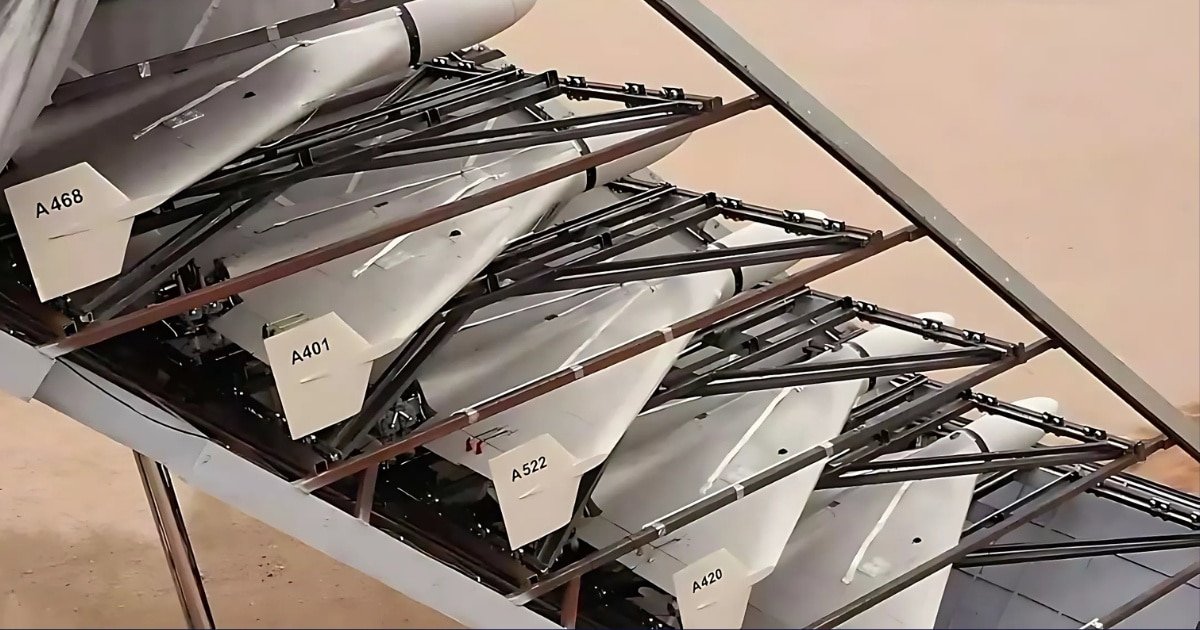
Swarm Drones are employed during coordinated attacks. These drones operate independently in swarms to flood enemy defenses, a recent example being Iran’s 170-drone attack on Israel in April 2024.
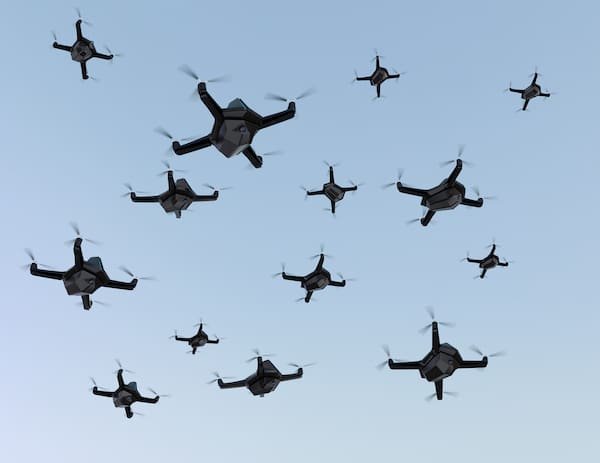
Source: Sentient Digital.Inc.
Fiber-Optic Guided FPV Drones
These drones are a comparatively newer development. They are tethered through fiber-optic cables for jam-proof navigation and penetration to distant targets. Russia has utilized them successfully in Ukraine.
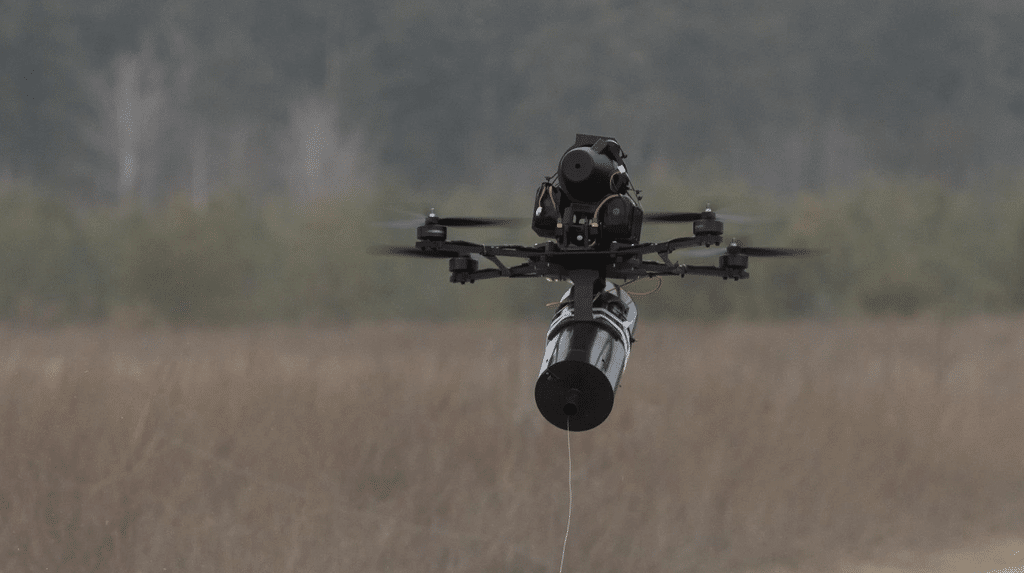
Source: Wikipedia
Logistics Drones
Logistic drones are usually deployed for supply drops, battlefield resupply and medical evacuation thereby minimizing human presence in hostile zones.
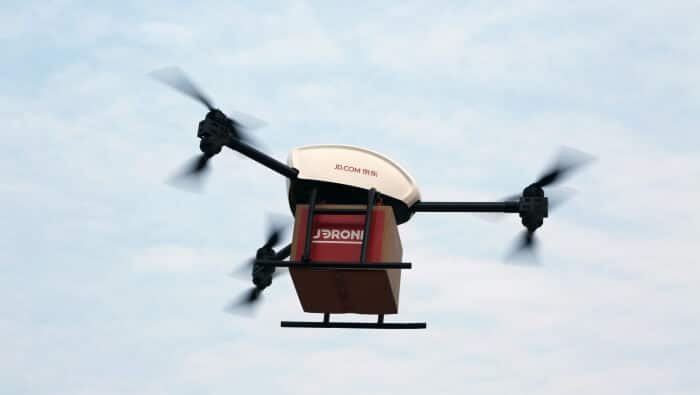
Source: Jingdong
Thermite ‘Dragon’ Drones
Ukraine has used fire-bombs to spray molten thermite that had ignited forests and fortifications. Such drones take up the form of literal fire-breathing dragons and are extremely lethal.
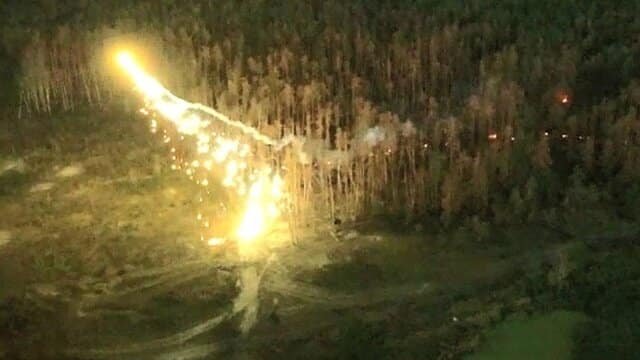
Source: ISNA
Technological Advancements:
AI and Autonomy
Some of the most notable advancements in drones are now in the field of AI. Companies like Auterion are making “strike kits” that can convert commercial drones into AI-enabled, jam-resistant weapon systems (FT).
Sensors and Surveillance
Commercial drones are, at present, integrating optical, IR, radar, and thermal imaging systems that provide high-precision intelligence.
Mass Production
Ukraine’s drone production is expected to rise to 2.2 million in 2024 and is projected to reach 4.5 million by 2025. These are inexpensive and frequently crowdfunded drones. Most of them cost less than $1000 and have transformed asymmetric warfare.
Jet-Powered Shahed Clones
Russia has recently introduced the jet-powered Shahed-238, which can fly at 500 mph. These drones are also hard to shoot down with traditional systems.
Drones in Modern Conflicts
Ukraine–Russia War
Bayraktar TB2s have destroyed tanks and logistics hubs. DIY quadcopters have become the backbone of Ukraine’s drone army. The recent Operation Spider Web saw drone attacks on Russian airbases where bombers were destroyed. Russian fiber-optic drones are now able to penetrate 10-plus km into Ukrainian lines with no jamming interference.
Middle East and South Asia
Iran’s April 2024 drone attack on Israel employed more than 170 drones. Many of them were intercepted, but demonstrated the sheer scale of how drones have become an essential part of modern warfare. India-Pakistan May 2025 border clashes saw the use of Israeli-made Harop drones as well as Warmate-R and Nagastra-1 by India. Pakistan retaliated with Turkish-made Assisguard Songar which are a type of swarm armed quadcopters. YIHA-III were also employed, which are loitering munitions also called kamikaze drones. Buraq UAVs were used for precision strikes deep into Indian territory, meanwhile Shapar-II and III provided targeting and coordination. Wing Loong/CH-4 is also a type of strike UAV that carried out deeper reconnaissance work in this conflict.
Nagorno-Karabakh 2020
Israeli and Turkish drones were used by Azerbaijan, which wiped out Armenian defenses and brought a major shift in the war.
Libya & Ethiopia
Turkish, UAE, Iranian, and Chinese drones have flipped battlefield momentum in civil wars.
Strategic Impact and Global Implications
Drones have transformed war by substituting expensive platforms with low-cost, scalable, and accurate weaponry. In Ukraine, 80% of casualties on both sides, at present, are being caused by drones. More than 91 non-state actors are deploying drones today as compared to only 6 in 2018. This indicates that drone technology has expanded beyond its conventional military applications. With countries like Ukraine producing drones in bulk and corporations like Auterion working on AI kits, the battlefield is no longer about tanks and planes. It is about code, connectivity, and processing of power. Drones have also demonstrated how easy it is for non-state actors to conduct asymmetric warfare by going beyond the dichotomy of conventional and irregular warfare. Be it in forests, deserts, cities, or cyberspace, drone warfare is the new frontline reality of military innovation.
Drone warfare has transitioned from the periphery to the center of 21st-century warfare. With the help of AI, autonomy, and mass production, the battlefield is increasingly being defined by silicon rather than steel or muscle. As production increases, military doctrine evolves. This technology is the new face of modern conflicts everywhere and is in the process of completely transforming warfare as we know it.