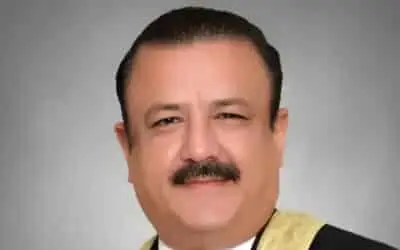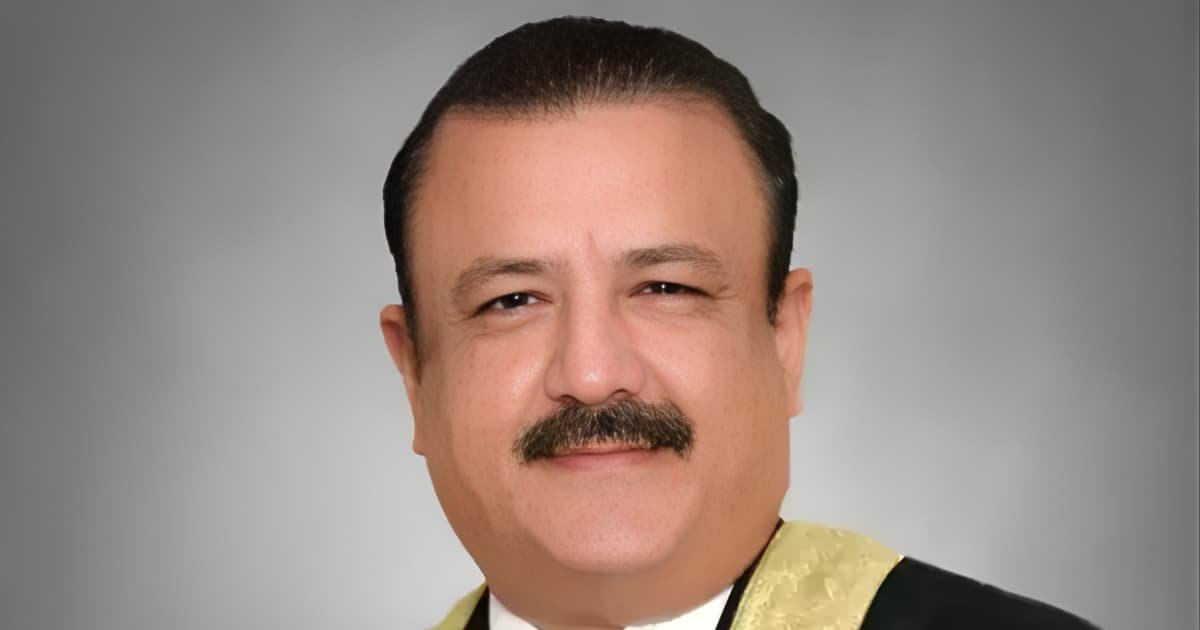





ISLAMABAD: The Islamabad High Court (IHC) has dismissed objections raised by Justice Tariq Mehmood Jahangiri against a division bench, headed by Chief Justice Sardar Muhammad Sarfraz Dogar, hearing petitions challenging the legitimacy of his law degree and his appointment as a judge.
The objections were taken up in a written order issued following Monday’s hearing, during which Justice Jahangiri appeared in person before the bench comprising CJ Dogar and Justice Muhammad Azam Khan. A copy of the order is available with Dawn.
Justice Jahangiri had questioned both the constitution of a division bench instead of a single bench and expressed “no confidence” in the bench, citing the pendency of an intra-court appeal filed against Chief Justice Dogar before the Supreme Court.
Rejecting these objections, the court observed that, given the “sensitive nature” of allegations involving an allegedly invalid or fake degree of a sitting high court judge, it was appropriate and in the interest of justice to constitute a division bench. The order further noted that the power to constitute benches lies solely with the chief justice on the administrative side.
The court also held that constituting a division bench in such matters was not unprecedented. On this basis, it concluded that Justice Jahangiri’s objection regarding the bench’s composition carried “no force”.
Addressing the objection based on alleged bias and lack of confidence in CJ Dogar, the court pointed out that the intra-court appeal cited by Justice Jahangiri had already been dismissed for non-prosecution by the Federal Constitutional Court (FCC) on November 24. The appeal, filed in July by Justice Jahangiri and four other IHC judges, challenged a Supreme Court decision upholding the seniority list of IHC judges that elevated Justice Dogar.
You May Also Like: Justice Jahangiri Raises Objections as IHC Bench Hears Fake Degree Petition
The order also cited several Supreme Court precedents, including Asif Ali Zardari vs The State and Ms. Benazir Bhutto vs The President of Pakistan, to underline that a judge of a superior court is the “keeper of his own conscience” and that applications seeking transfer of cases on grounds of bias do not ordinarily lie against high court judges.
Justice Jahangiri “expressed his no confidence” in the bench on the ground of filing of an intra-court appeal against CJ Dogar in the SC.https://t.co/gYoRdhoObW
— Dawn.com (@dawn_com) December 16, 2025
In addition, the IHC rejected Justice Jahangiri’s contention regarding lack of confidence in the bench, observing that established jurisprudence does not support such objections in cases involving superior court judges.
During the hearing, Justice Jahangiri also complained that he had not been provided the complete case record and sought time to engage private counsel. Accepting this request, the court directed the Higher Education Commission (HEC) to provide him with its report and annexures, and ordered the court office to supply copies of the petition and relevant reports, including those from Karachi University.
The court also summoned the KU registrar, along with the complete academic record of Justice Jahangiri’s law degree, for the next hearing scheduled for December 18.
The case stems from allegations that Justice Jahangiri obtained his LLB degree through unfair means, an issue that has been under scrutiny by the Supreme Judicial Council and the IHC following petitions filed last year.