


On Friday, March 27, 2026, the Islamic Revolutionary Guard Corps (IRGC) launched its 84th wave of “Operation Promised Sadiq 4,” targeting the Prince Sultan Air Base in Al-Kharj, Saudi Arabia.Commercial satellite imagery confirmed the destruction of three U.S. KC-135 Stratotankers on the flight line. These “flying gas stations” are critical for sustaining U.S. air operations over the Persian Gulf.
Two U.S. officials confirmed that at least 10 service members were wounded, with two in serious condition. This brings the total U.S. death toll in the month-long conflict to 13.By targeting the refueling fleet, Iran has successfully hampered the endurance of U.S. fighter jets, potentially forcing them to fly shorter sorties or rely on more vulnerable regional hubs.
The strike is being hailed by Tehran as a major success, proving that even heavily defended U.S. installations protected by Patriot and THAAD systems are vulnerable to a synchronized “swarm” of ballistic missiles and suicide drones.
🚨BREAKING
Iran retaliates: powerful explosion in Saudi Arabia’s capital
▪️A ballistic missile hit a target in Riyadh.
▪️Earlier, Iran demanded that personnel at petrochemical plants in Saudi Arabia, Qatar, and the UAE evacuate immediately. pic.twitter.com/3TYebbw6Ek— Aleksey The Great 🇷🇺🎖 (@aleksthgrt) March 18, 2026
The “Logistics War”: Why Refueling Planes?
The IRGC’s shift from striking combat aircraft to support infrastructure is a calculated move to “ground” the U.S. Air Force:
- The KC-135 Loss: The Stratotanker is the backbone of U.S. aerial refueling. Losing three in a single strike is a significant blow to the 378th Air Expeditionary Wing stationed at Al-Kharj.
- Fueling the Conflict: Without these tankers, U.S. F-35s and F-16s cannot loiter over Iranian airspace for extended periods, drastically reducing the effectiveness of the ongoing Operation Epic Fury.
- Solid vs. Liquid Fuel: The IRGC used a mix of precision-guided solid-fueled missiles (for rapid launch) and liquid-fueled missiles (for larger payloads) to overwhelm the base’s multi-layered defenses.
🚨 BREAKING: Saudi Arabia and the United Arab Emirates have reportedly taken steps toward joining the conflict against Iran, with closer military cooperation and increased support for U.S. operations, according to The Wall Street Journal. pic.twitter.com/E0QAgaIGAC
— GCO (@GCO_Global) March 25, 2026
Regional Fallout: “Operation Promised Sadiq 4”
The 84th wave of the operation was not limited to Al-Kharj. The IRGC and its affiliates launched a wider coordinated assault:
- Kuwait: Claims surfaced of strikes on U.S. tactical vessels at Shuwaikh Port.
- UAE: Intercepted debris from a ballistic missile caused two fatalities in Abu Dhabi on Thursday, leading to a sharp condemnation from the Gulf Cooperation Council (GCC).
- Israel: Sirens sounded across Tel Aviv and Jerusalem as Iran launched a fourth salvo of missiles in 24 hours, with one civilian fatality reported in central Israel.
[Image: Side-by-side satellite comparison of Prince Sultan Air Base showing charred “scars” on the tarmac where the KC-135 tankers were parked]
Diplomacy in the Shadows
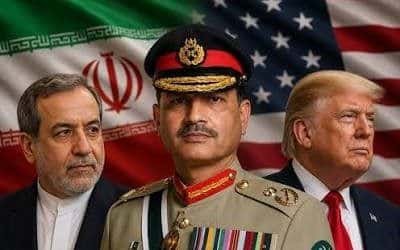
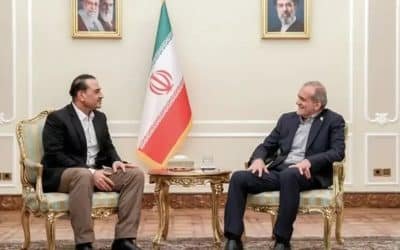
Despite the intense kinetic warfare, the “Bridge to Peace” remains open through Pakistan:
- The 15-Point Plan: U.S. envoy Steve Witkoff has reportedly delivered a ceasefire framework to Tehran via Islamabad.
- Iranian Counter-Proposal: While the IRGC mocks U.S. claims of “neutralizing” Iran, senior Iranian officials have hinted at a counter-proposal being delivered as early as this weekend.
- The “Hormuz” Factor: Trump has demanded the immediate reopening of the Strait of Hormuz, while Iran has reportedly allowed 10 Pakistani-flagged tankers to pass as a gesture of goodwill to its mediator.
You May Like To Read: “Weeks, Not Months”, Rubio Outlines U.S. Exit Strategy for Iran Conflict
Check out our latest video: