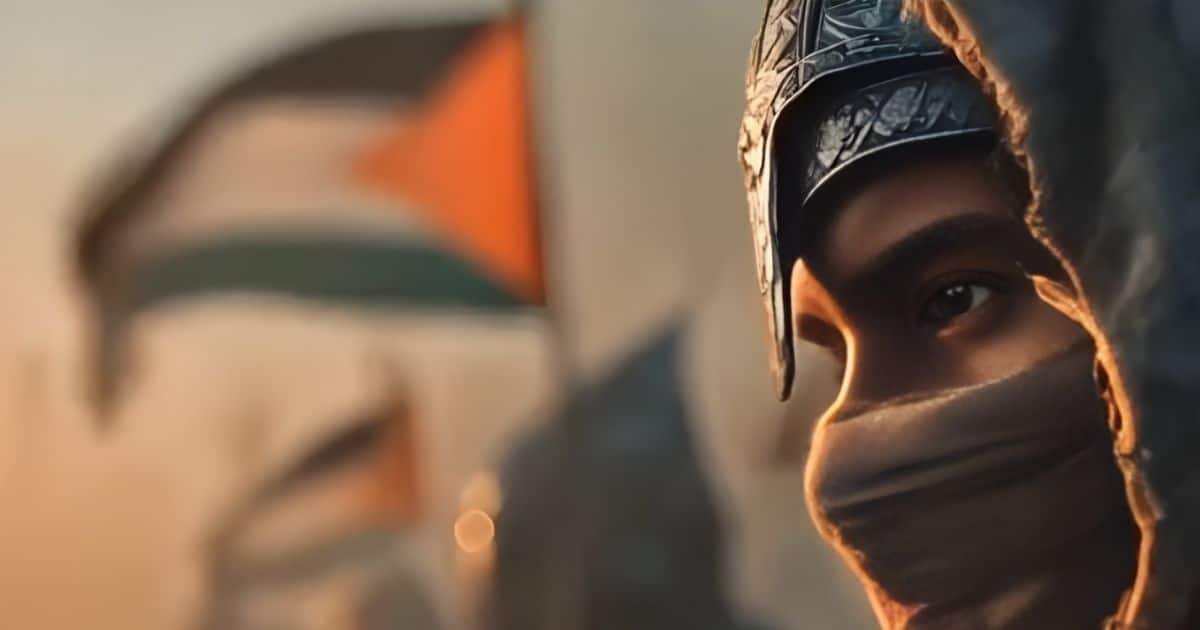





The air at Karachi’s Nueplex Cinema on December 17, 2025, felt different. It wasn’t the typical buzz of celebrity sightings or popcorn machines; it was the hum of a digital revolution. Industry veterans and curious techies gathered for the historic premiere of The Next Salahuddin, Pakistan’s and one of the world’s first feature films created entirely without a single live actor, physical set, or traditional camera.
A Ghost Set and a Room with a View
Written and directed by Farhan Siddiqui, the 55-minute film is a paradox of modern production. Siddiqui produced the entire epic from a single room using state-of-the-art AI tools, bypassing the logistical nightmares of location scouting and actor schedules.
“There are no risks of on-ground shoots here,” Siddiqui shared during the post-screening Q&A. “AI gave us a cost-effective way to tell a massive, high-stakes story that would have otherwise cost millions.” The film centers on Yousuf, a young Palestinian who rises as a symbol of hope and resistance in Gaza, drawing deep, spiritual parallels to the legendary leadership of Salahuddin Ayyubi.
The “Reel” Format for a New Generation
What makes The Next Salahuddin stand out isn’t just its origin, it’s its structure. Recognizing that 2025 audiences have shorter attention spans, the film was edited in a “reel-like,” fast-paced format designed to keep Gen-Z viewers glued to the screen.
The aesthetic is strikingly realistic. While early AI films struggled with the “uncanny valley” (where digital humans look slightly “off”), Siddiqui’s project features remarkably emotive characters that aim to make the audience “laugh, cry, and reflect.” The film is already being translated into Urdu, Arabic, English, and Bengali, signaling its intent to be a global voice for peace and human rights.
The Ethical Crossroads: Human Soul vs. Silicon Speed
However, as the lights dimmed and the credits rolled, a heavier conversation lingered in the lobby: at what cost does this digital “efficiency” come? While Siddiqui’s achievement is a marvel of modern engineering, it forces us to confront the uncomfortable repercussions of a cinema without souls. By bypassing physical sets and live performers, we risk devaluing the very human “friction”, the sweat, the spontaneous tears, and the collaborative spirit that have defined storytelling for centuries. More pressingly, in an industry that sustains thousands of livelihoods, from lighting technicians to makeup artists, the shift toward a solo-operator model creates a daunting economic shadow. As we celebrate the birth of Pakistan’s first AI feature, we must also ask if we are ready for an era where the art of the many is replaced by the algorithm of the one.
It may be the future but I find it kind of sad…
“There are no actors, no physical shooting locations and no conventional film set in this project,” he said. “Despite that, audiences will not feel that they are watching an AI-generated film.”https://t.co/jBZmOpVcGO
— carin jodha fischer (@carin__fischer) December 21, 2025
A French Connection
The journey doesn’t end in Karachi. The producers announced that they are officially submitting the film to an international film competition in France for March 2026. As the credits rolled, the conversation in the lobby shifted from if AI belongs in cinema to how fast it will take over. For Pakistan, The Next Salahuddin isn’t just a movie; it’s a flag planted in the digital soil of the future.
You May Like To Read: Rallies, events held in Karachi to mark Mohajir Culture Day
Check out our latest video: