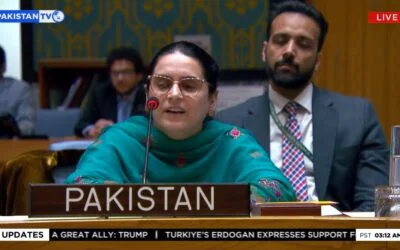





NEW YORK — Pakistan’s Permanent Representative to the United Nations, Ambassador Asim Iftikhar Ahmad, delivered a strong policy statement on Wednesday during a Security Council open debate, calling for a “credible and time-bound” process to achieve an independent Palestinian state.
The address comes at a critical juncture in the Middle East, as the international community navigates the implementation of UNSC Resolution 2803, which endorses a new transition plan for Gaza.
In line with the Security Council resolution 2803, the commencement of the second phase of the Peace Plan – including the establishment of the National Committee for the Administration of Gaza (NCAG), and the establishment of the Board of Peace (BoP) and Executive Committees –… pic.twitter.com/fG4ZrWQ3MW
— Permanent Mission of Pakistan to the UN (@PakistanUN_NY) January 28, 2026
Key Highlights
- The Goal: A sovereign, contiguous Palestinian state based on pre-1967 borders with Al-Quds Al-Sharif (East Jerusalem) as its capital.
- Support for Resolution 2803: Pakistan officially endorsed the transitional mechanisms established by the resolution, including the Board of Peace and the National Committee for the Administration of Gaza (NCAG).
- Gaza Stabilisation Force: Ambassador Ahmad confirmed Pakistan’s willingness to participate in a US-led multinational force to stabilize Gaza, provided the mandate focuses on humanitarian protection and reconstruction.
- Condemnation of Sheikh Jarrah Raid: Pakistan “strongly condemned” the January 20, 2026, demolition of the UNRWA headquarters in Sheikh Jarrah by Israeli forces, calling it a “grave violation of international immunity.”
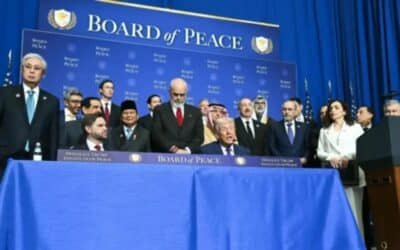
“Pakistan, together with other Arab and Islamic countries in the group of 8, has joined the Board of Peace in support of its mandate as endorsed by the Security Council resolution 2803.” pic.twitter.com/3axInxsHEw
— Permanent Mission of Pakistan to the UN (@PakistanUN_NY) January 29, 2026
Strategic Engagement: The “Board of Peace”
Pakistan has joined other OIC and Group of Eight members in backing the current peace framework. Ambassador Ahmad emphasized that the “second phase” of this plan must ensure:
- Permanent Cessation of Hostilities: Moving beyond a temporary ceasefire to a lasting peace.
- Recovery and Reconstruction: Massive scaling of aid through established UN channels like UNRWA.
- No Annexation: Explicit protection against any further alteration of Palestinian territorial unity.
The Gaza Conundrum: Troops and Mandate
While Pakistan has expressed readiness to contribute up to 3,500 troops to the proposed International Stabilization Force (ISF), the Ambassador’s statement underscored the country’s red lines:
- No Disarmament Role: Pakistan maintains that it will participate in peacekeeping and stabilization, but will not engage in the “peace enforcement” or forced disarmament of Palestinian factions.
- Humanitarian Priority: The focus of any deployment must remain on protecting civilian corridors and enabling the NCAG (the technocratic administration) to function.
Timeline of Recent Developments
| Date | Event | Significance |
| Nov 17, 2025 | UNSC Resolution 2803 passed. | Authorized the “Board of Peace” and “Stabilization Force.” |
| Jan 20, 2026 | Sheikh Jarrah UNRWA Raid. | Israeli forces demolished offices, sparking global condemnation. |
| Jan 22, 2026 | Pakistan joins Board of Peace. | Formalizes role in the transitional governance mechanism. |
| Jan 28, 2026 | UNSC Open Debate. | Pakistan reaffirms 1967 borders as the only viable solution. |
A Message to the Security Council
Ambassador Ahmad concluded by reminding the Council that “renewed engagement” must translate into “measurable change on the ground.” He warned that the continued demolition of UN facilities and illegal settlement activity in the West Bank remain the biggest hurdles to regional stability.
You May Also Like: Pakistan, Seven Muslim Countries Decide to Join Trump’s ‘Board of Peace’
Check out our latest video: