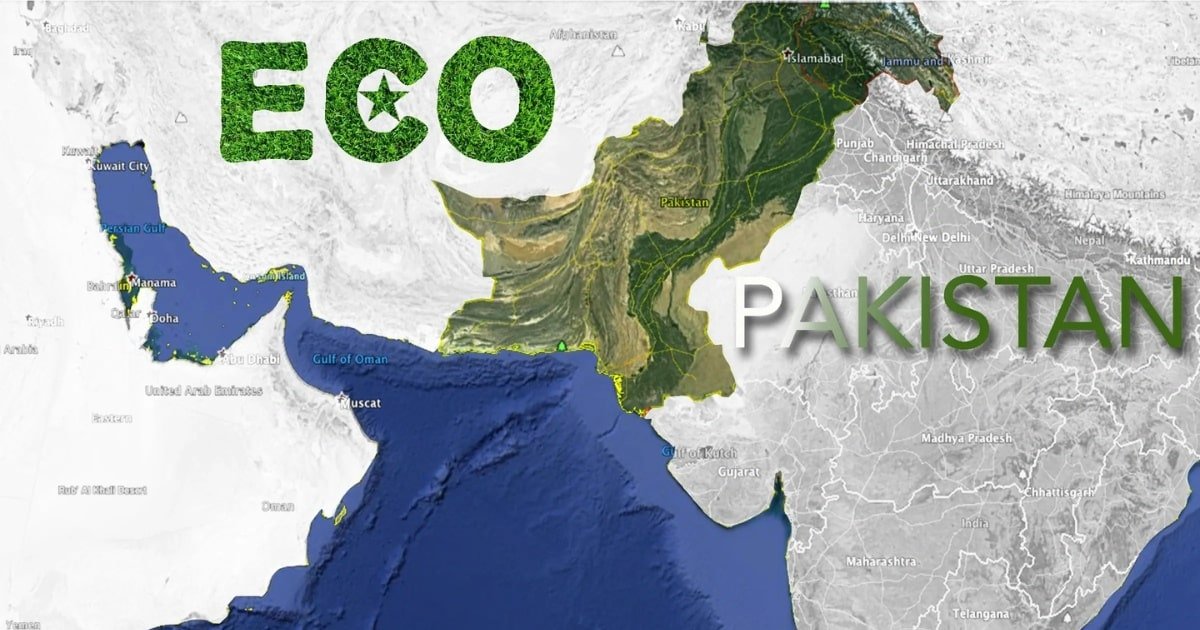





Pakistan’s exports to South Asian neighbors have lagged far behind those to its ECO partners. Recent studies show Pakistan’s export share to ECO countries ranges from 4.8% to 14.2% of total exports. Trade within SAARC remains negligible. Intra-SAARC trade captures only about 5% of the region’s potential. This is stark compared to ASEAN or the EU. Political tensions, border restrictions, and weak institutional support hinder regional commerce.
The last SAARC summit, meant to be held every two years, took place in Nepal in 2014. Pakistan was scheduled to host the next summit in 2016. However, it was stalled after India refused to participate. This followed the Pulwama terror attack in Jammu and Kashmir, which New Delhi blamed on Pakistan. SAARC has not met since India boycotted the 2016 summit. Faced with this, Islamabad has pivoted east and west. Pakistan now engages ECO actively to expand markets, improve connectivity, and seek practical alternatives to the stagnant SAARC framework.
You May Like To Read: Information Warfare: How Israel Uses Media Warfare as a Tool Against Palestine?
SAARC’s Decline
The 2016 SAARC summit was derailed by India’s boycott, freezing the organization. Since then, India again suspended the SAARC Visa Exemption Scheme (VES) for Pakistan after the Pahalgam incident. This has crippled SAARC’s functioning. Intra-SAARC trade remains just a few percent of each country’s commerce. By contrast, Pakistan’s exports to ECO members have been more substantial. In 2016, Pakistan even proposed an expanded SAARC, including China and Central Asian countries. These steps reflect Islamabad’s effort to diversify trade and regional cooperation. The combination of political tensions, low trade volumes, and stalled summits highlights why Pakistan now looks beyond South Asia for economic opportunities and stronger regional partnerships.
Source: TRT Global
Pakistan’s Strategic Pivot to ECO
Pakistan is shifting focus from the stalled SAARC framework to the Economic Cooperation Organization (ECO). It is leveraging historic, geographic, and economic ties to strengthen regional trade. Under ECO-CCI, Pakistan is boosting trade with Turkey, Iran, Afghanistan, Azerbaijan, Kazakhstan, Kyrgyzstan, Tajikistan, Turkmenistan, and Uzbekistan. Bilateral trade is rising fast. Pakistan-Kazakhstan trade grew from $20 million in 2021 to $139.3 million in 2023. Pakistan-Turkey trade reached $1.4 billion in 2024. Pakistan is expanding Preferential and Transit Trade Agreements, improving land and air connectivity, and creating direct trade corridors. These steps strengthen regional influence and support SMEs, industrial collaboration, and digital trade.
This strategy shifts South Asian trade from a stagnant SAARC to a dynamic ECO-led framework. Projects like the Islamabad-Tehran-Istanbul (ITI) freight train and the Kazakhstan-Turkmenistan-Iran (KTI) railway expand connectivity. Joint investments, energy cooperation, and cross-border technology exchange address shared challenges like climate change, energy crises, and trade inefficiencies. These efforts open new avenues for sustainable economic growth. Pakistan’s ECO engagement positions it as a central hub in an integrated, economically resilient South and Central Asia.
ECO’s Promise
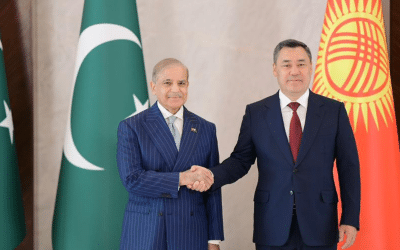
The ECO bloc, originally the 1964 RCD, unites Pakistan with Iran, Turkey, and seven Central and Caucasus states. It covers about 460 million people over 8 million km², offering a vast market Pakistan is eager to access. Pakistan has taken a leadership role. At the July 2025 ECO summit in Azerbaijan, PM Shehbaz Sharif pledged to share Pakistan’s perspective on regional and global challenges. He also promised to enhance intra-regional trade, transport connectivity, and energy cooperation under ECO Vision 2025. Pakistani diplomats note a newfound readiness among ECO members to cooperate economically. In short, Pakistan is using ECO as a vehicle to pursue growth and security goals that SAARC failed to deliver.
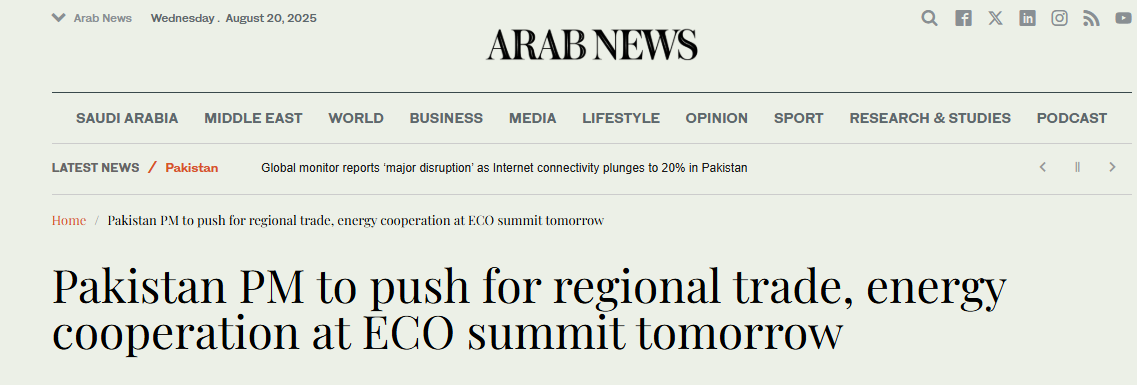
Source: Arab News
Pakistan’s Initiatives
Pakistan is negotiating concrete deals with ECO partners alongside diplomatic outreach. It joined Central Asia’s transit corridors and revived the Pakistan-Uzbekistan-Afghanistan rail project to draw new trade through its territory. Islamabad has pursued bilateral trade and transit pacts. Pakistan invited Turkmenistan to its Trade & Transit Agreement and discussed using Gwadar as an export outlet for Turkmen goods. Officials pitched Gwadar port as a strategic outlet for Turkmen hydrocarbons, opening new avenues of cooperation. These efforts complement a broader strategy. A trilateral meeting in Kabul with China and Afghanistan emphasized extending CPEC into Central Asia. Islamabad’s message is clear. It aims to foster trade and infrastructure links, including roads, rails, and ports, with friendly neighbors to reduce dependence on obstructive ones.
Pakistan’s strategic geography, with its new deep-water port, underpins the ECO pivot. CPEC’s Gwadar port and associated corridors provide Pakistan with unprecedented maritime strategic depth. CPEC links China to the Arabian Sea via Gwadar, securing sea lanes to Central Asia and the Middle East. Highways and railways from Gwadar northward offer Central Asian exporters an alternate route to global markets. This allows Kazakh oil or Uzbek cotton to be shipped through Pakistani ports instead of Russia or China. Pakistan’s foreign office ties these efforts to economic needs, calling enhanced trade and connectivity vital to consolidate economic gains amid a domestic macroeconomic crisis.
Conclusion
Pakistan is pragmatically shifting its regional focus from SAARC to ECO. Its coastline and Gwadar port offer a new axis of depth in the south, complementing traditional western ties. By deepening ECO cooperation, Islamabad seeks to turn geography into opportunity. It is forging new trade corridors with Iran, Turkey, and Central Asia. This strategy leverages Pakistan’s role as a trade gateway. In effect, the axis of Pakistan’s regional trade is moving from a stalled South Asian forum to a growing Central-West Asian bloc.
You May Like To Read: Is the Global South Rising? Pakistan’s Leadership Role in the Shift