
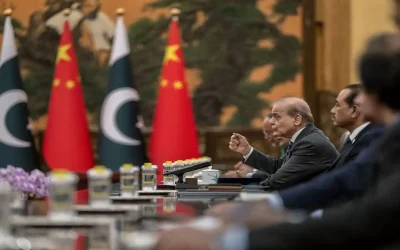




Pakistan’s future relies on a financial system that empowers its citizens and prevents funds from being misused. In October 2022, our nation exited the FATF grey list after fulfilling all 34 action items set since 2018. This milestone demonstrates that Pakistan can modernize its systems while remaining true to its values: honesty, justice, and faith.
This change is more than procedural—it affects every Pakistani who uses banks, sends remittances, gives charity, or builds a business in today’s global world.
Why the FATF Exit Matters
The Financial Action Task Force (FATF) sets global standards to combat money laundering and terror financing. Pakistan’s listing in 2018 exposed profound weaknesses:
- Remittances slowed, disrupting families abroad
- Investor trust waned, hurting job creation and trade
- Even simple bank tasks became lengthy and uncertain
After exiting the grey list, we gained:
- Quicker international transfers, helping students and patients abroad
- Fewer bank delays, easing commerce and business
- Renewed confidence from global partners, encouraging new ventures
Major Reforms That Made It Happen
Prompted by the 2019 APG FATF evaluation, Pakistan launched landmark reforms:
- National FATF Secretariat: Central coordination among seven ministries and 50+ agencies
- Legal Reforms: Updated the Anti-Money Laundering Act (2010), Anti-Terrorism Act, Foreign Exchange Regulations, and UN sanctions mechanisms
- Regulatory Authority: Appointed ICAP and ICMAP as AML/CFT regulators, establishing a joint oversight board (IFAC case study)
- Professional Training: Trained 1,000+ bankers, accountants, auditors, and lawyers via workshops and online tools
- STR System Enhancements: FMU implemented real-time Suspicious Transaction Reporting shared with FIA
- Border Strengthening: Seizures at airports, seaports, and land crossings—especially during Hajj and Eid
- Public Outreach: Financial literacy drives in rural areas
- Digital Banking Tools: Anti-fraud features in mobile apps and e-wallets
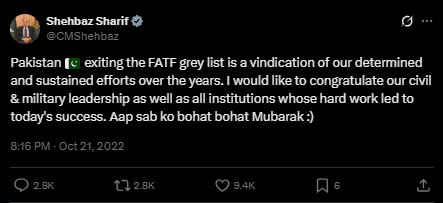
Source: X/@CMShehbaz
FATF Legislation via Joint Parliamentary Session
A major step came on 16 September 2020 during the Joint Parliamentary Session, when Pakistan passed key laws to meet FATF deadlines after Senate delays:
- Anti-Terrorism (Third Amendment) Act 2020: Allowed undercover operations, interception of communications, and controlled deliveries for terror-financing investigations.
- Anti-Money Laundering (Second Amendment) Act 2020: Strengthened the role of FMU and NAB, introduced stricter penalties (fines up to Rs 25 million for individuals, Rs 100 million for companies), mandated Customer Due Diligence (CDD), risk-based assessments, data retention, and cooperation mechanisms for law enforcement.
- Islamabad Capital Territory Waqf Procedure Act 2020: Tightened supervision over waqf properties, aligning religious assets with AML standards to prevent misuse.
These laws were crucial to meeting FATF’s deadline and helped Pakistan exit the grey list. The session under President Alvi acted as a catalyst to ensure legal clarity and compliance. RSIL and Dawn coverage from 16 September 2020 confirm these acts were passed in a special joint sitting.
Islamic Values at the Core
Islam teaches that wealth is a divine trust, entrusted to us to benefit society. The Quran states:
“Do not consume one another’s wealth unjustly…” (Al-Baqarah 2:188)
Misusing zakat or charitable funds for violence violates the spirit of giving. Pakistan’s reforms embody Amr bil Ma’ruf (promoting good) and Nahi anil Munkar (forbidding evil), aligning our legal frameworks with moral duty.
Everyday Benefits for Citizens
The reforms are not abstract—they bring real improvements:
- Faster International Transfers – Students, patients, and their families abroad can send and receive money more quickly.
- Safer Digital Banking – Banks introduced stronger security layers in apps to prevent theft and fraud.
- Trustworthy Charity – Flood and earthquake relief reaches intended recipients with greater transparency.
- Economic Growth & Jobs – Foreign and local investment is now easier, leading to the creation of new startups and job opportunities.
- Fintech Innovation – Secure regulation encourages financial technology products for farmers, artisans, and traders.
- Financial Inclusion – Rural and urban communities gain better access to compliant financial services.
- Streamlined Banking – Shops, schools, and traders deal with fewer transaction delays.
- Academic Confidence – Students paying tuition abroad feel supported and secure.
- Stronger National Security – A resilient financial system reinforces Pakistan’s defense against money-based terrorism.
Proof in Data and Progress
Clear metrics back Pakistan’s success:
- 34 FATF action points completed by October 2022 (Reuters)
- Compliance with 38 of 40 FATF standards (IFAC report)
- 398% surge in trade-based STRs during 2023–2024 (PTBP analysis)
- Monthly, hundreds of STRs are processed by FMU for FIA action
- 1,000+ trained professionals supporting compliance
- Border cash seizures during travel seasons
- Digital anti-fraud protocols are widely adopted
These numbers mark a breakthrough in national security and financial resilience.
Securing the Future
Continuing success requires vigilance. Key priorities include:
- Crypto and Digital Currency Regulations
- Public Education on spotting and reporting suspicious transactions
- Ethical Finance in Mosques and Schools
- Certification for AML Professionals
- Transparent Zakat and Relief Policies
- Ongoing Fintech Monitoring
- Support for Rural Bank Training
By making compliance a cultural habit, Pakistan secures not just its system—but its future.
Moral Strength & National Identity
Pakistan’s journey shows that modern systems and Islamic values are fully compatible. The Prophet Muhammad (PBUH) said:
“The best among people are those who benefit others.”
By safeguarding our financial structure, we protect families, support communities, and affirm Pakistan’s moral fiber and unity.
Conclusion: Faith, Finance, and the Future
Exiting the FATF grey list was not simply technical; it was a moral triumph. Pakistan proved that institutions can evolve while holding faith in their hearts.
By blocking terror funding, we save lives, rebuild dignity, and nurture national trust and opportunity.
Let every secure transaction, honest donation, and resilient remittance serve as proof of Pakistan’s commitment: where finance uplifts, ethics guide, and hope shapes our journey.