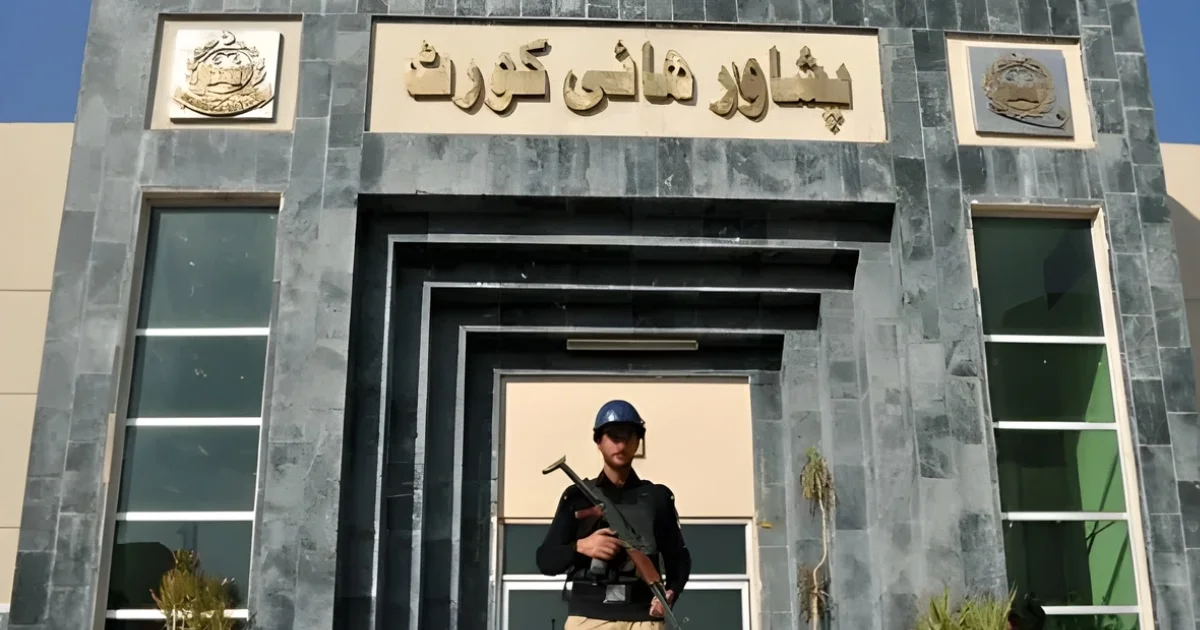




PESHAWAR: The Peshawar High Court (PHC) on Thursday issued notices to the federal and Khyber Pakhtunkhwa governments as well as the Election Commission of Pakistan (ECP), seeking their responses to a petition requesting a ban on any “anti-federation and anti-state” march towards Islamabad or any other province.
A two-member bench comprising Justice Mohammad Naeem Anwar and Justice Kamran Hayat Miankhel was hearing the petition filed by a Peshawar-based citizen, Momin Tariq. The petitioner has sought multiple reliefs, including directions to restrain protesters from blocking public or private places, buildings, highways or vehicles on the Grand Trunk Road, motorways, cities or other areas during protests.
The petitioner has also requested the court to bar protest organisers from allegedly hiring participants or using funds for demonstrations and from promoting what he termed as “anti-federation” and “anti-state” narratives through public disorder or social media campaigns, whether individually or collectively.
In addition, the plea seeks directions for the federal government to promulgate an ordinance or enact legislation to prohibit marches described as “anti-state” towards another province or the federal capital. The petitioner has also sought interim relief to restrain protesters, with or without the consent of provincial governments or elected representatives, from violating any provisions of the Constitution.
The respondents named in the petition include the federal government through the attorney general for Pakistan, the National Assembly and Senate through their respective secretaries, the federal interior secretary, the Khyber Pakhtunkhwa government through the advocate general, the KP chief secretary, and the Election Commission of Pakistan through its secretary.
You May Also Like: Three killed, six injured in fog-related road accidents in Sahiwal
Advocate Mohammad Hamdan, appearing on behalf of the petitioner, argued that during the past few years there had been repeated and serious violations of the law and the Constitution by what he described as “so-called protesters” from the province. He alleged that provincial resources, machinery and assets were misused under political mandates in a manner that undermined the stability of the state.
The counsel questioned whether the Constitution allowed protesters or members of political parties to create inter-governmental disturbance in the name of protests. He claimed that such actions amounted to offences against the state and promoted narratives based on provincial or racial prejudices, threatening harmony between the federation and provinces.
The lawyer cited several constitutional provisions, arguing that fundamental rights of citizens guaranteed therein had been violated by protesters.https://t.co/oP73HHcEoz
— Dawn.com (@dawn_com) January 16, 2026
He further contended that fundamental rights guaranteed under the Constitution, including the right to free movement, had been violated due to repeated blockades of major roads, including the GT Road and motorways. Referring to Article 4 of the Constitution, the counsel argued that actions detrimental to the life, liberty, property and reputation of citizens could not be justified except in accordance with law, which he said protesters continued to violate.
After hearing the preliminary arguments, the bench issued notices to the respondents and sought their replies on the matter. Further proceedings were adjourned to a later date.
Check out our latest video: