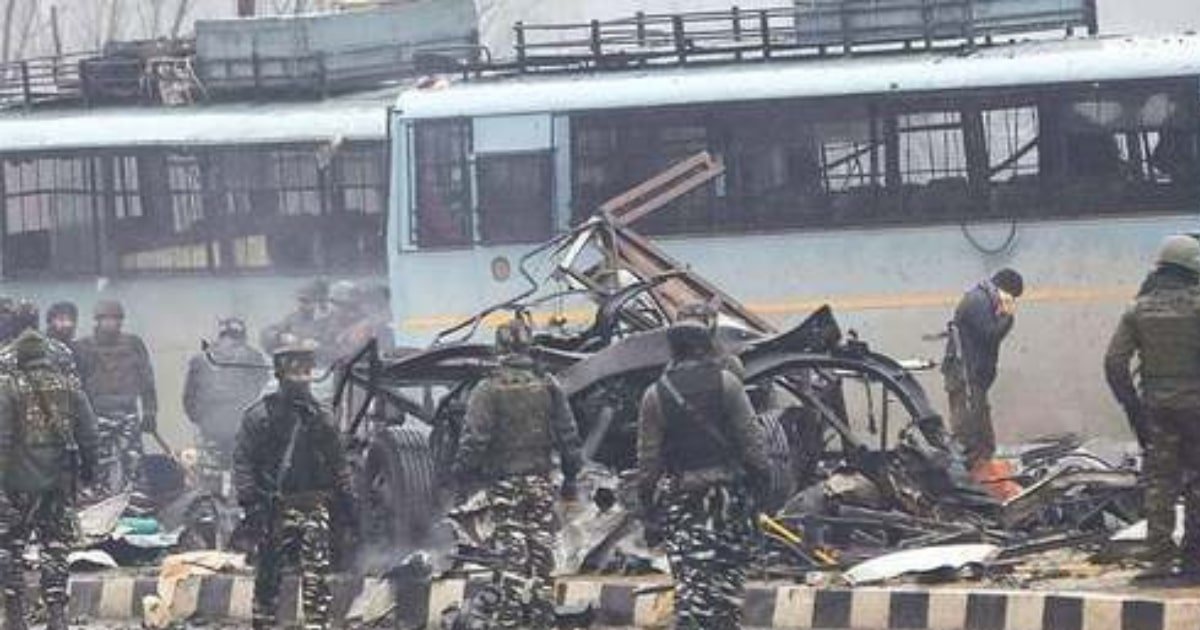


New Delhi — As the world marks the fifth anniversary of the Pulwama attack on February 14, 2019 — a suicide bombing that killed 40 Central Reserve Police Force (CRPF) personnel in Indian Illegally Occupied Jammu and Kashmir (IIOJK) — reflections on India’s response reveal deep internal security failures and diplomatic missteps that escalated tensions with Pakistan without achieving strategic goals.
The incident, claimed by Jaish-e-Mohammed (JeM), exposed vulnerabilities in India’s intelligence and convoy protection, leading to a cross-border airstrike on February 26 in Balakot, Pakistan. Pakistan’s swift retaliation the next day — shooting down an Indian jet and capturing pilot Wing Commander Abhinandan Varthaman — not only highlighted India’s operational shortcomings but also drew muted international support, underscoring the risks of escalation in a nuclear-armed region.
Indian captured pilot #Abhinandan lauds Pak Army professionalism in his latest video #PakistanLeadsWithPeace pic.twitter.com/fPSY9Vaxzx
— Radio Pakistan (@RadioPakistan) March 1, 2019
Key Highlights
- Pulwama attack: Feb 14, 2019; 40 CRPF killed in suicide bombing.
- Claimed by Jaish-e-Mohammed; major Indian intelligence failure.
- Balakot airstrike: Feb 26; India claims 300-350 terrorists killed.
- Pakistan denies casualties; says only trees hit.
- Pakistan’s response: Feb 27; Indian MiG-21 downed, pilot captured.
- Abhinandan released March 1 as peace gesture.
- International reaction: US initially backed India; later urged restraint.
- No conclusive proof of Balakot success; tensions de-escalated diplomatically.
Internal Security Failure Exposed in Pulwama
The Pulwama bombing — carried out by local Kashmiri youth Adil Ahmad Dar using a vehicle laden with explosives — was one of the deadliest attacks on Indian forces in decades. Critics at the time pointed to a “major intelligence failure,” as the convoy of over 2,500 personnel traveled a known high-risk route without adequate countermeasures or aerial surveillance.
General MM Naravane’s own account blows apart the Modi myth. Forty CRPF men died in Pulwama and the BJP turned their sacrifice into a vote seeking spectacle while films and godi media sold Balakot as a macho ad campaign. pic.twitter.com/1SIgbL9FEb
— VIZHPUNEET (@vizhpuneet) February 14, 2026
Retired Indian officials, including former Major General VK Singh, described it as a lapse in preventive intelligence and response protocols. The attack not only highlighted gaps in convoy security but also fueled domestic criticism that the government had failed to protect its own forces despite heightened alerts in the volatile region.
This internal shortfall set the stage for India’s retaliatory action, but the response itself raised questions about preparedness and execution.
Balakot Airstrike and Pakistan’s Retaliation
In the early hours of February 26, Indian Air Force jets crossed into Pakistani territory, targeting what New Delhi claimed was a JeM training camp in Balakot. Indian officials asserted that the strikes killed 300-350 terrorists, trainers, and commanders, marking the first airstrike on mainland Pakistan since 1971.
Pakistan rejected these claims, stating that the bombs missed their targets and only damaged trees in a forested area. Ground reports from Reuters and other international media later supported this, finding no evidence of major casualties or destroyed infrastructure at the site.
The next day, Pakistan launched Operation Swift Retort, with its air force crossing the Line of Control to target Indian military installations. In the ensuing dogfight, Pakistan shot down an Indian MiG-21 Bison, capturing pilot Abhinandan Varthaman after he ejected over Pakistani territory. India claimed to have downed a Pakistani F-16, but this was disputed, with no conclusive evidence presented.
Abhinandan was released on March 1 as a peace gesture by Pakistan, de-escalating the immediate crisis but leaving India facing questions over the airstrike’s effectiveness.
Operation Swift Retort: The 5th Anniversary 🦅 ⚡ 🐲 🛰 🛡 🚀 🇵🇰
Pakistan Strategic Forum wishes the whole Nation, the fifth anniversary of Operation Swift Retort.
♟ Significant Features of Operation Swift Retort
– Pakistan Air Force successfully bombed 6x Indian military… pic.twitter.com/3Zmvdz7gxr
— Pakistan Strategic Forum (@ForumStrategic) February 27, 2024
International Repercussions and Diplomatic Isolation
The Pulwama-Balakot episode tested India’s standing on global forums. Initially, the US supported India’s “right to self-defense,” with National Security Advisor John Bolton and Secretary of State Mike Pompeo endorsing the Balakot strike as a “counter-terrorism operation.” However, as Pakistan retaliated and tensions escalated, Washington urged restraint from both sides, shifting to active de-escalation diplomacy only after the aerial clash.
Other Western powers remained largely silent or called for dialogue, avoiding outright condemnation of either side. Reports from the Stimson Center noted a perceived tilt in US policy toward India, eroding Washington’s credibility as a neutral mediator — a shift attributed to the US-India nuclear deal and strategic alignment against China.
India’s attempts to garner international support for isolating Pakistan on terrorism forums yielded mixed results. While some countries condemned the Pulwama attack, no major sanctions or UN actions followed against Pakistan. The crisis instead highlighted the risks of nuclear escalation, with experts like those from the Carnegie Endowment warning that miscalculations could lead to catastrophe in South Asia.
‘You May Like To Read: Indian National Pleads Guilty in Plot to Kill Sikh Leader in New York
Lessons from a Tense Standoff
Five years on, the Pulwama attack and its aftermath serve as a stark reminder of unresolved regional tensions. India’s internal security lapses allowed the bombing to occur, while the Balakot operation — intended to signal resolve — faced skepticism over its outcomes and invited retaliation that exposed operational vulnerabilities.
The international community’s response emphasised de-escalation over endorsement, reinforcing that diplomatic isolation efforts against Pakistan did not fully succeed. Abhinandan’s capture and release further underscored Pakistan’s measured approach, preventing further escalation.
As anniversaries come and go, the episode highlights the urgent need for dialogue to address root causes in Kashmir and prevent future flashpoints in a nuclear-armed neighborhood.
Check out our latest video: