


In recent weeks, there has been a wave of tragedy in Pakistan, one that requires introspection, state action, and responsible journalism. Target killings of Punjabi passengers in Baluchistan to mega financial scams involving foreign nationals in Faisalabad, a drowning incident of some tourists in a heartbreaking case in Swat, the country is grappling with various issues. However, the fact that this is portrayed using international media, especially the BBC Urdu, begs the question about narrative accountability, perspective, and other unanticipated effects of how they are framed.
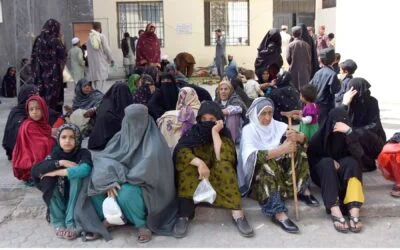
In the Zhob district of Baluchistan, unknown gunmen brutally murdered nine passengers of Punjab after they were offloaded from buses. The victims also included two brothers, Jabir and Usman Nazir, who were going home to the funeral of their father. Their family sustained an unimaginable loss of three loved ones within a day. This event has striking similarities with previous incidents of atrocities where Punjabi travelers have been targeted based on identity profiling by militants, many of whom are members of the banned organizations, such as the Fitna-al-Hindustan (FAH).

Source: BBC Urdu
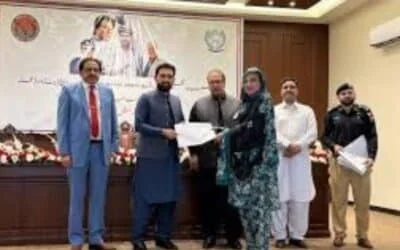
A few days earlier, another tragic incident occurred in Swat when tourists were drowned in flash flooding. Rescue operations were later said to have been slow by eyewitnesses and residents, with authorities and hotel employees being ill-equipped or unprepared. The tragedy elicited a response at the administrative level. However, it also revealed a pattern of systemic neglect when it comes to the implementation of safety measures in major tourist destinations.

Source: BBC Urdu
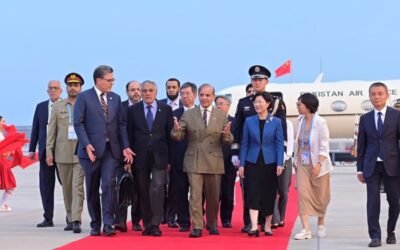
Pakistani authorities have uncovered a major cyber fraud in Faisalabad, arresting 149 people, including 48 Chinese nationals. The group ran a fake freelancing and investment scam under the name “Upwork Pakistan,” misleading victims with false promises of earnings through online ads, WhatsApp, and Telegram. They initially offered small returns to gain trust before swindling millions of rupees. The operation was based at the home of Malik Tehseen Awan, a politically connected former FESCO board chairman, who is now on the run. The scam falsely used the name of the legitimate US platform Upwork, which has denied any links to the fraud.

Source: BBC News
A Pattern of Governance Failures
All of these incidents represent systemic issues. Baluchistan killings are a living example of the insecurity that continues to exist within the inter-provincial highways, primarily within the conflict-ridden regions. The negligence to protect civilians despite the warnings and past events of a similar nature is concerning. The absence of disaster control and failure to provide preventive supervision resulted in the loss of valuable lives in Swat. And in Faisalabad, the lack of digital regulatory mechanisms allowed an elaborate international fraud network to act freely.
Although provincial and federal governments have since pledged to act, with suspensions, investigations, and raids, the delayed and reactive mode of their response provides little hope to the families of victims or the general citizenry. Proactive governance, technological modernization, and awareness are much needed to stop such disasters in the future.
BBC’s Framing and Narrative Bias
During such a crisis, the reporting of the BBC Urdu triggers some concerns. Through its in-depth reporting and strong human interest stories, the outlet has done great work, but how it has presented some of these stories has, in some cases, jeopardized its ability to keep ethnic tensions calm. Repeated emphasis on the ethnic identities of victims and the regional origin of attackers, “Punjabis killed in Baluchistan” or “Baloch militants targeting Punjab passengers”, can contribute to a divisive and inflammatory discourse.
This is an incomplete picture since the role of the foreign-backed militant outfits, in particular India-sponsored proxies such as FAH, is not put in adequate context. By not addressing these important aspects of security, BBC Urdu ends up deciding to move the issues of terrorism and national security into the problem of inter-ethnic tension. Furthermore, although it is important to profile the victims to humanize the news, the emotional overload without much political and security context weakens the policy-level implications and distorts public opinion.
Likewise, in reporting the Faisalabad cyber fraud, BBC successfully exposed the mechanics of the cyber fraud but did not go deep to look at the geopolitical or economic aspect of this global network of fraudsters operating with impunity. The foreign involvement was of such caliber, yet the role played by the Chinese nationals and the various scenarios that could have hindered the course of the diplomatic or regulatory factors remained a topic that was not dealt with keenly.
Having allowed emotional testimonies in the Swat tragedy, BBC on its part was justified to have covered the rescue delay and lack of administration, but once again, this was supported on emotional memories rather than on structural responsibility. Regular media coverage is supposed to educate citizens, bring authorities to pressure, and contribute to constructive criticism rather than just submitting emotional photographs.
Toward Responsible Journalism and Reforms
The media in a democracy have a role to play: to report the truth responsibly. With the country facing a complex crisis, related to terrorism, mismanagement of disasters, and rapidly emerging digital fraud, the time is ripe to improve the quality of context-rich, fact-based journalism. BBC Urdu can influence perceptions of Pakistan, but it must do so carefully to avoid unintentionally promoting separatist rhetoric or creating sensational stories that depict the country as being far from national salvation.
The media and civil society in Pakistan must demand change based on these events: improved highway security standards in Baluchistan and stricter laws against digital scams and non-optional safety measures at tourist attractions. However, such momentum can only be effective when the coverage is based on national cohesion, accountability, and critiques that are reform-oriented, not divisive labels and silence of choice.
These are not merely failure stories. They are demands to change the system. The victims not only need justice but also need a nation that becomes better as a result of the tears and the healing that follows, with facts, not fear-mongering; with truth, not tribalism.