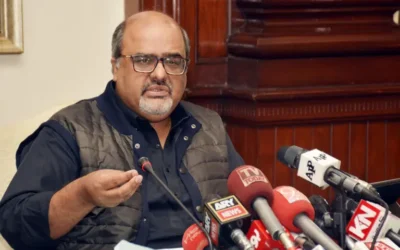





The Higher Education Commission (HEC) of Pakistan has taken a major step toward digital modernization by directing all public and private universities to introduce a mandatory three-credit-hour course on Artificial Intelligence (AI) for all undergraduate and postgraduate degree programs.
This directive, issued on Thursday, February 19, 2026, aims to ensure that every graduate—regardless of their field of study—is equipped to navigate an AI-driven global economy.
HEC directs universities to introduce mandatory AI course from Fall 2026https://t.co/kzoBSJs5qe#HEC pic.twitter.com/kyHTZuKabZ
— The_Nation (@The_Nation) February 19, 2026
Key Details of the HEC Directive
| Feature | Details |
| Effective Date | Starting from the Fall 2026 academic session. |
| Scope | All undergraduate and postgraduate degree programs. |
| Credit Hours | Mandatory 3 credit hours. |
| Course Type | Flexible: Can be an elective, interdisciplinary, or supporting course. |
| Application | Applicable to all HEC-recognized public and private universities. |
Core Curriculum Requirements
While universities have the flexibility to tailor content to specific disciplines (e.g., AI in Healthcare vs. AI in Law), the HEC has mandated that the curriculum must cover:
-
Foundational Concepts: Basic understanding of how AI, Machine Learning, and Large Language Models (LLMs) function.
-
Ethical Responsibility: Addressing bias, fairness, and accountability in algorithmic decision-making.
-
Data Privacy & Transparency: Training on how to handle data securely and ethically.
-
Societal Impact: Understanding how AI is reshaping governance, the economy, and the workforce.
The Strategic Context: $1 Billion Investment
This educational mandate follows a recent announcement by Prime Minister Shehbaz Sharif at the Indus AI Week 2026. The government has committed to:
-
Investment: A $1 billion fund to build a national AI ecosystem by 2030.
-
Scholarships: Awarding 1,000 fully funded PhD scholarships in AI to develop world-class research capacity.
-
Mass Training: A goal to train one million non-IT professionals in AI skills to improve national productivity.
You May Like To Read: Pakistan Railways, Rs 1.1 Billion Land Retrieved in Multan
Implementation for Universities
The HEC Executive Director emphasized that AI literacy is no longer “optional” but a “pressing necessity.” Universities are now expected to:
-
Establish or upgrade advanced computer labs and research centers.
-
Foster industry-academia collaborations to provide students with hands-on experience.
-
Incorporate professional AI certifications as part of the degree requirements.
Check out our latest video: