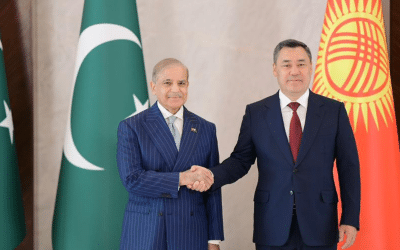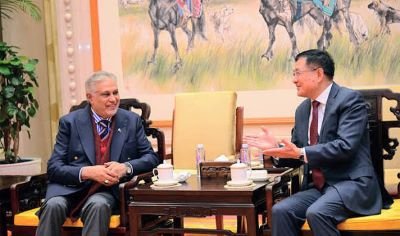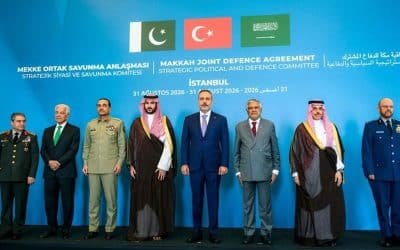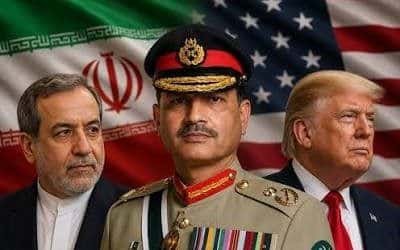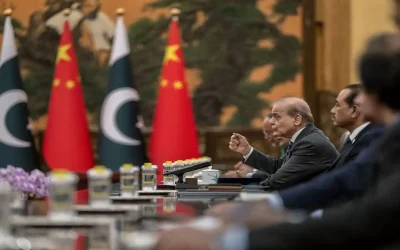
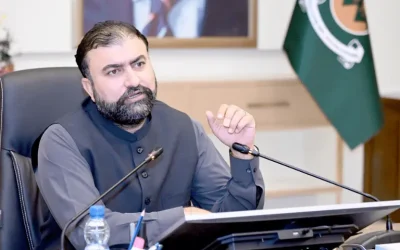



Islamabad (April 16, 2026) — Pakistan has launched a high-stakes diplomatic offensive to save the fragile US-Iran ceasefire, with Prime Minister Shehbaz Sharif and Field Marshal Asim Munir leading parallel missions in Saudi Arabia and Iran. The dual-track “shuttle diplomacy” comes as the White House praised Pakistan as an “incredible mediator” and signaled that Islamabad will likely host the next round of peace talks.
Key Highlights
- Field Marshal Munir reportedly delivered a message from Washington to Iran regarding a potential Lebanon truce.
- PM Shehbaz briefed Crown Prince Mohammed bin Salman on the Islamabad talks while securing a $3 billion financial boost.
- The U.S. expressed confidence in reaching a deal, with President Trump stating the war is “close to over.”
- The White House clarified that Pakistan is currently the sole intermediary for these negotiations to ensure “streamlined communication.”
Delighted to welcome Field Marshal Munir to Iran.
Expressed gratitude for Pakistan’s gracious hosting of dialogue, emphasizing that it reflects our deep and great bilateral relationship. Our commitment to promoting peace and stability in the region remains strong—and shared. pic.twitter.com/e74lm6hL8r
— Seyed Abbas Araghchi (@araghchi) April 15, 2026
Field Marshal Munir carries ceasefire message
In Tehran, Chief of Defense Forces (CDF) Field Marshal Asim Munir held detailed discussions with Iranian Foreign Minister Abbas Araghchi and security officials. Sources indicate the Field Marshal acted as a bridge, relaying a proposal from Washington that links the broader US-Iran settlement to a ceasefire in Lebanon. Iran is reportedly evaluating the proposal, waiting to see if Israel will formalize a truce before committing to the next stage of the Islamabad process.
Prime Minister secures regional backing
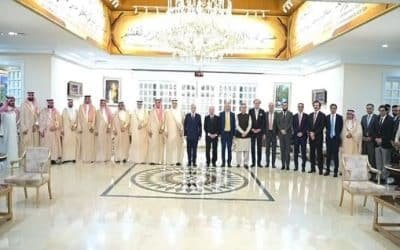
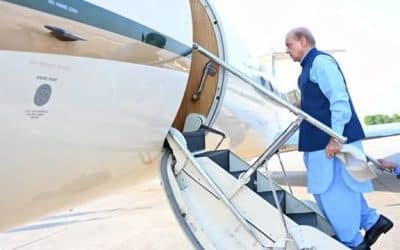
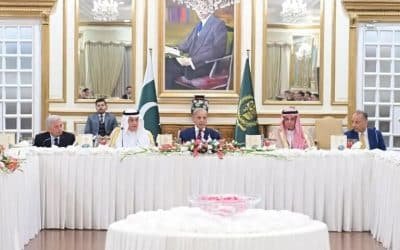
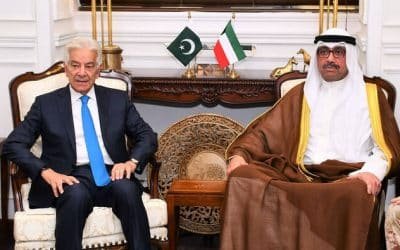
While the military leadership engaged Tehran, Prime Minister Shehbaz Sharif arrived in Saudi Arabia, the first stop of a four-day tour that includes Qatar and Turkiye. In Jeddah, the PM briefed Crown Prince Mohammed bin Salman on the status of the April 8 ceasefire. The Saudi leadership has publicly endorsed Pakistan’s role, providing a $3 billion deposit to stabilize Pakistan’s economy—a move seen as vital to ensuring Islamabad has the domestic stability to focus on its role as a regional peacemaker.
I had the honor of accompanying Prime Minister Shehbaz Sharif @CMShehbaz during his meeting with His Royal Highness Mohammed bin Salman.
The meeting was marked by warmth, brotherhood, and a shared vision for a stronger Pakistan–Saudi Arabia partnership. The Prime Minister… pic.twitter.com/BGE1GSyjkV
— Ishaq Dar (@MIshaqDar50) April 15, 2026
Washington’s vote of confidence
The White House has been unusually vocal in its praise for Pakistani diplomacy. Press Secretary Karoline Leavitt confirmed that the U.S. intends to keep the dialogue centered in Islamabad, describing the Pakistanis as “incredible mediators.” President Trump also signaled a potential reopening of the Strait of Hormuz, a massive concession intended to stabilize global energy markets and incentivize Tehran to return to the negotiating table.
NEW: President Trump says the war with Iran is “close to over.”
Full interview airs on @MorningsMaria on Fox Business at 6 a.m. pic.twitter.com/7YqjbHW3Fy
— Fox News (@FoxNews) April 15, 2026
The road to the second round
Despite the first round ending without a signed agreement, the diplomatic channel remains active. Indirect exchanges have persisted through the week, with the Pakistani delegation in Tehran working to bridge the gap between “unrealistic” demands and negotiable points. With regional flashpoints like Lebanon beginning to show signs of easing, diplomats are cautiously optimistic that the upcoming second round in Islamabad could lead to a definitive breakthrough before the April 22 ceasefire expiration.
You May Like To Read: PM Shehbaz travels to Doha after wrapping up Saudi Arabia visit
Check out our latest video: