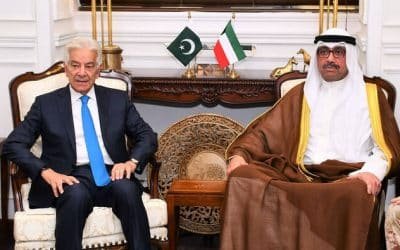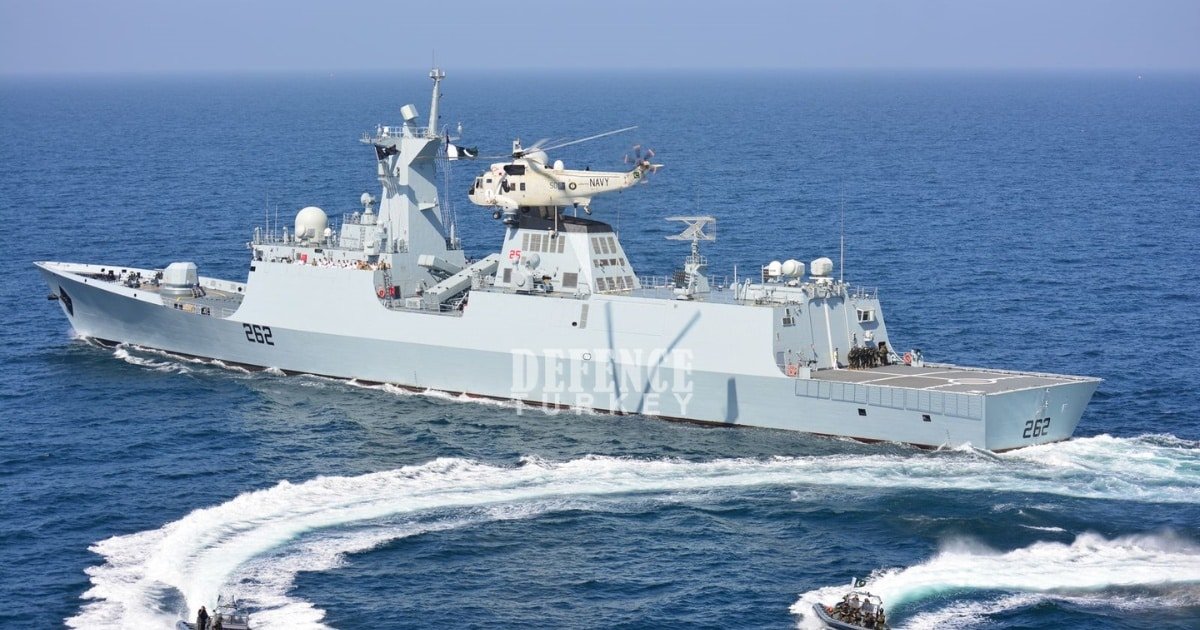





A rise in naval collaboration can be seen in the warming waters of the Arabian Sea and the Eastern Mediterranean. Both Pakistan and Turkey have historic bonds, religious unity, and a similar strategy to achieve strategic interests. Collectively, they are creating a maritime axis that will play a critical role in stabilizing the region. They are aligned, as evidenced by joint naval exercises, cooperation in the defense industry, and top-level discussions. They are seeking to guarantee sea lanes and address emerging threats, and enhance their capacity to play a central player in common maritime security.
Deepening Operational Synergy: From Bilateral Drills to Multilateral Engagement
Pakistan and Turkey are rapidly deepening their naval synergy. Their joint activities have grown in tempo and complexity. In July-August 2025, the Karachi Amphibious Exercise focused on joint landings, interoperability, and real-time mission sharing, building confidence at sea and solidarity on land. In February 2025, Ataturk-XIII drills saw Turkey’s Special Forces training with Pakistan’s SSG in Cherat, sharpening counterterrorism tactics and cross-cultural coordination. The AMAN-2025 exercise brought together 60 navies, with Turkey contributing aircraft, commandos, and surface ships. This event reinforced Pakistan’s vision of “Together for Peace” and helped Turkey expand its role in the Indian Ocean. Additionally, in Turkish Navy MAVI VATAN-2025, PNS Yamama was the sole foreign participant, highlighting Pakistan’s role in multi-domain and cyber warfare drills within Turkish waters.
Defense Industrial Integration: From Technology Transfer to Co-Production
The cornerstone of Pak-Turk maritime strategy is the defense industrial collaboration. Turkey is constructing four corvettes for Pakistan under the 2018 MILGEM program, two in Istanbul and two at Karachi Shipyard. The PNS Babur was commissioned in 2023, improving Pakistan’s anti-surface and anti-air warfare capabilities as well as transferring shipbuilding capabilities. Turkey is also upgrading the Pakistani Agosta 90B submarines to feature air-independent propulsion and improved stealth, combined with greater combat capabilities, as well as extending their operational life.

Source: X/@dgprPaknavy
Geopolitical Signaling: Naval Diplomacy as Strategic Reassurance
Naval deployments during crises show the deep strategic bond between Pakistan and Turkey. In April 2025, during the India-Pakistan standoff, Turkey sent the corvette TCG BUYUKADA to Karachi. Officially, it was a goodwill visit. In reality, it was a clear signal of solidarity. President Erdogan also called Prime Minister Sharif. He praised Pakistan’s restraint and offered to mediate. This combined military and diplomatic move reassured Pakistan during tense times.
You May Like To Read: Pakistan, Israel, and the Politics of Recognition
In July 2025, Admiral Naveed Ashraf received Turkey’s Legion of Merit. This is Turkey’s highest military award. It highlighted how personal diplomacy strengthens institutional ties. Admiral Ashraf’s meetings with Turkish defense chiefs were important. They accelerated plans for joint training programs and research collaborations. These steps are turning symbolic gestures into concrete defense cooperation.
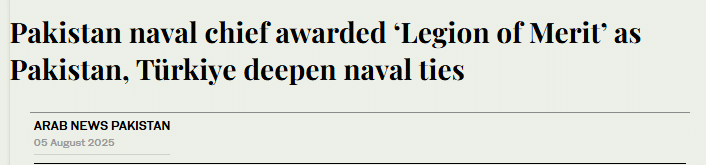
Source: Arab News
Securing the Maritime Commons: Counter-Threat Convergence
Pakistan and Turkey face common asymmetric threats that require joint responses. In June 2025, Pakistan held naval defense drills. These exercises simulated sabotage, infiltration, and unconventional attacks. Such threats are also a concern for Turkey in the Eastern Mediterranean. The AMAN-2025 exercise focused on piracy, drug trafficking, and terrorism. Multinational task forces trained together to counter these challenges. Admiral Ashraf stressed that close naval cooperation is essential to tackle evolving threats. Turkey’s MAVI VATAN drills highlighted cyber warfare and electronic defense. Pakistan is keen to learn from Turkey’s expertise in these areas. Strengthening port cybersecurity and electronic defenses is now a priority for both nations. Their growing collaboration is a unified response to modern maritime challenges.
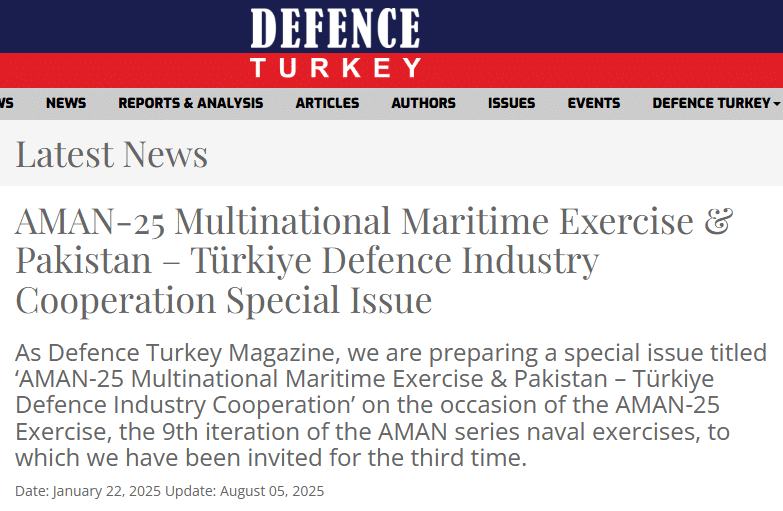
Source: Defence Turkey
Future Trajectory: Anchoring a Muslim Maritime Partnership
Pakistan and Turkey are setting ambitious goals for their maritime partnership. They will help streamline joint exercises, intelligence sharing, and threat assessments. Economic cooperation is another focus. Both countries aim to link their $5 billion trade target to port development and seabed mining projects. The MILGEM corvette program boosts Pakistan’s blue-water patrol capacity through local shipbuilding. The Agosta 90B submarine upgrades will extend Pakistan’s underwater strike capabilities. The AMAN Dialogue Forum, launched in 2025, positions Pakistan as a key player in regional naval security. Joint development of unmanned maritime vessels will enhance Pakistan’s surveillance of its Exclusive Economic Zone. Together, these initiatives anchor a Muslim maritime partnership with strategic depth and economic vision.
You May Like To Read: China’s Position on Kashmir at the UN: Silent Support or Strategic Solidarity?
Conclusion
The Pakistan-Turkey naval partnership is now practical and strategic, not just symbolic. For Pakistan, it brings three key advantages. First, it strengthens deterrence against regional maritime powers. Second, it provides access to advanced naval technologies. Third, it boosts Pakistan’s leadership role in Indian Ocean security. Admiral Ashraf aims for a fully modernized navy by 2035. Turkey plays a vital role in making this vision a reality. Fraternal ties are now a true force multiplier for peace. In today’s era of maritime competition, this alliance shows how Muslim nations can lead in ocean security. Through unity, innovation, and strong strategic bonds, Pakistan and Turkey are shaping a new maritime future together.