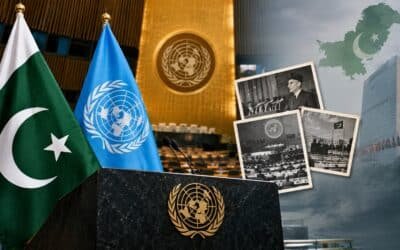
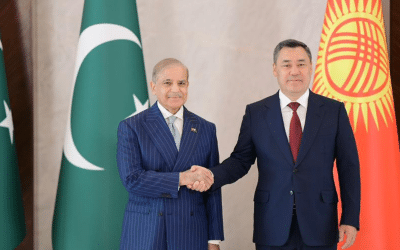
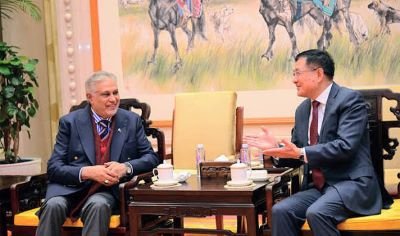
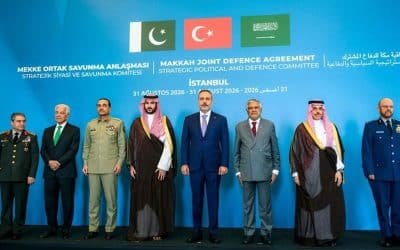
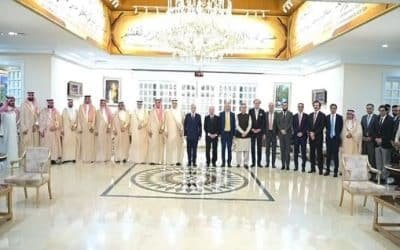
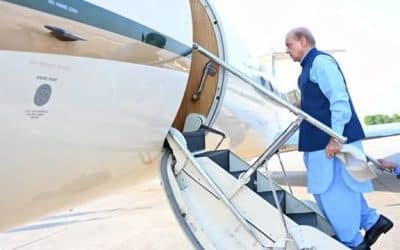
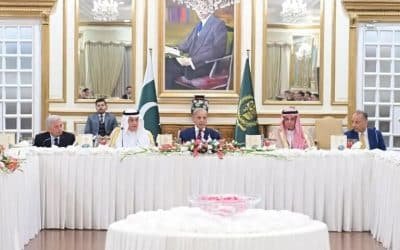
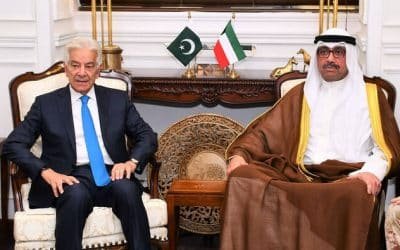
As BRICS (Brazil, Russia, India, China, South Africa) expanded in 2023-24, Pakistan moved to join the group. Islamabad says membership would boost its economy and strengthen its voice in the Global South. In August 2023, Pakistan formally applied. By late 2023, it was openly lobbying for support. The foreign ministry confirmed the formal request. It said Pakistan could play an important role in promoting multilateralism. Pakistan’s envoy to Russia told TASS they were contacting member states for backing. These actions show Pakistan’s interest is serious and ongoing, not just rhetoric.

Source: X/@TheDailyCPEC
Russian Support and High-Level Endorsements
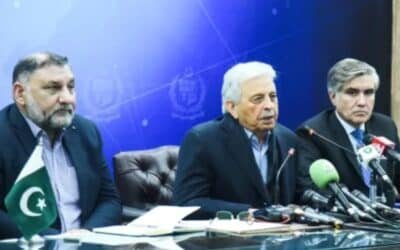
Russia is a strong supporter of Pakistan in its bid to join BRICS. Deputy Prime Minister Alexei Overchuk, speaking at a BRICS outreach meeting, stated that his country would be supportive of Pakistan joining BRICS. He vowed that Russia would contribute to it. Pakistan’s Ambassador to Russia confirmed that Islamabad has already submitted an application and that it hopes to join as a member under Russian chairmanship. At an IMF and World Bank meeting in Washington, the Finance Minister also added, “Yes, we are,” seeking membership of BRICS. Such explicit announcements made by the top officials and the open support granted by Russia demonstrate the seriousness of the bid. They also prove it is more than just talk. It is a long-term practice that is carried out with the support of diplomacy and popular commitment.
You May Like To Read: Rahul Gandhi, INDIA Bloc MPs Detained During Protest

Source: Sputnik
Roadblocks: India’s Opposition and BRICS Rules
The journey of Pakistan to BRICS is tough. New members must be admitted with the unanimous consent of the group. This poses a significant challenge to the Pakistani bid in the form of rival India. According to the experts, the application will most likely be opposed by New Delhi. Pakistan’s foreign office has hinted before that a member blocked its entry in earlier talks. It did not mention the country. The comment was a hint at Indian resistance. The bid has also been rejected by the Indian analysts as weak. While Islamabad frames its membership as a step toward inclusive multilateralism and greater cooperation among developing nations, experts warn that acceptance depends heavily on the state of India-China relations. Critics say New Delhi’s stance, whether driven by rivalry or geopolitical alignment with the US and Israel, could limit Pakistan’s prospects, despite the bloc’s recent expansion and rising appeal in the Global South.

Source: Al Jazeera
The Stimson Center observes that, despite the support of Russia, Pakistan will still be required to secure the approval of all members. India is amongst them. This is difficult because of decades of hostility between India and Pakistan. Pakistan cannot join under the existing regulations without the approval of India. This is why critics ask whether Islamabad’s drive is more than just politics.
You May Like To Read: Can Punjab’s Water Strategy Save Pakistan from a Thirsty Future?
Pakistan’s Long Road to BRICS Membership
Domestically, Pakistani commentators have urged action. During the 2023 BRICS summit in South Africa, analysts noted that Saudi Arabia, Iran, and Argentina were invited to join. Columnists argued that Pakistan must submit its application if it expects China and Russia to support it. After such calls, Pakistan filed officially in late 2023. By 2024, senior leaders praised BRICS engagement as proof of South-South solidarity. “The world is moving towards regionalism,” said one senator who attended BRICS events. Others stressed economic benefits. They cited IMF forecasts that BRICS economies will drive global growth. They also called membership a hedge against Western-dominated institutions.
As of late 2025, Pakistan is still a BRICS aspirant without membership. The expanded BRICS roster that took effect on January 1, 2024, did not include Pakistan. Pakistan continues to lobby quietly. The foreign ministry says Islamabad is “focused and serious” about joining BRICS. Lawmakers and strategists give several reasons. They say Pakistan sits at a geo-economic crossroads, linking CPEC and Central Asia. They argue that BRICS development banks could help fund projects. Others hope that if tensions ease, the door may open. They note that better India-Pakistan ties could change the equation.
Reality, Rhetoric, and Roadblocks in Pakistan’s BRICS Bid
For now, Pakistan’s role in BRICS expansion holds both reality and constraint. Reality, because Pakistan has applied. It won open support from Russia. It keeps pushing its campaign. Rhetoric, because the goal is blocked without India. Pakistan calls its application a serious policy. It points to talks with BRICS members. It claims it will gain from the bloc’s projects. India’s opposition remains the main obstacle, making observer status a more likely outcome despite Islamabad’s continued lobbying.
JUST IN:Russia says that it strongly supports pakistan to join BRICS, but India opposes it and tries to isolate pakistan at intensified front. pic.twitter.com/RBQxwmFTN9
— World Affairs (@World_Affairs11) November 3, 2024
You May Like To Read: Language and Identity: How Cultural Nuances Amplify Disinformation
Conclusion
Islamabad’s push to join BRICS is deliberate and calculated, aimed at securing both economic and strategic benefits. It is not mere rhetoric; Pakistan has submitted a formal application and pursued high-level diplomacy to press its case. Yet membership is not in its hands alone. The outcome rests on broader geopolitical shifts that Islamabad cannot fully control. Even so, Pakistani policymakers keep making the argument that a truly inclusive BRICS should welcome Pakistan, pointing to the country’s role in counterterrorism, its position as a connectivity hub, and its potential to strengthen South-South cooperation. They also present the bid as a way to reduce dependence on Western-led financial systems. Whether this diplomatic effort results in full membership or evolves into a “BRICS Plus” partnership remains uncertain, but for now, Islamabad appears determined to keep its application active and its lobbying persistent.