


Pakistan is a country built on agriculture. The land generates a large portion of its revenue, and most people work in farming. However, the land needs water, and recently, there hasn’t been enough. Droughts are becoming a serious problem, severely impacting the country’s economy.
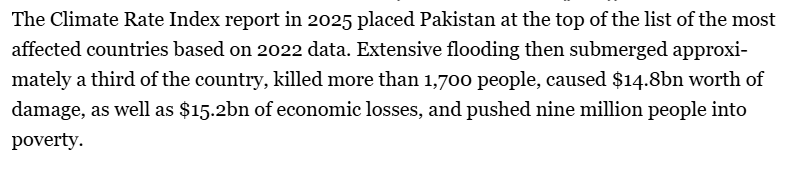
The issue of no rain is a serious concern for Pakistan, as a significant portion of its economy relies on water. The country gets most of its water from the Indus River system, which is fed by rain and melting snow. But with climate change, the weather is getting strange. The monsoons don’t bring as much rain as they used to, and it’s hotter for longer. This means less water in the rivers and less water in the ground.
The Impact on Farming and People
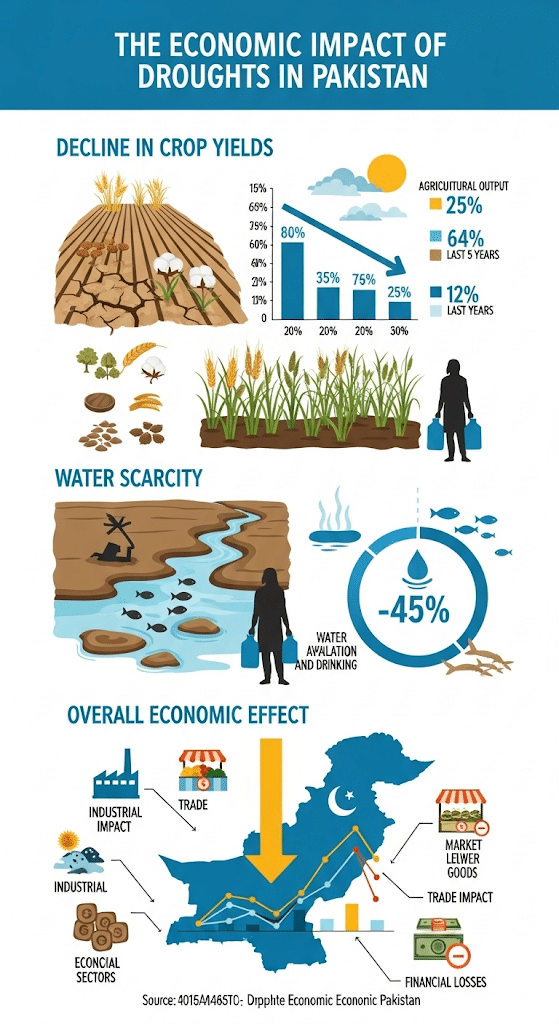
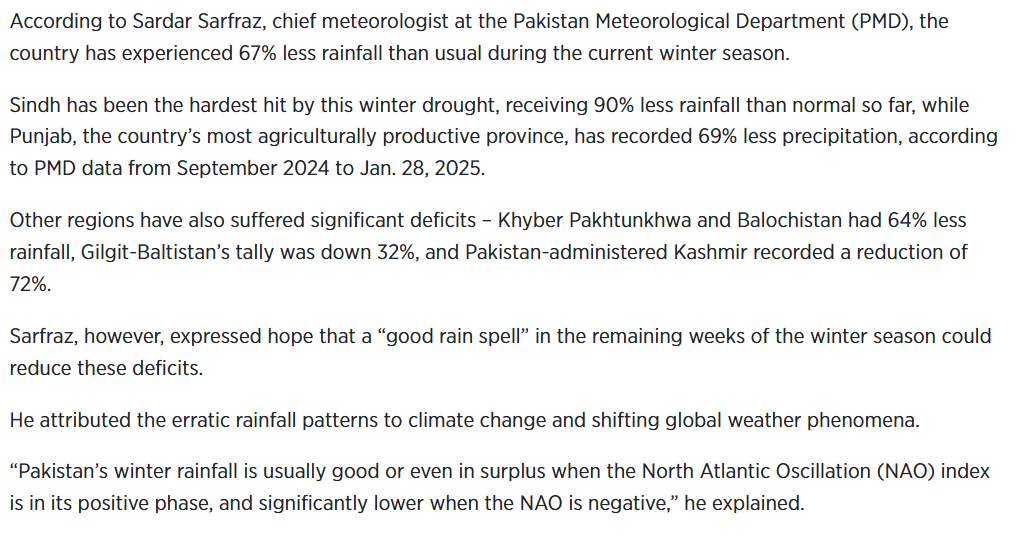
When there’s no water, crops die. Wheat, rice, and sugarcane are some of Pakistan’s most important crops. However, they require a significant amount of water to grow. During a drought, their yields can drop by half or more.
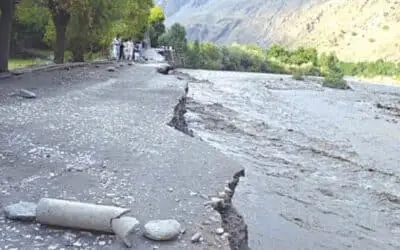
Source: Al Jazeera
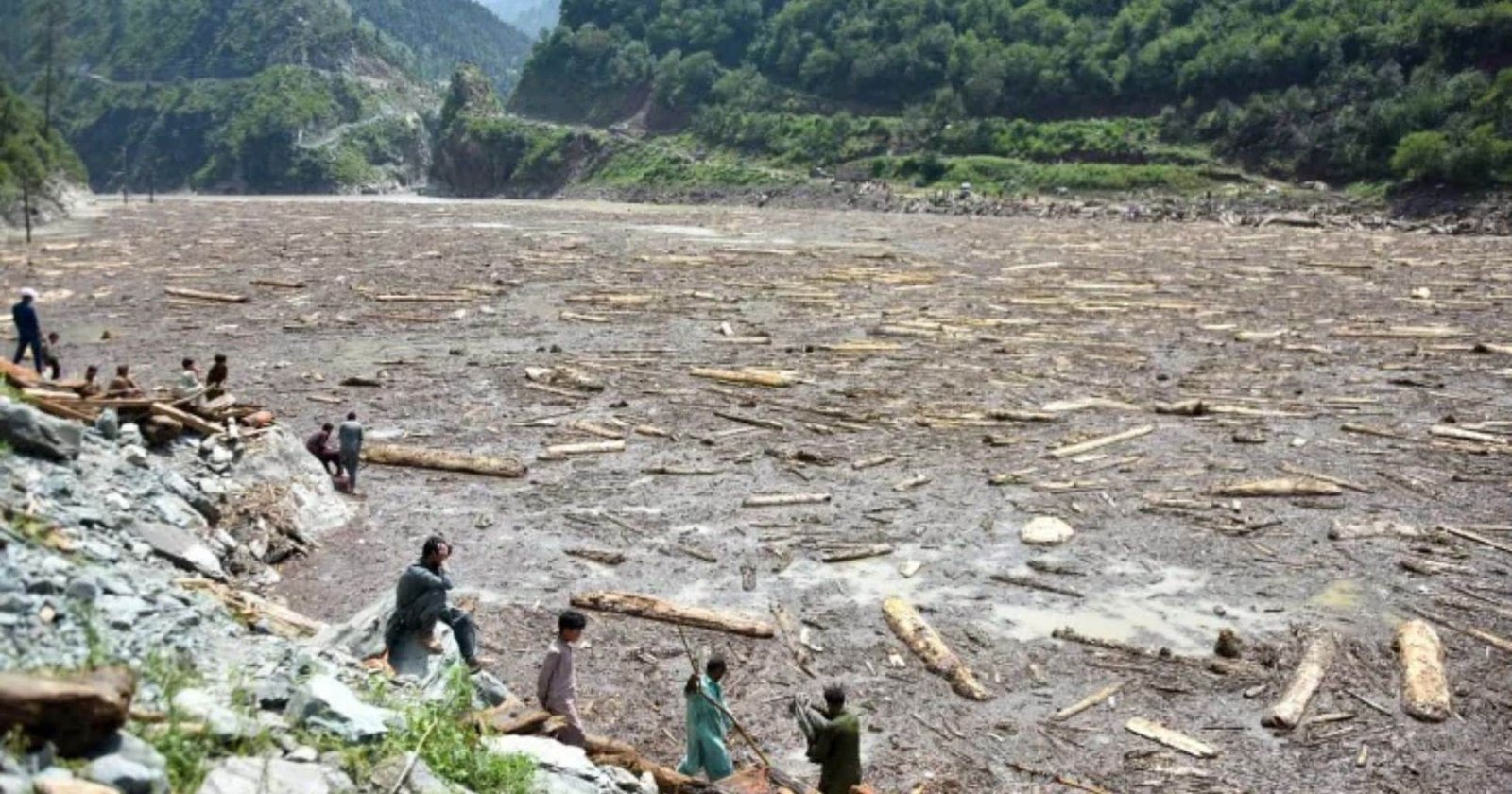
Source: Al Jazeera
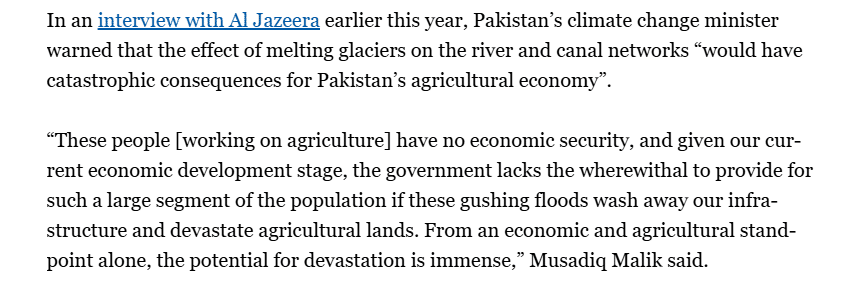
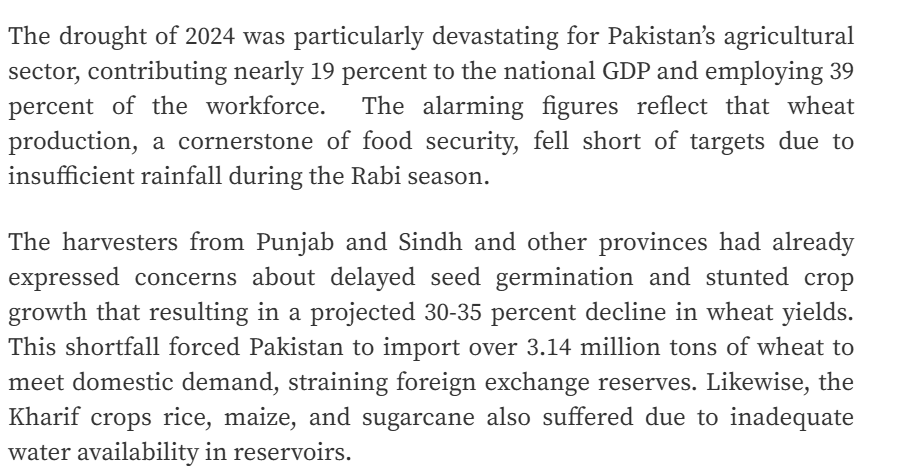
This is terrible for farmers, who lose their income and sometimes their homes. It also means there’s less food for everyone, which makes food prices go up. This hits poor people the hardest, making it tough for them to feed their families. The country’s agriculture sector has seen its growth fall short of targets because of drought conditions. For instance, the Pakistan Economic Survey showed that major crops like wheat and cotton contracted by a significant percentage, which slowed down the country’s overall economic growth . This kind of economic impact is a huge concern for a country that relies so heavily on its farms.
Source: The Nation
The problem doesn’t stop with farming. Industries that use farm products, like the textile industry, also suffer. When cotton production drops because of a drought, textile factories don’t have enough material. This can lead to factories closing and people losing their jobs. It also means the country has to spend money to buy these things from other countries. In fact, one report revealed a 33% decline in cotton production, forcing the government to import millions of dollars’ worth of cotton. This directly hurts the economy and makes it harder for Pakistan to export goods.
Source: AA Turkey
The Cost to the Country
Droughts are costing Pakistan a lot of money. They hurt the economy and make it harder for the country to grow. The government has to spend a lot to help people who have lost their farms and to fix the damage. All this takes money away from other important things like schools and hospitals. For instance, a major drought from 2000 to 2002 caused a negative growth rate for the agriculture sector and a slower overall GDP growth for the country. The financial losses are huge, and they affect everything from food prices to job security.
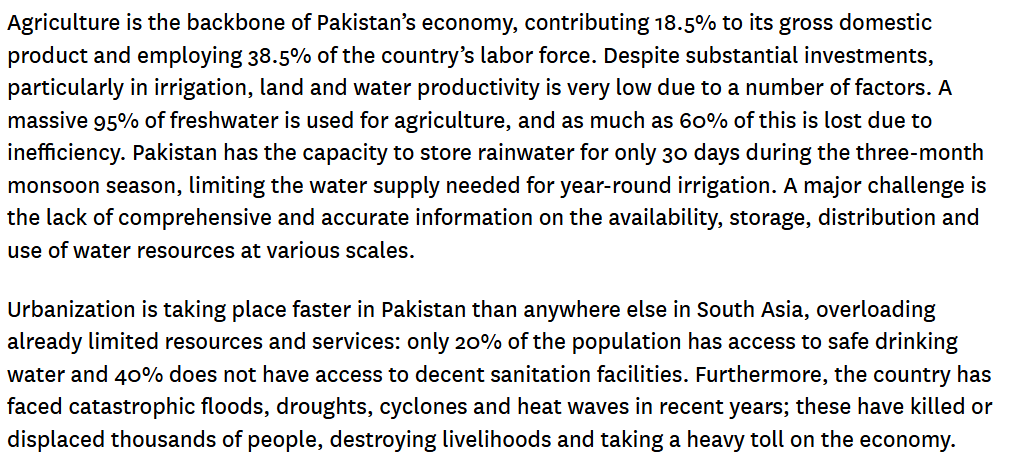
One of the biggest problems is that Pakistan can’t save enough water. The country gets a lot of rain during the monsoon season, but it only has the capacity to store enough for about 30 days. Most of the water just flows out to the sea. Meanwhile, a lot of the water that is used for farming is lost because of old, broken irrigation systems.
Source: IWMI
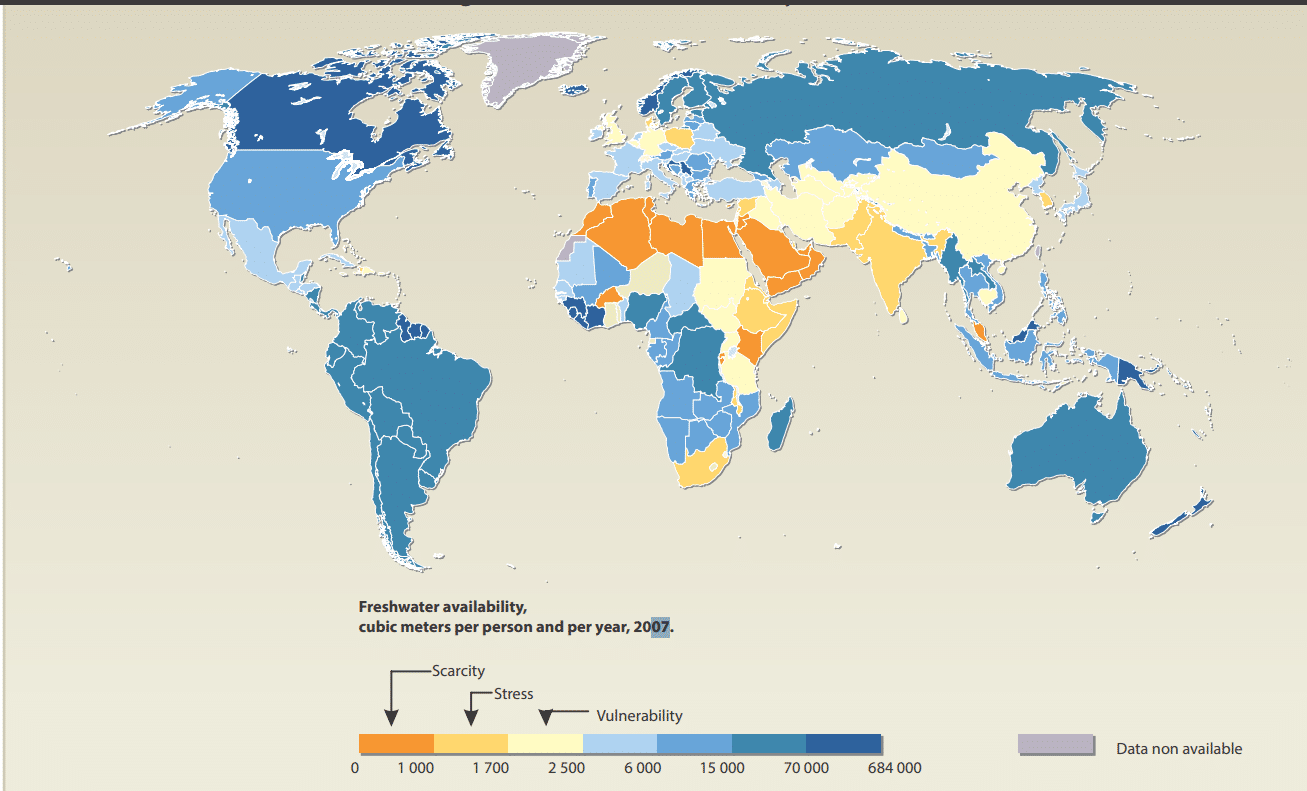
The per-person water availability in Pakistan has dropped dramatically over the years, falling well below the point where a country is considered to be under water stress . This scarcity is not just about a lack of water; it’s also about not managing the water that’s available well enough. The country’s water security is at risk, and this has serious consequences for public health and economic growth.
You May Like To Read: Effects of Climate Change on Education in Pakistan
Looking for Solutions
Pakistan knows it has a problem and is trying to fix it. The government and other groups are working on better ways to manage water. One new idea is to use technology to see when a drought is coming. They’re developing a Drought Management System that uses data from satellites to give early warnings . This helps people get ready before the worst happens.
Source: UNDP
They are also looking at new ways to grow crops that don’t need so much water. Things like switching to more drought-resistant crops and using smarter irrigation methods can help farmers save water. Building new dams and reservoirs is also a big part of the plan to store more water for dry times. For example, some experts suggest building more water storage to handle the large amounts of rainfall that come during the monsoon season.
Fixing this will take a lot of work from everyone. It means changing old habits and spending money on new technology. But if Pakistan can learn to use its water smarter, it can protect its farmers, its industries, and its economy from the pain of droughts. It’s a big challenge, but with good planning, a dry future doesn’t have to be a lost one.
You May Like To Read: Industrial Challenges Amidst Rising Temperatures in Pakistan