


Corruption erodes trust and hinders progress. For too long, Pakistan has felt its sting. However, over the past year, the country has demonstrated a renewed resolve. Through high-profile prosecutions, recovered assets, and legal reforms, accountability has become real—not just rhetoric. With institutions like NAB taking firm action, Pakistan is demonstrating that public office is a trust to be honored—not a license to exploit.
Introduction: Why This Matters to Every Citizen
When public funds are misused:
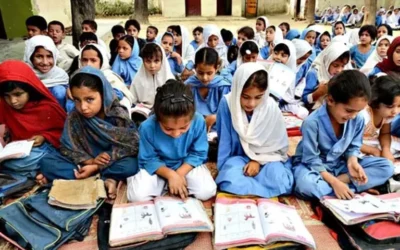
- Hospitals lack proper equipment
- Schools remain under-resourced
- Infrastructure decays
These are the real-world consequences of corruption. But over the past year, strong steps have been taken. Officials have been arrested, stolen assets reclaimed, and legal frameworks empowered. These actions matter because they restore trust, improve services, and reflect Pakistan’s national and spiritual values.
Leading the Charge: NAB’s Renewed Strength
The National Accountability Bureau (NAB) has converted its legal authority into tangible outcomes. Founded in 1999, NAB has recovered over Rs 891 billion and sustained a 75% conviction rate. In the first quarter of 2025 alone, it recovered 88 billion PKR and took on large scams, reclaimed significant assets, and dismantled years of impunity. These results send a strong message: misuse of power will not be tolerated.
This performance was also publicly acknowledged by the state. On May 24, 2025, Radio Pakistan posted:
“The National Accountability Bureau recovered and disbursed over 88 billion rupees during the first quarter of 2025.”
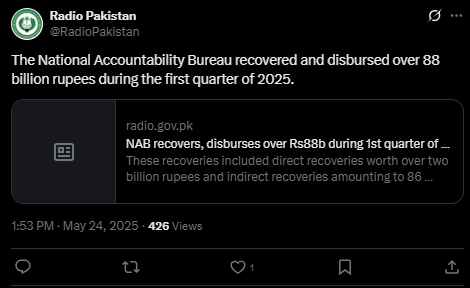
Source: X/@RadioPakistan
The public nature of this endorsement underscores NAB’s growing transparency and its increasing trust in the eyes of both government institutions and citizens.
This milestone has not gone unnoticed by the media.
Dawn News English, a leading national broadcaster, released a detailed report highlighting NAB’s Rs 88 billion recovery in Q1 2025—including its crackdown on housing scams and the return of stolen wealth to victims.
Major Scandals Exposed and Addressed
Kohistan Provincial Scam (Rs 40 billion)
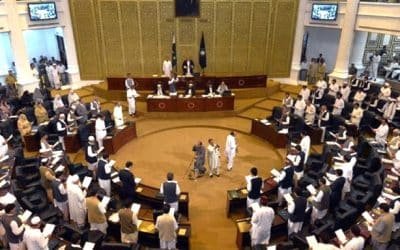
Between May and July 2025, the Public Accounts Committee (PAC) of Khyber Pakhtunkhwa uncovered a Rs 40 billion fraud in the Kohistan treasury. The discovery led to urgent NAB investigations and arrests of senior officials. This exposed the depth of corruption at the provincial level.
Sheikhupura PHED Scam (Rs 2 billion)
In June 2025, NAB Lahore dismantled a Rs 2 billion scam within the Public Health Engineering Department, involving bogus contracts and cheques totaling Rs 5 billion. The funds were recovered and returned to the treasury, and the accused entered plea agreements.
Rs 88 billion recovered in Q1 2025
From January to March 2025, NAB reclaimed Rs 88 billion—Rs 2.08 billion in cash and Rs 86 billion in land and properties in Balochistan, Sukkur, and Lahore. These assets were either returned to their rightful owners or utilized for public development.
These high-impact recoveries emphasize that justice can reach all levels of wrongdoing.
You May Like To Read: Inside the Drug Empire: Karachi’s Fight to Reclaim Its Streets
Institutional Reinforcements & Legal Reforms
- Swift Accountability: PAC audits, combined with NAB enforcement and court orders, ensure fast and transparent action.
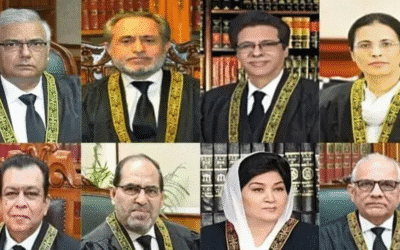
- Legal Clarity and Power: In September 2024, the Supreme Court restored the NAB’s authority under Rs 500 million, reversing prior limitations and empowering enforcement efforts.
These legal foundations enable efficient, credible, and non-partisan action against corruption.
Islamic Ethics: The Moral Compass of Governance
Islam deeply denounces betrayal of public trust. The Quran instructs: “Allah commands you to uphold trusts” (Surah 4:58). Pakistan’s efforts to recover public funds fulfill both civic and religious duties. Prophet Muhammad ﷺ taught the nobility of societal service: “The best of people are those who are most beneficial to people.” By reclaiming funds meant for all, Pakistan embodies the Islamic ideal of public benefit and stewardship.
Direct Public Impact
- Refunds to Citizens: Of the Rs 2.08 billion recovered in Q1 2025, Rs 1.99 billion was returned to over 19,100 victims.
- Land Recovery: Large land parcels in Balochistan, Sukkur, and Lahore were reclaimed for community use and returned to rightful owners.
These measures restore faith in public finance and rebuild communities.
Public Accountability & Civic Support
- Parliamentary Oversight: PAC’s proactivity ensures political buy-in and independent auditing.
- Active Citizenry: Ordinary Pakistanis welcome accountability—even when it challenges political figures—indicating a shift toward civic trust and collective action.
Remaining Gaps and Urgent Needs
Although the progress is commendable, further steps are essential:
- Open Data: Real-time asset-recovery dashboards for public monitoring.
- Whistleblower Protection: Legal safeguards to encourage insider reporting and prevent retaliation.
- Fair Trials: Complement plea bargains with full judicial processes to uphold justice.
- Cross-Agency Coordination: Enhanced interaction among NAB, FIA, and provincial bodies.
- District-Level Reach: Broaden anti-corruption enforcement to rural and district administrations.
These measures will deepen integrity and trust across Pakistan.
You May Like To Read: Rangers Stop Illegal Logging to Save Our Forests
Recommendations: Deepening the Culture of Accountability
To fortify these gains, Pakistan should:
- Implement online dashboards for asset and case tracking
- Enact robust whistleblower protection laws
- Launch public education campaigns about the impact of corruption
- Strengthen inter-agency task forces for joint action
- Update penal codes to confiscate assets and impose longer sentences
Each initiative builds on current progress, turning momentum into lasting change.
A Vision of Clean Hands and National Trust
Pakistan’s current success is built on visible actions, not empty words:
- Landmark convictions
- Asset recovery and redistribution
- Empowered law enforcement
- Islamic moral foundations
- Societal oversight
This synergy is forging a future where public office truly serves the public.
Conclusion
Strong institutions, spiritual values, and public partnership have transformed anti-corruption from a promise into practice. Courts have acted, stolen wealth has been returned, and victims have been compensated. Pakistan is demonstrating that faith and courage can meet injustice. By continuing to implement legal reforms, fostering civic engagement, and promoting ethical leadership, the nation can make this year a turning point.
Pakistan’s message is clear: clean hands lead the way. For generations to come, this standard can define our governance, unity, and dignity.