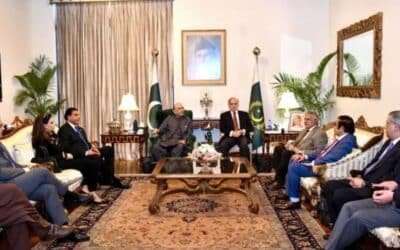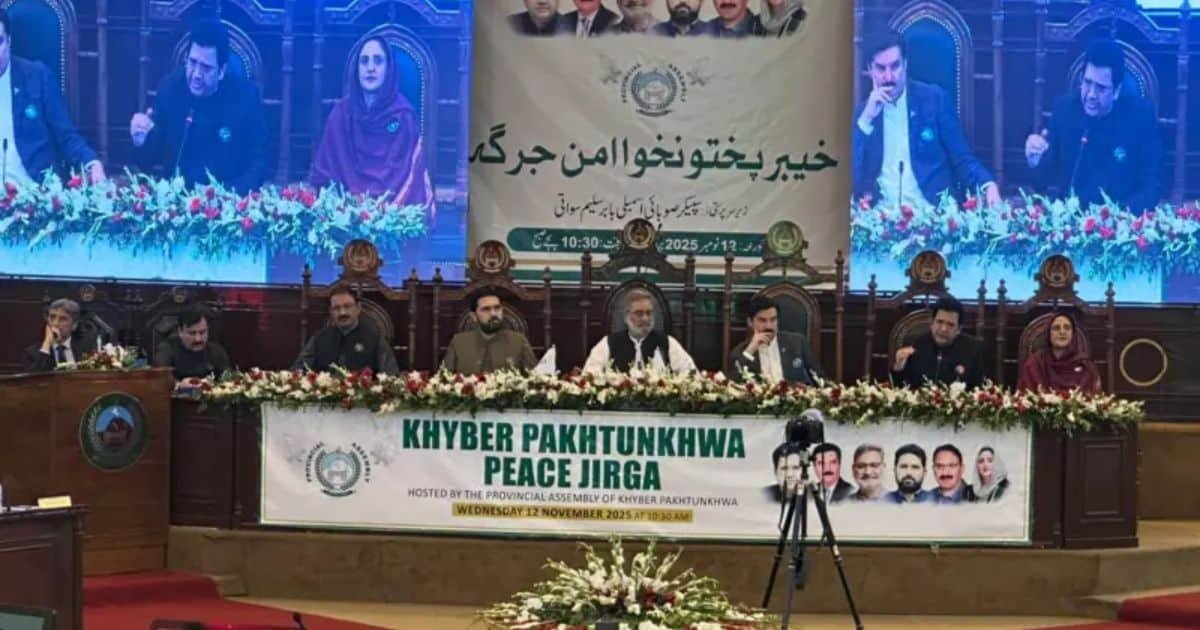





Peshawar, November 13: The Khyber Pakhtunkhwa (KP) peace jirga on Wednesday unanimously called on the federal government to prioritise negotiations with Afghanistan and include the provincial government in formulating national Afghan policy. Convened by the KP government, the multi-party gathering also urged Islamabad to reduce tensions with Peshawar, reopen trade routes with Afghanistan, and formulate a comprehensive provincial action plan for peace.
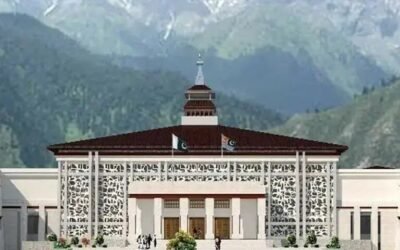
Chaired by KP Assembly Speaker Babar Saleem Swati, the jirga brought together an unusually broad cross-section of stakeholders, including Chief Minister Sohail Afridi, Governor Faisal Karim Kundi, former governors and chief ministers, lawmakers from both national and provincial assemblies, tribal elders, lawyers, members of civil society, and representatives from all major political parties, including the Awami National Party (ANP), Jamiat Ulema-i-Islam-Fazl (JUI-F), Pakistan Peoples Party (PPP), Jamaat-i-Islami (JI), and the Pakistan Tehreek-i-Insaf (PTI).
خیبر پختونخوا امن جرگے کا باقاعدہ آغاز ہو گیا. تقریب کا آغاز صوبے کے تمام شہداء کے لیے دعا مغفرت سے کیا گیا۔#KPAmanJirga pic.twitter.com/FCk368DQVd
— Chief Minister KP (@KPChiefMinister) November 12, 2025
Call for Inclusive Policy and Lasting Peace
In his address, Chief Minister Afridi said the province had suffered from terrorism for over two decades and demanded a “shift in national security policy” to ensure long-term peace. “Decisions made behind closed doors and imposed on us have not worked,” he said, adding that all stakeholders — political, civilian, and military — should jointly draft the new counterterrorism strategy.
Afridi insisted that peace in KP could not be restored through military means alone, saying war should always remain the last resort. “Our politics may differ, but our peace is shared,” he remarked, highlighting the sacrifices of the province’s people and security forces. The chief minister reiterated his demand for KP’s full share in the National Finance Commission (NFC) Award, estimated at Rs400 billion, and urged completion of the economic integration of the merged tribal districts.
Jirga Declaration
After hours of discussion, the jirga issued a declaration condemning the recent wave of terrorist attacks in KP, particularly in the merged districts. It called for an in-camera briefing for lawmakers on ongoing counterterrorism operations and the full implementation of previous peace-related resolutions passed by the provincial assembly.
Participants proposed forming local “peace forums” comprising youth, women, minorities, and politicians to promote social harmony and dialogue. They also demanded that the provincial finance commission be linked with the NFC to ensure financial autonomy for local governments.
The declaration further urged the federal government to deliver long-standing dues to KP, including Net Hydel Profit, excise duty on oil, water share, and gas royalties. The jirga also called for implementing the 11th NFC Award and ensuring wheat supply under Article 151 of the Constitution.
پشاور:خیبرپختونخوا اسمبلی امن جرگے کا اعلامیہ جاری کردیا گیا
پشاور:امن جرگے اعلامیہ پر اسپیکر سمیت 21 جرگہ ممبرز کے دستخط موجود
امن جرگہ تجویز کرتا ہے کہ صوبائی حکومت ،اسمبلی صوبائی ایکشن پلان مرتب کرے،اعلامیہ
پاک افغان کے تمام تاریخی تجارتی راستوں کو فلفور کھول دیا جائے،… pic.twitter.com/F7zrzQh6O3
— PTI Khyber Pakhtunkhwa (@PTIKPOfficial) November 12, 2025
Leaders Stress Dialogue and Unity
Governor Kundi praised the KP government for convening the jirga, terming it an “excellent step” towards collective wisdom and unity. “We must set aside politics and focus on the province’s prosperity,” he said. Kundi proposed forming a joint committee with representation from all parliamentary parties to sustain dialogue and bridge divisions between the Centre and the province.
The governor noted that repeated external interventions in Afghanistan had destabilised the region, leaving behind weapons that now fuel militancy in KP. “Our province does not have the capacity to counter these modern threats alone,” he warned, calling for greater federal support.
Political Consensus Across the Aisle
Senior PTI leader and former National Assembly speaker Asad Qaiser emphasised the need for a diplomatic approach to relations with Kabul. “Pakistan and Afghanistan cannot survive without each other,” he said, urging the Centre to engage the Afghan Taliban government through dialogue.
ANP leader Mian Iftikhar Hussain stressed abandoning the “good Taliban, bad Taliban” distinction, calling it a failed policy. “The complete implementation of the National Action Plan is the only way forward,” he asserted. He also demanded the immediate reopening of all trade routes with Afghanistan to revive the border economy.
Former chief minister Mehmood Khan of the PTI-Parliamentarians questioned the fate of past peace jirgas, urging the government to engage “key stakeholders” directly in talks with the federal government.
PML-N’s opposition leader in the KP Assembly, Ibadullah Khan, said the moot reflected a collective desire to restore peace. “We may have political differences, but today we are united on one agenda — peace,” he said, adding that there should be “no negotiations with terrorists” responsible for civilian deaths.
PPP’s parliamentary leader Ahmad Karim Kundi echoed similar views, noting that it was the first time a peace jirga had been held inside the KP Assembly — a sign, he said, of the province’s collective will to reclaim security and stability.
Context of Rising Violence
The jirga took place amid a surge in terrorist activity across the province and the country. Just a day earlier, a bomb attack in Dera Ismail Khan’s Daraban tehsil injured at least 14 security personnel, while an assault on the Cadet College in Wana left three people martyred. The federal capital also witnessed a rare suicide bombing that killed 12 people.
“The attacks in Bannu, Wana, and Islamabad ahead of the jirga are a conspiracy to sabotage the peace process,” former KP minister Kamran Khan Bangash wrote on X. “But the enemies of peace will fail, and peace is our future.”
خیبرپختونخوا اسمبلی ہال میں کچھ دیر بعد تمام سیاسی جماعتیں اور مکاتبِ فکر کے نمائندے صوبے میں امن کے لیے سرجوڑ کر بیٹھیں گے۔ جرگے سے قبل بنوں، وانا اور اسلام آباد میں امن دشمنوں کی کارروائیاں امن عمل کو سبوتاژ کرنے کی سازش ہیں، امن دُشمن ناکام ہونگے اور امن ہی ہمارا مستقبل ہے۔ pic.twitter.com/dhiBnmRDEE
— Kamran Khan Bangash 🇵🇰 (@kamrankbangash) November 12, 2025
Push for Federal-Provincial Coordination
Participants repeatedly emphasised that sustainable peace in KP was impossible without coordination between the Centre and the province. They called for using diplomatic channels with Kabul to address cross-border militancy and for recognising the unique challenges faced by KP as a frontline region.
Speaker Swati closed the session by thanking all attendees for their participation and reiterating that “peace above politics” would remain the jirga’s guiding principle.
The jirga’s recommendations will now be compiled and presented formally to the federal government in the coming weeks, as KP’s leadership seeks to institutionalise a joint framework for peace — one rooted in dialogue, inclusion, and provincial empowerment.
You May Also Like: ANP Leader’s Car Bombed in Swat
Check out our latest video: