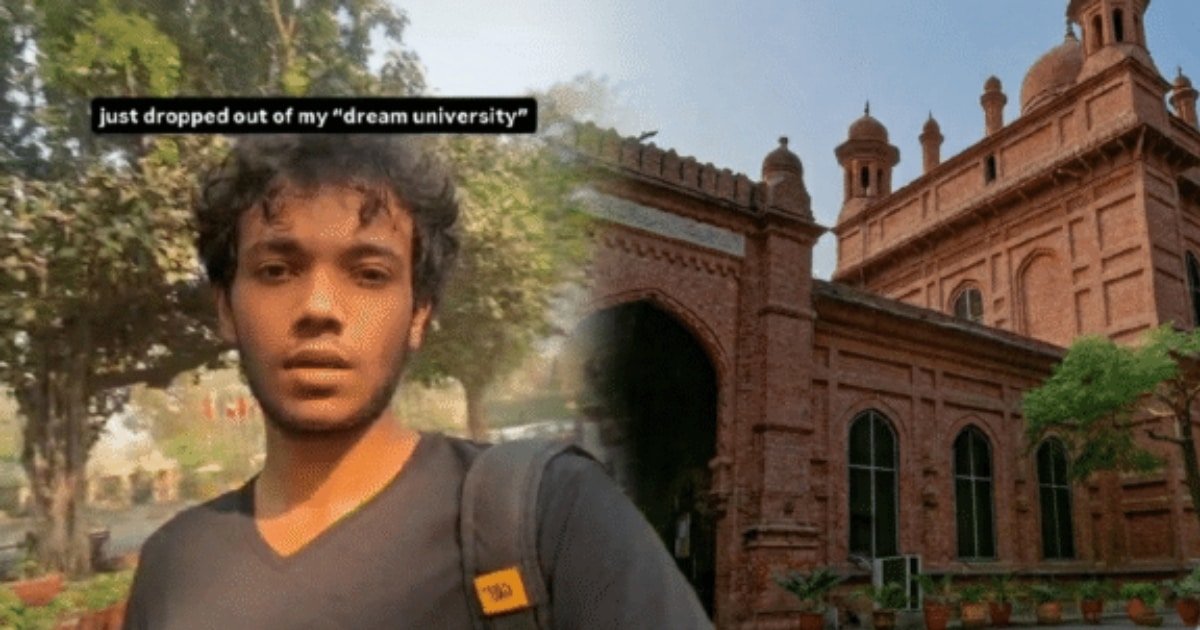





In the first week of March 2026, a single video began circulating on social media that did what decades of internal administrative policies could not: it forced a national reckoning on the dark underbelly of Pakistan’s most prestigious art institution. Abdul Rehman Asim, an influencer beloved for his “towel-clad” comedy and genuine enthusiasm for filmmaking, announced he was dropping out of the National College of Arts (NCA). He had secured a seat just weeks prior, a dream for any aspiring creator, but his exit was not about academic difficulty. It was an indictment of an entrenched, toxic ragging culture.
What followed was a digital avalanche. Asim’s departure acted as a catalyst, turning a personal decision into a systemic exposé of the college’s “azaadi” (freedom) rituals, which critics now argue have morphed into organized bullying.
View this post on Instagram
The Mirage of the “Dream University”
For many young artists in Pakistan, NCA is the finish line. Its red-brick corridors and legacy of creative giants like Shakir Ali and Sadequain suggest a bohemian utopia, a place where the rigid structures of traditional society are replaced by creative liberty. Abdul Rehman was no different; he had documented his admission journey with a joy that resonated with his millions of followers.
However, his withdrawal video painted a harrowing picture. He described an environment where seniors exercise a level of “ownership” over juniors that borders on the predatory. The “rituals” involve more than just light-hearted teasing; they reportedly include public humiliation, sleep deprivation, and psychological coercion. For a creator who built his brand on authentic, lighthearted humor, the stark reality of NCA’s “induction” was a cost he was unwilling to pay.
View this post on Instagram
The Viral Fallout: A Collective Trauma
The power of Asim’s influence meant that his video reached corners of the internet where students usually suffer in silence. Within 48 hours, platforms like Reddit and Instagram were flooded with testimonies from current students and graduates spanning over two decades. The consistency of these stories is what makes them so chilling.
Common themes emerged: the “Shared Hostel” trap, where freshmen are allegedly forced into sexualized acts or menial labor under the guise of breaking the ego. Others spoke of the financial exploitation where juniors are coerced into handing over their monthly allowances to “the collective”, a euphemism for the seniors’ discretionary fund. These aren’t just “rites of passage”; they are violations of basic human dignity.
NCA Lahore, the so-called “prestigious” dream, lol. I pulled this from a viral Instagram reel and countless survivor comments, daily bullying, merciless ragging, drugs and alcohol not just tolerated but encouraged, and sexual abuse ignored by staff. The VC, caught drunk in public pic.twitter.com/Knscwg9tln
— waleed (@Waleid_Khan) March 8, 2026
One of the most disturbing revelations involved the alleged apathy of the faculty. Multiple students claimed that complaining to the administration often leads to further targeting. The “old guard” of the institution reportedly views ragging as an essential tool to “toughen up” artists for the harsh realities of the professional world. In this worldview, trauma is rebranded as “character building,” and silence is rebranded as “loyalty.”
A Study in Stockholm Syndrome
Perhaps the most unique and modern phenomenon of this 2026 controversy is the digital backlash against those who speak up. A segment of the current NCA student body responded to Asim’s video with the Anti-Ragger hate wave. They labeled him and his supporters as weak, sensitive, or cowards who failed to understand the “sanctity” of NCA’s unique culture.
This reaction is a classic case of institutional Stockholm Syndrome. By framing abuse as “tradition,” the perpetrators position themselves as the protectors of the college’s soul. The logic is a vicious cycle: “I survived the humiliation, so I have earned the right to inflict it.” This defensive posture reveals a deep-seated fear that without these rituals, the institution loses its “edge.” In reality, it suggests a profound lack of imagination, a strange irony for a community of artists.
nca students and their cultist mentality of not being able to hear a single word against their institution is so baffling to me 😭🙏like worshipping your university is a new low lmaooo
— minhal || 🇵🇸 (@minhalrashed) March 10, 2026
The Cost of Monopolized Prestige
The reason this story has hit with such force in 2026 is that the demographic of the Pakistani student body is shifting. Gen Z and the early cohorts of Alpha are inherently “anti-bullying” and place mental health over institutional prestige. For decades, NCA’s monopoly on the “Art World” meant students felt they had no choice but to endure the abuse. If they left, they were told their careers were over.
However, we are now in the age of the independent creator. When a high-profile influencer like Abdul Rehman, who has the financial freedom and the platform to survive outside the “NCA system”, walks away, it devalues the “NCA Brand” in real-time. It tells the administration that the era of being a “closed-door cult” is officially over.
The situation with nca lahore makes it very clear that people completely misunderstand the concept of liberation and modernism for humiliation and a self proclaimed superiority complex which can be only obtained by harassing and assaulting others physically.
— momin (@mominasir99) March 9, 2026
The irony is glaring: an institution that prides itself on teaching Human Rights in Art, Political Resistance, and Visual Communication is being accused of failing to protect the physical and mental safety of its own students. If the National College of Arts wants to remain a relevant national treasure, it must address the fact that its most viral output this year wasn’t a masterpiece of cinema or a groundbreaking painting, it was a video about a broken dream.
The Road Forward
As of mid-March, the response from the NCA administration has been characteristically slow, with reports of “internal committees” being formed while the primary actors in the ragging videos remain on campus. For the public, however, the verdict is already in. The “Red Brick Walls” are no longer seen as a fortress of creativity, but as a barrier that allows toxic cycles to persist.
nca is the arsenal of pakistani universities no one got anything nice to say about it https://t.co/C8FqqWOgSm
— alyan (@tom_hoeland) March 10, 2026
The courage of one influencer to say “no” has emboldened a generation to demand that their education should not come at the cost of their soul. For NCA to survive the 21st century, it must learn that true “azaadi” is not found in the power to humiliate others, but in the power to create an environment where every artist, regardless of their “batch”, is treated with dignity.
You May Like To Read: The Gate of Secrets: Inside the 205th Urs of Sachal Sarmast
Check out our latest video: