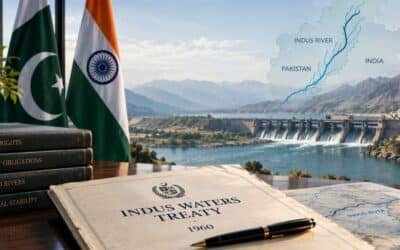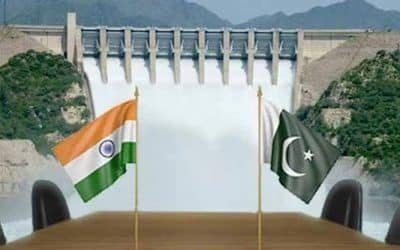





NEW YORK — Pakistan has categorically rejected India’s move to suspend the Indus Waters Treaty (IWT), describing it as illegal under international law during a United Nations Security Council debate on natural resource governance.
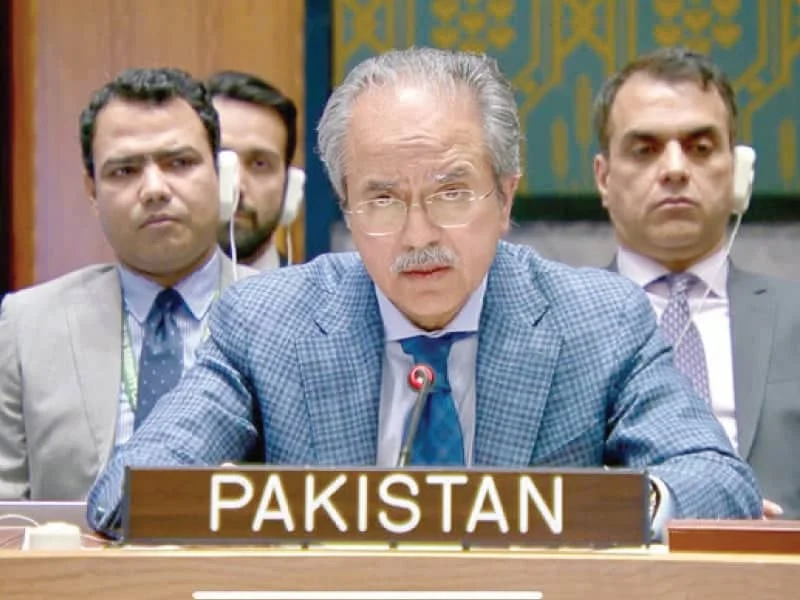
Speaking at the session, Pakistan’s Permanent Representative to the UN, Asim Iftikhar Ahmad, cautioned against the weaponisation of shared water resources. He stressed that no country should use vital natural assets as tools of political coercion, especially when such actions violate binding treaty obligations that directly affect more than 240 million people.
Statement by Ambassador Asim Iftikhar Ahmad, Permanent Representative of Pakistan,
At the Security Council High Level Open Debate on “Natural Resource Governance: The Foundation of Peace, Security and Prosperity”
(22 July 2026)
******Madam President,
We are pleased to see you… pic.twitter.com/qtZK77UYnk
— Permanent Mission of Pakistan to the UN (@PakistanUN_NY) July 22, 2026
Diplomatic Exchange at the UN Security Council
After remarks by Indian representative Harish Parvathaneni, who cited cross-border terrorism allegations to defend New Delhi’s position, Pakistan’s First Secretary Ansar Shah exercised the right of reply to counter the claims.
| Diplomatic Representative | Key Arguments & Legal Position Presented |
|---|---|
| Ambassador Asim Iftikhar Ahmad | Framed natural resource governance within international law; highlighted the August 2025 Permanent Court of Arbitration (PCA) ruling that reaffirmed the IWT remains valid and fully binding. |
| First Secretary Ansar Shah | Stated the IWT lacks provisions for unilateral abeyance; rejected terrorism claims and cited Indian sponsorship of proxy groups including the TTP, BLA, and Majeed Brigade. |
Right of Reply by First Secretary Ansar Shah
In Response to Remarks by Indian Representative
At the Security Council High-Level Open Debate
(22 July 2026)
*******President,
2. Pakistan is compelled to take the floor again to respond to India’s misleading statement, which is a… pic.twitter.com/AqbjPsz8qg
— Permanent Mission of Pakistan to the UN (@PakistanUN_NY) July 23, 2026
Legal Standing and Regional Security Implications
The Pakistani delegation underlined that the August 2025 ruling by the Permanent Court of Arbitration clearly upheld the treaty’s validity and its dispute settlement mechanisms. Shah warned that any attempt to alter water flows as a means to punish downstream populations would constitute a serious violation of international norms and pose a direct threat to regional stability.
Pakistan also reiterated its longstanding position on the Jammu and Kashmir dispute, reminding the Security Council of its responsibilities under Article 25 of the UN Charter and emphasising that unilateral actions cannot change the legally recognised disputed status of the territory.