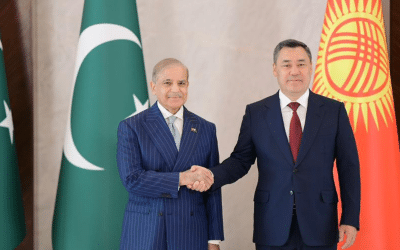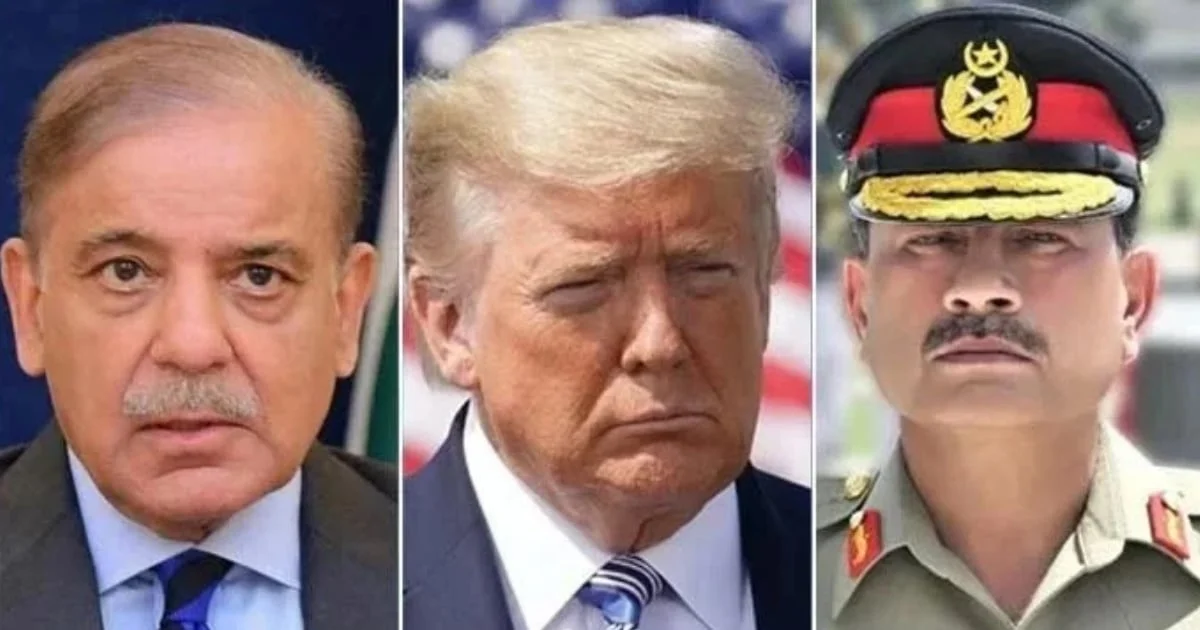



ISLAMABAD — In a stunning diplomatic reversal that has pulled the world back from the edge of a global conflagration, U.S. President Donald Trump announced on Wednesday a suspension of all military strikes against Iran. The breakthrough, termed a “double-sided ceasefire,” was secured following intensive backchannel negotiations led by Pakistan’s Prime Minister Shehbaz Sharif and Chief of Army Staff (COAS) Field Marshal Asim Munir.
With the greatest humility, I am pleased to announce that the Islamic Republic of Iran and the United States of America, along with their allies, have agreed to an immediate ceasefire everywhere including Lebanon and elsewhere, EFFECTIVE IMMEDIATELY.
I warmly welcome the…— Shehbaz Sharif (@CMShehbaz) April 7, 2026
The two-week truce, effective immediately, marks the first significant pause in hostilities since the U.S. and Israel launched operations against Iran on February 28. Pakistan has officially invited delegations from Washington and Tehran to Islamabad on April 10 for “conclusive negotiations.”
Key Highlights of the Truce
-
The Pakistan Intervention: President Trump confirmed he suspended the “destructive force” scheduled for Tuesday night following direct conversations with PM Shehbaz and Field Marshal Munir.
-
Strait of Hormuz Reopened: Iran has agreed to allow “safe passage” through the strategic waterway for the two-week duration, coordinated by its armed forces.
-
The 10-Point Roadmap: The U.S. has accepted Iran’s 10-point proposal as a “workable basis” for talks, including points on non-aggression and the lifting of sanctions.
-
Regional Scope: While the U.S. and Iran have agreed to a broad ceasefire, Israel has expressed support but clarified that its operations in Lebanon are not currently included in the deal.
-
Trump’s “Golden Age”: On Truth Social, President Trump predicted a “Golden Age for the Middle East,” suggesting the U.S. would assist in clearing the shipping “traffic buildup” in the Strait.
Statement on behalf of the Supreme National Security Council of the Islamic Republic of Iran: pic.twitter.com/cEtBNCLnWT
— Seyed Abbas Araghchi (@araghchi) April 7, 2026
Chronology of a Midnight Breakthrough
The ceasefire comes less than two hours before President Trump’s “hell” deadline was set to expire. On Tuesday, the U.S. President had warned that “a whole civilization will die tonight.” However, a series of urgent appeals from Islamabad shifted the momentum.
Prime Minister Shehbaz Sharif took to X (formerly Twitter) to earnestly request a two-week extension to allow “diplomacy to run its course.” Simultaneously, Field Marshal Asim Munir engaged in high-level military-to-military communication to provide security guarantees and a framework for the “Islamabad Venue.”
“Based on conversations with Prime Minister Shehbaz Sharif and Field Marshal Asim Munir… I agree to suspend the bombing and attack of Iran for a period of two weeks,” Trump posted, adding that he believed a definitive agreement was finally within reach.
The 10-Point Proposal: What’s on the Table?
Tehran’s proposal, which the U.S. has now acknowledged as a basis for the April 10 talks, includes several high-stakes demands:
-
Non-aggression guarantees against Iranian territory.
-
Lifting of all primary and secondary sanctions.
-
Recognition of Iran’s right to uranium enrichment.
-
Withdrawal of U.S. combat forces from the region.
-
Compensation for damages inflicted during the month-long conflict.
President Trump, speaking to AFP, claimed a “total and complete victory,” asserting that the issue of enriched uranium would be “perfectly taken care of.”
Iran’s 10-point conditions that the US has accepted:
The US is fundamentally committed to:
🔹 Non-aggression
🔹 Continuation of Iran’s control over the Strait of Hormuz
🔹 Acceptance of enrichment pic.twitter.com/4lTb2lsiUp
— Press TV 🔻 (@PressTV) April 7, 2026
The “Islamabad Bridge” in Action
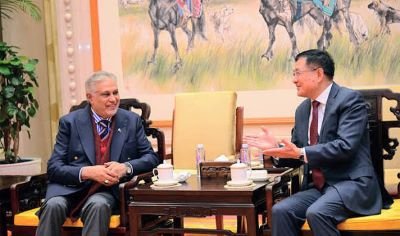
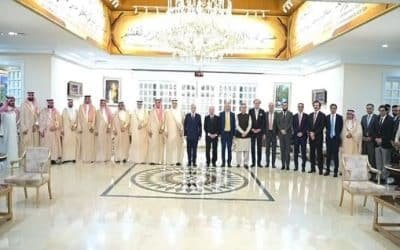
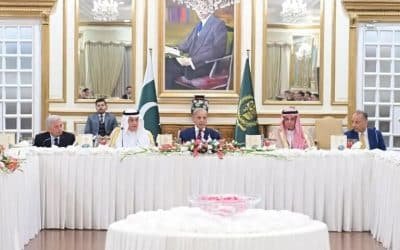
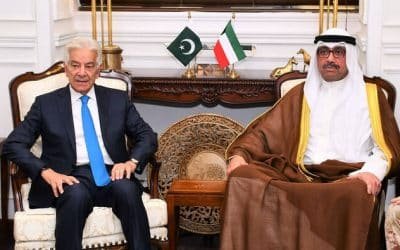
Pakistan’s role as the primary facilitator was bolstered by Deputy PM Ishaq Dar’s rapid-fire diplomacy. Following the announcement, Dar held consultations with the foreign ministers of Saudi Arabia, Turkiye, Egypt, and Morocco. These nations had previously participated in a quadrilateral moot in Islamabad, signaling a unified regional push for stability.
The “Islamabad Talks” on April 10 are expected to be the most significant diplomatic gathering in the country’s recent history, as the world watches to see if this two-week “Golden Age” window can be turned into a permanent peace.
You May Like To Read: UNSC to Vote on Hormuz Resolution as Trump’s ‘Hell’ Deadline Looms
Check out our latest video: