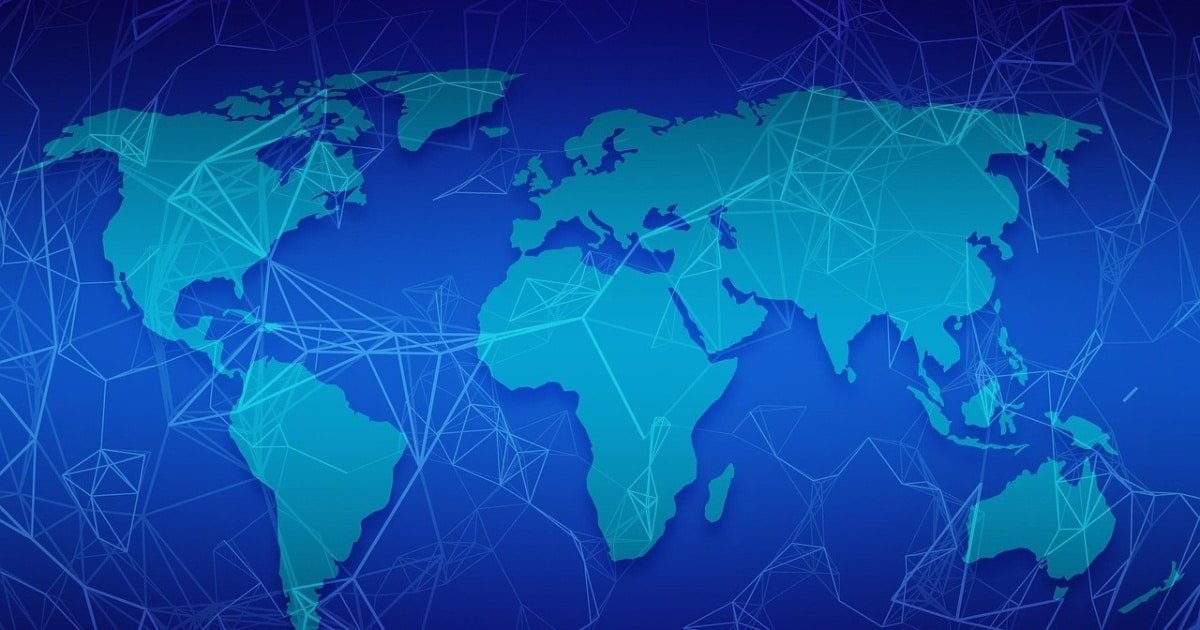





We live in a time where tariffs and chip bans move faster than tanks. The line between economic partnership and strategic pressure is no longer clear. What was once seen as a shield against war—economic ties—is now being used as a political weapon. Big powers are using their control over supply chains, key resources, and access to markets to change global trade rules. These actions are having effects far beyond the usual zones of war or diplomacy.
Source: Research Gate
From Mutual Benefit to Asymmetric Dependency
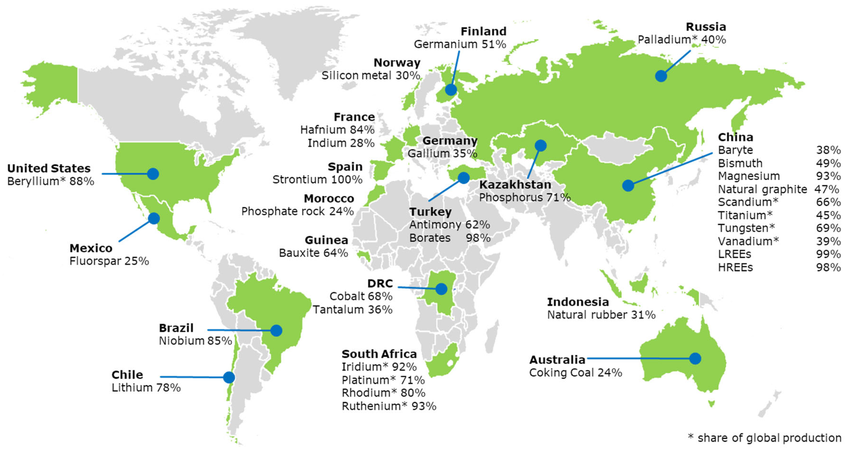
At the heart of this transformation is the asymmetry embedded in global economic networks. Nations that dominate sectors—be it rare earth minerals (China), advanced semiconductors (Taiwan, the U.S., South Korea), or energy logistics (Russia, Gulf states)—now find themselves wielding extraordinary power. These chokepoints are no longer just commercial bottlenecks; they are tools of coercive diplomacy.
For instance, China’s dominance over critical minerals like lithium, cobalt, and rare earth elements—essential for electric vehicles, batteries, and defense systems—has given Beijing considerable geopolitical leverage. In 2023, China restricted exports of gallium and germanium, rare materials used in chip production, following U.S. and European curbs on its access to advanced semiconductors.
You May Like To Read: Pakistan, Israel, and the Politics of Recognition
Meanwhile, Russia’s weaponization of gas supplies to Europe during the Ukraine conflict exposed the perils of energy dependency, prompting a dramatic rethinking of energy security policies across NATO capitals.
The Rise of “De-Risking” and “Friend-Shoring”
In response, the global economic architecture is shifting toward “de-risking” rather than outright decoupling. Pioneered by the EU and embraced by the U.S., de-risking aims to reduce strategic dependencies on authoritarian or unpredictable states while preserving essential trade. European Commission President Ursula von der Leyen clarified this in 2023: “De-risking means limiting vulnerabilities, not cutting ties.”
A related trend is called “friend-shoring.” This means countries move their investments and supply chains to nations they trust politically. Examples include Washington’s Indo-Pacific Economic Framework (IPEF), Japan’s investment in Vietnamese chip production, and India’s “China+1” strategy. These changes aim to improve national security. But they also break up global trade and make economies less efficient.
Source: CEPA
Economic Nationalism: Defensive or Destabilizing?
Protectionism—once seen as bad economics—is making a comeback. Now, it’s being used in the name of economic security. The U.S. CHIPS and Science Act, the EU’s Critical Raw Materials Act, and India’s Production-Linked Incentive plans all aim to bring key industries back home. These steps are changing how governments act in the market. They are also putting pressure on the old system of free-market trade.
Yet, there is a cost. Reconfiguring supply chains is capital-intensive and slow. According to a 2024 report by the World Trade Organization (WTO), “policy-driven supply chain fragmentation could reduce global GDP by up to 5% in the long term.”
Moreover, developing economies caught in the middle—such as those in Southeast Asia and Africa—face difficult choices. Aligning with one economic bloc may mean losing access to another, deepening their vulnerability.
The Effectiveness—and Limits—of Economic Coercion
Despite its growing popularity, economic coercion is not a guaranteed success. U.S. sanctions on Iran and Venezuela have failed to achieve regime change. China’s trade retaliation against Australia backfired, as Canberra diversified its markets and gained diplomatic support from other democracies.
More broadly, coercion can entrench nationalism and accelerate self-sufficiency drives in targeted countries. Russia’s invasion of Ukraine pushed the EU into massive green and defense investments. U.S. technology sanctions have galvanized China’s indigenous innovation in AI and semiconductors. The net result may not be submission, but strategic autonomy.
You May Like To Read: China’s Position on Kashmir at the UN
Toward a Bloc-Based Global Economy?
The combined result of these changes is a clear move toward forming economic groups. These groups are not based on market efficiency but on political and strategic goals. The United States and its G7 allies are working more closely together. They are setting shared rules for high-tech products, building safe digital networks, pushing clean energy, and creating joint sanctions. This teamwork is built on shared democratic values. It also reflects a shared goal: to reduce risks from authoritarian states. Efforts like the Indo-Pacific Economic Framework (IPEF), the EU’s Critical Raw Materials Club, and the U.S.-Japan-South Korea trilateral pact show this new direction.
At the same time, China is expanding its Belt and Road Initiative (BRI) 2.0. It now focuses on “resilient infrastructure,” “data control,” and new money tools like the digital yuan. The 2023 BRICS expansion—adding Iran, Saudi Arabia, and Egypt—helped China build a stronger alternate group. This deepened the divide in the global economy.
If the 1990s marked the height of globalization, the 2020s show the rise of geoeconomic division. Today, trust, politics, and security shape global trade—who trades with whom, and how.
A Strategic Reordering in Progress
Economic interdependence was once viewed as a force for peace and prosperity. Today, it is increasingly shaped by the logic of deterrence, risk management, and power projection. As nations scramble to secure strategic autonomy and hedge against coercion, the global trading system is being redrawn—not by tariffs alone, but by strategic alignment.
In this emerging world, economic statecraft is no longer optional—it is a central pillar of national security.