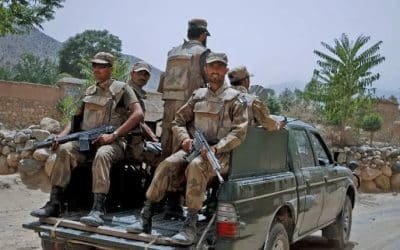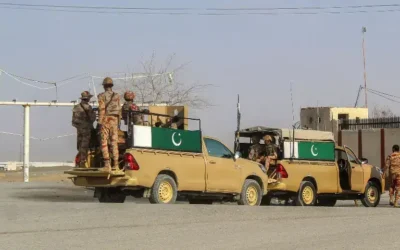





Urban areas serve as ideal targets for international terrorists as they contain valuable physical and social infrastructure. Compared to governmental, financial, and critical institutions or military targets (which have been attacked in the past), urban spaces are much more challenging to defend. City spaces, such as schools, hospitals, and shopping districts, are considered “soft targets” as they are vulnerable due to their lack of access control. Anyone could infiltrate these places and unleash terror attacks on civilians. In the wake of 9/11, urban areas became centers of conflict. Major cities in Pakistan, especially Karachi, Quetta, and Lahore, have become sites of horror, targeted by suicide bombings, target killings, and militant infiltration. These attacks not only threaten the social fabric but also reveal weaknesses in State security. This article examines how terrorism transformed these three Pakistani cities into battlefields.
Urban Terrorism
Urban terrorism is the targeted use of terrorism in urban spaces to maximize the harm, injury, and destruction caused. Given the higher population density of urban areas compared to rural areas, they have become prime locations for attack by terrorists. It is a systematic attempt to instill fear and anxiety in the population to achieve a political or social purpose. Urban terrorism is asymmetric warfare that uses modern weaponry, skilled planning, and execution to deal more damage than their lack of militant strength allows for. Such tactics showcase a bold disregard for morality and the destruction of lives and property.
This phenomenon is not limited to Pakistan. Cities such as New York, Mumbai, and Baghdad have also been targeted. However, Pakistan’s unique geopolitical location and sensitive internal dynamics make it more vulnerable to urban terrorism. Militants often view cities as ideal hideouts, as they can blend in easily among the millions who live there and then strike at crowded locations without being noticed. The use of urban terrorism allows terrorist groups to disrupt everyday operations and spread fear into the civilian population.
Karachi: A City Under Siege
Karachi is the financial and economic center of Pakistan. Not only does Karachi have the highest literacy rate in the country, but it also has the largest number of people employed in manufacturing, retail, and service sectors. Soon, terrorist groups like Fitna al Khwarij (FAK), then known as TTP, established their strongholds in Karachi. In 2011, the city was “responsible for 9.6 per cent of all fatalities that were caused by violent crime in Pakistan”.
In 2007, high-profile twin bombings and an attempted targeted assassination of former Prime Minister Benazir Bhutto led to 140 individuals and marked one of the deadliest attacks in Karachi’s history. Target killings were especially widespread during this period, with terrorists attacking officers, journalists, and members of rival political parties. Their ability to carry out such covert attacks in daylight demonstrated how dispersed and deeply rooted their network had become in Karachi. The city’s slums, like Layari, served as ideal hideouts for terrorists and recruitment centers by exploiting poverty. In 2013, a joint operation by the Police and Rangers successfully eliminated many of these terrorist networks. Hundreds of militants were arrested, and numerous networks dismantled, which significantly reduced violence in the city. Despite these efforts, Karachi still faces terror attacks, and as Pakistan’s economic hub, it has greatly hindered the country’s progress.
Lahore: The Heart of Pakistan
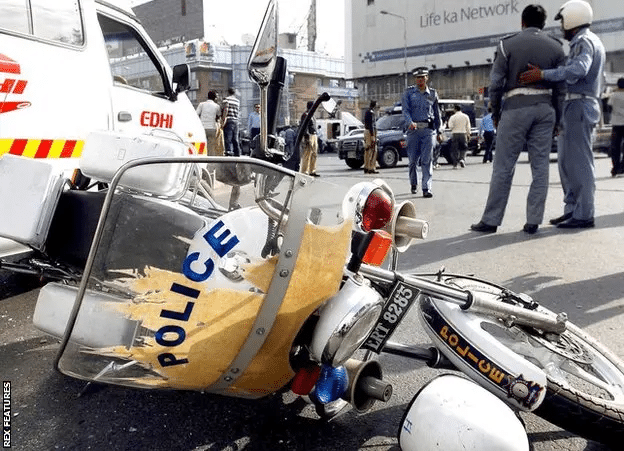
Lahore, famously considered the cultural capital of Pakistan, has suffered heavily due to urban terrorism. Its symbolic value to the country, as well as its being a home to military and state institutions, has made it an attractive target for militants who seek to inflict maximum damage. The first major attack occurred in March 2008, when terrorists struck the FIA Headquarters, killing over 20 people in the process. However, perhaps the event that brought heavier consequences, globally speaking, was the attack on the Sri Lankan cricket team in 2009.
12 gunmen, equipped with AK-47 rifles, attacked the bus carrying the Sri Lankan cricket team to the Qaddafi stadium. While the players sustained minor injuries, six policemen lost their lives trying to defend the team. The driver of the bus was also regrettably killed while trying to take the bus to safety. This attack brought heavy consequences for Pakistan, especially in terms of its global image. Pakistan was stripped of its right to co-host the Cricket World Cup in 2011. The country was now viewed internationally as an unsafe place to visit, which harmed its tourism industry as well. For six years, Pakistan was unable to host any top-level international cricket. Six years after the attack, Zimbabwe became the first country to visit in 2015.
Source: BBC
The suicide bombing in Gulshan-e-Iqbal Park on Easter Sunday in March 2016 killed over 70 people. This included children and women, highlighting the indiscriminate nature of urban terrorism and how it makes collective spaces hubs of fear. It also brought to attention the precarious position of minorities in Pakistan. Counter-terrorism in Lahore is a difficult task. Its sprawling neighborhoods and unregulated housing society make it easier for militants to find safe spaces to hide. However, with the strengthening of Punjab’s Counter-Terrorism Department (CTD), there has been a noticeable decrease in terrorist attacks across Punjab.
Quetta: A Perpetual Battlefield
Balochistan’s provincial capital, Quetta, offers a different face of urban terrorism — one that is characterized by sectarian violence, insurgency-related strikes, and foreign-sponsored proxy infiltration.
Militant organizations such as Lashkar-e-Jhangvi and Sipah-e-Sahaba have conducted horrific suicide attacks and targeted assassinations against the Hazara people. On the other hand, organizations like Fitna al-Hindustan (FAH) have contributed to the spread of terror not just in Quetta but also in the whole province. They often target security officials, especially from Punjab, in targeted killings. Quetta’s geographical closeness to Afghanistan and Iran has also turned it into a hub of regional proxy conflicts. The Afghan Taliban supposedly have had their operations in the city for decades, whereas sectarian actors found patronage from transnational networks. Such a degree of penetration makes counterterrorism more challenging, as the boundaries between regional geopolitics and domestic militancy become blurred.
In 2019, a suicide bombing took place in a marketplace in Quetta on April 12th. 21 people were killed, with nine belonging to the Hazara Shia community. Lashkar-e-Jhangvi (LeJ) took responsibility for the attack, claiming sectarian motivations were behind the attack. Political parties condemned the attack and extended condolences to the families of the deceased and injured.
Possible Counter-Measures
Successful operations by Pakistan’s Armed Forces, such as Operation Zarb-e-Azab and Radd-ul-Fasaad, have led to a significant decrease in terrorism in Pakistan. However, some long-term planning could further help in ensuring the frequency decreases even further. Some counter-measures could include:
- Eradicating religious extremism and sectarianism through education and community engagement
- Regulating housing and housing schemes, and eliminating unplanned urbanization
- Combatting the link between militancy and organized, local crime
- Strengthening urban law enforcement capacity
Conclusion
Urban terrorism in Pakistan has left permanent marks on Karachi, Lahore, and Quetta, but it also showed the strength of its people and the will of its state to take back its cities from the forces of anarchy. The recent victories of counterterrorism efforts demonstrate that forceful action and institutional change can restore the balance. But the struggle is not yet won. Pakistan not only needs to maintain its alertness but also to resolve the deeper social and political fissures that militants seek to take advantage of. Pakistan’s cities are capable of flourishing as hubs of culture, commerce, and coexistence—and not battlefields. Policymakers, security agencies, and citizens have the option in their hands to make sure that terrorism can find no corner to nestle in the heart of Pakistan.
References
- Arul, F. V. (n.d.). Urban terrorism (NCJ 61678) [Abstract]. U.S. Department of Justice, Office of Justice Programs, National Criminal Justice Reference Service.
- Coaffee, J. (2009). Protecting the urban: The dangers of planning for terrorism. Theory, Culture & Society, 26(7–8), 343–355.
- Hussain, S. A., & Khan, M. U. (2023). The geopolitics of water in South Asia: Transboundary dynamics and strategic competition. Pakistan Journal of International Affairs, 6(1), 45–62.
- 2016 Lahore suicide bombing. (2024, [last updated date]). In Wikipedia. Retrieved July 11, 2025