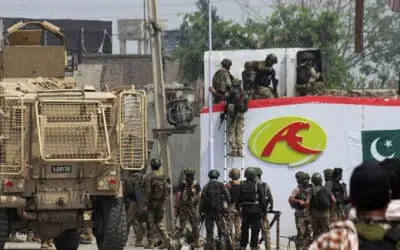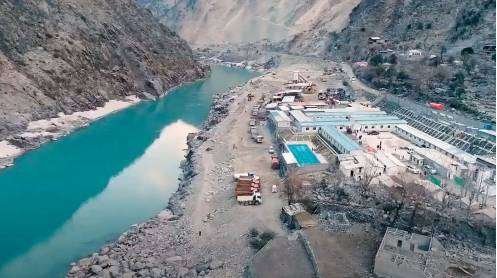





ISLAMABAD — The federal government has decided to constitute a specialized “Wapda Security Force” to provide dedicated security to major water infrastructure projects and associated workers across the country, with a particular focus on enhancing safety protocols for Chinese engineers and personnel. The decision follows a legislative bill titled the Wapda Security Force Act, 2026, which has already been forwarded to parliament for formal approval. The move aims to permanently revamp the Water and Power Development Authority’s security apparatus following previous insurgent assaults on critical national assets.
A new security force is being planned for Wapda projects after deadly attacks linked to the Dasu hydropower site halted work and raised protection concerns for key water infrastructure and staff across Pakistan 🧵 pic.twitter.com/HPikxlURz6
— ProPakistani (@ProPakistaniPK) May 25, 2026
Key Highlights
- The government is creating a standalone “Wapda Security Force” via a fresh parliamentary bill.
- The force is structurally optimized to provide CPEC-level security cover to Chinese nationals.
- The unit will sport its own uniform, insignia, and stamp, likely led by a Director General from the armed forces.
- The force will guard critical dams, powerhouses, machinery, and offices in designated notified areas.
- The draft law grants comprehensive civil and criminal immunity for actions taken in good faith.
The creation of this specialized force follows historical vulnerabilities, specifically referencing two past terrorist attacks on workers at the over $6 billion Dasu Hydropower Project in November 2021 and March 2024, which resulted in the casualties of several Chinese and Pakistani workers. Officials explained that while the Pakistan Army maintains two special security divisions protecting CPEC projects across Balochistan and up to Gilgit-Baltistan, standalone Wapda projects previously lacked a unified, high-tier protective arrangement. The previous suspension of the Dasu project by Chinese firms for over a year due to security fears prompted the Prime Minister to direct that CPEC-level outer cover be extended universally to all water sector installations of national importance.
The new force will be legally mandated to safeguard dams, power plants, construction equipment, and the private residences of project personnel. Its operational deployment will be tailored regionally; for instance, it will assist local police and Rangers at the K-4 Greater Water Supply Scheme in Sindh, while cooperating with the Frontier Constabulary (FC) across Khyber Pakhtunkhwa and Balochistan. Furthermore, the force will be authorized to coordinate directly with intelligence agencies to secure notified areas from illegal trespass and land encroachment.
To maintain high professional standards and prevent operational disruptions, all officers and staff of the newly formed force will be strictly governed under the Essential Services Act. Under these terms, personnel will be legally barred from seeking external secondary employment or forming labor unions, as the Industrial Relations Act, 2012, will not apply to this service. The overall personnel strength of the force will remain flexible, adjusting periodically based on evolving regional security threats and project requirements.
To ensure unhindered tactical execution in high-risk zones, the draft legislation includes a robust legal indemnity clause. The text guarantees that no criminal or civil lawsuits, prosecutions, or legal proceedings can be initiated against the federal government, Wapda, the Director General, or any individual officer for security operations carried out in good faith under the mandate of the Act.