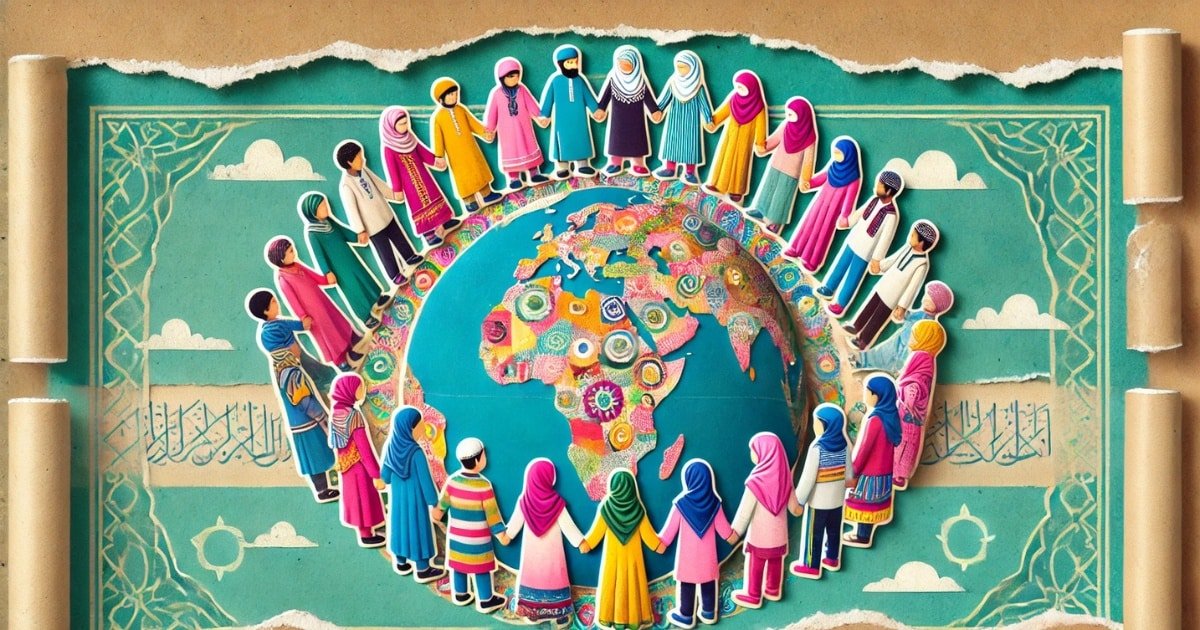


The idea of Muslim world unity is one of the most persistent illusions in modern geopolitics. It resurfaces in every crisis from Palestine to Kashmir, from Afghanistan to Sudan, but never materializes. This failure is not incidental. It is built into the political, ideological, and strategic contradictions that shape the contemporary Muslim world. Rather than functioning as a coherent bloc, Muslim-majority states operate within rival camps, locked in mutual distrust, competing for influence, and constrained by conflicting interests.
Sectarian Rivalries as Political Tools
The Sunni-Shia divide, symbolized by the Saudi-Iran rivalry, is more than a theological disagreement. It is a tool of geopolitical influence. For decades, Riyadh and Tehran have backed rival factions across the Middle East, turning local conflicts into proxy wars. Syria, Iraq, Lebanon, Bahrain, and Yemen all bear the scars of this regional power play. Although a 2023 China-brokered thaw between Saudi Arabia and Iran signaled potential de-escalation, it has not resolved the core rivalry. Iran continues to support armed non-state actors. Saudi Arabia remains aligned with Western defense structures. The détente looks more like a tactical pause than a transformation.
Each state claims its version of leadership. Iran presents itself as the vanguard of anti-imperialist resistance. Saudi Arabia asserts its role as guardian of Sunni orthodoxy and driver of economic modernization. These visions are incompatible. Neither one allows space for genuine consensus or collective action.
The Paralysis of the OIC
The Organization of Islamic Cooperation is the world’s second-largest intergovernmental body, yet its political influence is negligible. Designed to represent the collective voice of Muslim nations, it has instead become a platform for hollow declarations. Pakistan’s repeated efforts to use the OIC to raise issues such as Kashmir or Gaza have gone largely unsupported by the Gulf bloc. This is not due to diplomatic miscalculation but to fundamental strategic divergence.
Prime Minister Shehbaz Sharif, Turkish President Recep Tayyip Erdogan, and Azerbaijani President Ilham Aliyev walked together and exchanged pleasantries in Khankendi, Azerbaijan, following the Economic Cooperation Organization Summit.
Read: https://t.co/6BXxPJvilR pic.twitter.com/tP4qihYFQc
— Profit (@Profitpk) July 6, 2025
Several Gulf states have prioritized economic ties and security cooperation with Israel through agreements like the Abraham Accords. Their normalization of relations with Israel has redrawn regional alliances, leaving countries like Pakistan increasingly isolated in their vocal opposition. When Israel launched its latest assault on Gaza in 2023 and 2024, responses from the Muslim world were scattered and inconsistent. While Turkey and Iran condemned the attacks and mobilized support, the Gulf states remained restrained. Egypt and Jordan, despite public outrage, maintained quiet cooperation with Israel.
High Commissioner Major General (R) Faheem-ul-Aziz met with delegation of Ministerial Standing Committee on Scientific and Technological Cooperation (COMSTECH) of OIC led by Dr. M. Iqbal Choudhary at Pakistan House on August 04, 2025.@GovtofPakistan @ForeignOfficePk pic.twitter.com/ufRlkQGVlQ
— Pakistan High Commission Sri Lanka (@PakinSriLanka) August 4, 2025
The OIC cannot function as a unified voice because its members do not share the same interests, values, or threats. Statements of solidarity do not translate into action, and the institution lacks enforcement power.
Deeper Divisions: Economic, Political, and Ideological
Unity cannot be built on slogans. It requires structural alignment. That is absent across the Muslim world. Economically, the disparity is extreme. Qatar has a per capita GDP exceeding $60,000. Somalia’s is less than $500. The wealth gap between oil-rich Gulf states and impoverished Muslim-majority countries in Africa and Asia undermines any sense of shared purpose. Richer states show little inclination to create mechanisms for equitable development or regional redistribution.
Politically, the Muslim world is a mix of monarchies, military regimes, and fledgling democracies. Most of these states are inward-looking and lack popular legitimacy. Their survival often depends on foreign alliances, which further limits their ability to pursue independent, collective policies. Some depend on U.S. military aid. Others rely on China for infrastructure development or Russia for arms. There is no geopolitical center of gravity that can anchor a unified agenda.
You May Like To Read: Pakistan, Israel, and the Politics of Recognition: A Historical and Strategic Fault Line
Ideologically, visions of Islamic governance are deeply divided. Turkey, under Erdoğan, promotes a neo-Ottoman regional influence. Iran exports its revolutionary Islamic model. Saudi Arabia pushes a top-down modernization project that marginalizes clerical authority. Pakistan oscillates between religious populism and pragmatic diplomacy. These are not complementary models. They compete for legitimacy and influence, further fracturing the landscape.
A Fragmented Response to Gaza
The 2023-2024 Gaza crisis again revealed the depth of disunity. Public anger swept across the Muslim world, but state responses were uneven and often contradictory. Some states issued condemnations. Others offered quiet support to Israel or prioritized their economic partnerships. Pakistan, one of the few countries to maintain a consistently pro-Palestine stance, found itself diplomatically isolated. Its attempt to rally the OIC into an emergency summit produced little more than rhetorical gestures.
This episode demonstrates that solidarity is not only lacking—it is actively undermined by competing national interests. The era when symbolic Muslim unity could be invoked as a political force is over. States now act according to their national calculations, not religious identity.
Toward Realistic Cooperation
Despite these deep divides, all hope for cooperation is not lost. Instead of chasing grand visions of political unity, Muslim countries could focus on modular, issue-based collaboration. Joint efforts in humanitarian aid, disaster response, education, and food security are achievable and necessary. There is room for multilateral frameworks that do not demand ideological conformity.
Reviving proposals like the Pakistan-Malaysia-Turkey media bloc could help develop shared narratives in global discourse, especially around Islamophobia and the misrepresentation of Muslim societies. Similarly, a Muslim development fund for rebuilding conflict zones such as Gaza, Sudan, and parts of Afghanistan could be a meaningful expression of solidarity.
The Muslim world must shift from rhetorical unity to functional cooperation. That means working through shared interests, not symbolic gestures.
You May Like To Read: Pakistan-Saudi Relations in the Post-Khashoggi Era
Muslim world unity remains a political fantasy because it ignores the harsh realities of regional rivalry, economic disparity, and ideological divergence. Religious identity alone cannot override national interest. The current geopolitical environment requires a different approach, one grounded in realism, mutual benefit, and limited yet effective collaboration.
Coordination, not unity, is the most that can be achieved under current conditions. Suppose Muslim-majority states abandon the illusion of political oneness and instead build pragmatic alliances around common goals. In that case, they may still shape a more equitable and assertive presence on the global stage. The challenge is not dreaming less it is dreaming smarter.