


ISLAMABAD (April 10, 2026) — The Asian Development Bank (ADB) has revised and upgraded Pakistan’s economic growth rate to 3.5 percent for the ongoing fiscal year (FY2026), mentioning a strong comeback in the manufacturing sector as well as an increase in private-sector investments. However, it also warned about a significant “downside risk,” due to the global situation, especially amid the ongoing conflict between the US and Iran.
#𝗣𝗮𝗸𝗶𝘀𝘁𝗮𝗻 #𝗥𝗲𝗺𝗶𝘁𝘁𝗮𝗻𝗰𝗲𝘀 𝗦𝘁𝗮𝘆 𝗦𝘁𝗿𝗼𝗻𝗴 – 𝗚𝗿𝗼𝘄 𝟭𝟳%
– March inflows at $3.8 Billion, up 17% vs Feb 2026
– 9M FY26 up 8% YoY, at $30.3 Billion
– Full year FY26 to cross $41 Billion vs $38 Billion in FY25 pic.twitter.com/o2lxtDwZfF
— Developing Pakistan (@developingpak) April 8, 2026
At a Glance: ADB Economic Outlook
-
GDP Growth: Forecast at 3.5% (FY26) and 4.5% (FY27), up from 3.1% in FY25.
-
Inflation: Projected to rise to 6.4% in FY26, driven by surging global oil prices and trade route disruptions.
-
Manufacturing Rebound: Large-scale manufacturing grew by 4.8% in the first half of FY26, led by textiles, cement, and automobiles.
-
Construction Surge: The sector grew by 21% in Q1 FY26, fueled by post-flood reconstruction and budget incentives.
The ‘Middle East Factor’ and Energy Costs
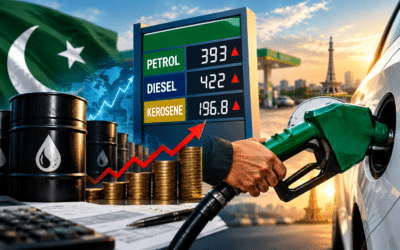
While the ADB’s Asian Development Outlook (ADO) April 2026 highlights domestic stabilization, it anchors the forecast in a “challenging global environment.” The report notes that oil and gas constitute a massive portion of Pakistan’s import bill. A prolonged conflict in the Middle East could:
-
Swell the Trade Deficit: Higher energy and fertilizer costs would weaken industrial output and widen the current account gap.
-
Impact Remittances: Any economic struggle in the Gulf region could reduce the inflow of workers’ remittances, which stood at $23.2 billion between July and January.
-
Disrupt Supplies: Temporary disruptions to fuel and wheat supplies are expected to keep inflation near the 6.5% mark through 2027.
Current account to shift to 1.2% deficit, fiscal gap at 4.3%; Middle East tensions, energy prices and remittances pose risks
Read: https://t.co/hQ5b8YMmke pic.twitter.com/4N1LrQNvWh
— Profit (@Profitpk) April 10, 2026
Investment and Reform Momentum
ADB Country Director Emma Fan credited the recovery to “steadfast implementation of structural reforms.” The report specifically noted that private investment is recovering as government financing requirements lower, freeing up credit for small and medium enterprises (SMEs) and agriculture.
The successful privatization of Pakistan International Airlines (PIA) and a stable foreign exchange market have further bolstered investor confidence. Additionally, the central bank’s cautious monetary easing is expected to keep inflation within the target range of 5%–7%, provided global commodity prices do not spiral.
A Crucial Moment for Resilience
Despite the upgrade, the ADB cautioned against “reform fatigue.” The lender emphasized that adherence to the current economic adjustment program is critical to bolstering fiscal buffers against external shocks.
With merchandise imports growing by 9.8% due to industrial demand, and merchandise exports falling by 5.5% (largely due to flood-related rice crop losses), the report underscores that Pakistan’s path to 4.5% growth in 2027 depends entirely on its ability to navigate the volatility triggered by the Strait of Hormuz crisis and the broader Middle East conflict.
You May Like To Read:Gold Prices Drop by Rs 9,500 as Global Safe-Haven Demand Cools
Check out our latest video: