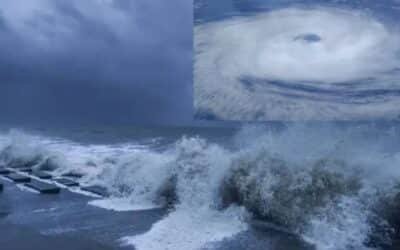
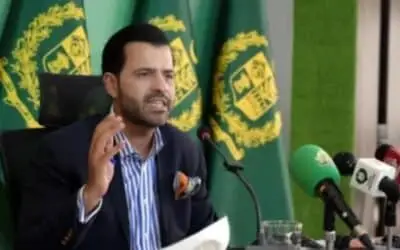
From September 1st to 6th, AP News and other outlets gave a full look at what was happening in Pakistan. The country faced a big natural disaster, as well as complex political and security issues. The reporting was broad, showing many key stories from that week. It covered the terrible effects of monsoon floods, important talks and money deals, and a security event.
The Floods
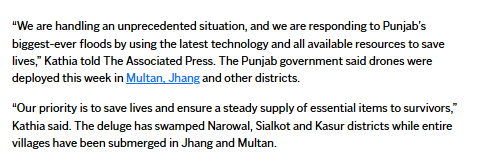
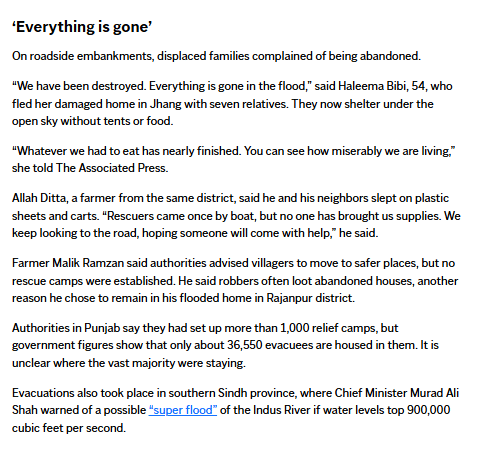
The biggest story was the ongoing flood crisis. AP reports showed the bad situation in Punjab, the country’s most populous area. It faced its largest flood ever. An AP Article from September 1, 2025, told how workers used drones to save people and animals. The report said that more than 900,000 people had to leave their homes. The floods came from heavy rains and water let out from dams in India. The report also told the story of a woman who lost her home, which made the news feel more real.

Source: AP News
Source: AP News
Source: AP News
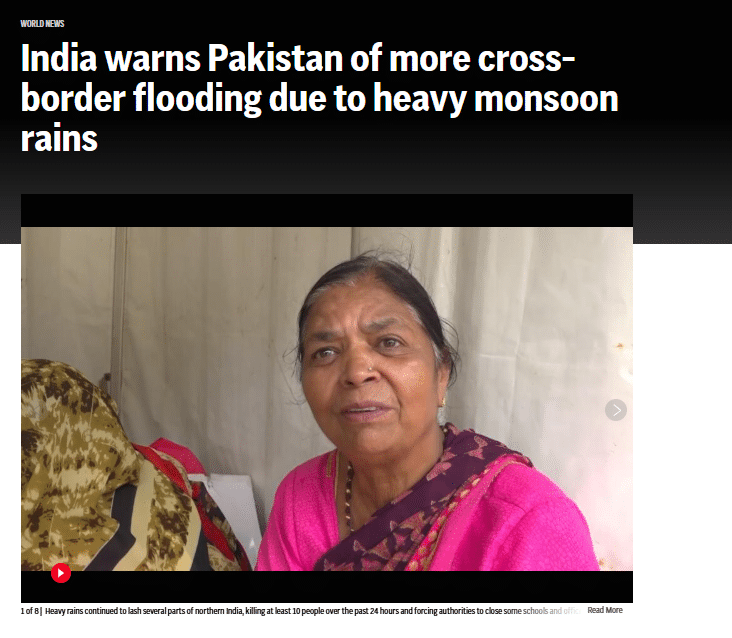
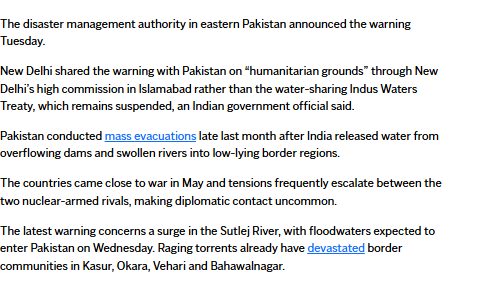
Another AP Article on September 2 showed a rare moment of peace between India and Pakistan. India warned Pakistan about more possible flooding. The reports gave a clear look at how big the disaster was and what was being done to help people. The detailed news showed how serious the situation was.
Source: AP News
Source: AP News
Diplomacy, Economy, and Security
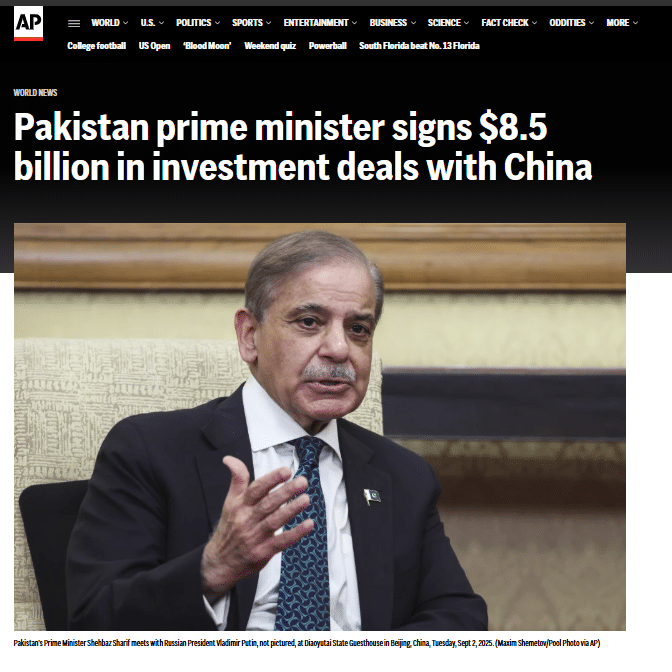
Besides the floods, AP also had important stories about Pakistan’s political and security worlds. A big money story came out on September 5. An AP Report told about Prime Minister Shehbaz Sharif’s trip to China. The story, called “Pakistan prime minister signs $8.5 billion in investment deals with China,” showed a big win for the government’s money plans.
Source: AP News
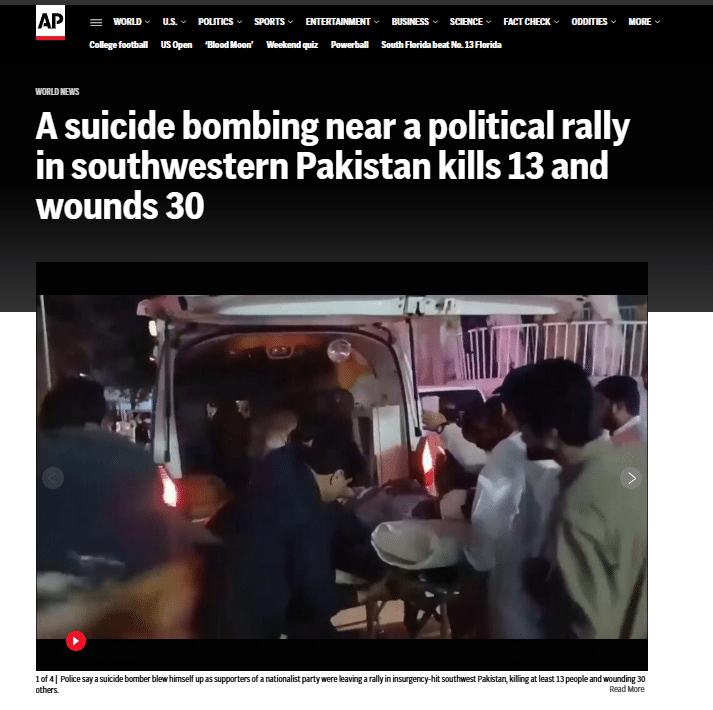
The deals, which included promises and joint projects, focused on key areas like farming and clean energy. They showed the next step of the China-Pakistan Economic Corridor. Another key security event was covered in an AP Report from September 3. It was about a bomb blast in Quetta that killed 13 people. The story told what happened in the attack. It noted that no group quickly said they did it and explained the history of violence in that area.
Source: AP News
From September 1 to 6, 2025, AP News and other international outlets reported heavily on Pakistan. The coverage spanned devastating floods, political diplomacy, economic deals, and a deadly bombing. On the surface, it looked like broad, factual reporting. But a closer look shows a pattern: AP consistently chose to frame Pakistan as overwhelmed by disaster, dependent on others, and unable to manage its challenges. This is not just about what was reported; it’s about how it was reported.
The Floods: Facts Without Balance
The floods were the biggest story of the week, and rightly so. By September 1, AP reported that more than 900,000 people had been displaced in Punjab, Pakistan’s most populated province. The story described the use of drones to rescue people and livestock, and it gave a human face by quoting a woman who lost her home.
At first glance, this seems like strong reporting. But what’s missing is just as important. AP stressed the suffering, but gave little recognition to the scale of Pakistan’s response—the 700 relief camps, the hundreds of medical centers, and the local volunteers who worked nonstop.
Instead, the narrative leaned toward helplessness, as if Pakistan was only surviving because India “warned” of flooding. On September 2, AP described this warning as a “rare moment of peace,” painting Pakistan as reactive rather than proactive. The reality is that Pakistan’s National Disaster Management Authority had already issued alerts, carried out evacuations, and coordinated with local governments. That context was left out, and the result was a one-sided picture.
You May Like To Read: Media Warfare: How India Uses Media Against Pakistan
Diplomacy and Economy: Achievements Reduced
A rare positive story appeared on September 5: Prime Minister Shehbaz Sharif signed $8.5 billion in investment deals with China. The deals included farming, clean energy, and new projects under the China-Pakistan Economic Corridor.
This could have been framed as a landmark achievement, especially at a time when Pakistan needs foreign investment. Instead, AP presented it cautiously, focusing on “promises” and “pledges” rather than progress. By stressing uncertainty, AP undermined the significance of the agreements.
It’s not that skepticism about international deals is wrong; journalism should question. But when disaster is reported with certainty and progress is reported with doubt, the bias becomes clear. A crisis is always definitive. Success is always conditional.
Security: Violence Without Context
On September 3, AP reported on a bomb blast in Quetta that killed 13 people. The story described the attack and reminded readers of Quetta’s history of violence. But, again, what was left out matters.
There was no mention of Pakistan’s counterterror operations, no detail about the emergency medical response, and no coverage of how communities rallied after the attack. The absence of this context leaves the impression of a country trapped in endless violence.
When international readers see only death tolls without stories of resilience or security efforts, they absorb a bleak and incomplete picture.
The Manipulation of Narrative
So how does AP manipulate the narrative? The manipulation is not in fabricating facts—it is in selective framing:
- Floods are shown as overwhelming, but not as moments of national mobilization.
- Diplomacy is covered, but with doubt overshadowing achievement.
- Security incidents are reported, but without the counter-efforts that show Pakistan is not simply a passive victim.
This pattern creates a consistent image: Pakistan as unstable, dependent, and incapable of handling its challenges.
Why This Matters?
For global audiences, AP is a key source of information. Policymakers in Washington, London, and Brussels read these reports. Investors considering Pakistan see these headlines. Aid groups and human rights organizations rely on them.
When AP’s reporting consistently strips away resilience and achievement, it does more than inform—it shapes global perception. That perception then influences how Pakistan is treated diplomatically, economically, and politically.
The Untold Stories
Imagine if AP had balanced its reporting with equal weight on resilience:
- Instead of only counting the displaced, it could have shown how relief workers used drones and boats to save lives.
- Instead of casting doubt on investment deals, it could have highlighted what the $8.5 billion projects might mean for Pakistan’s farming and energy future.
- Instead of only citing Quetta’s violent past, it could have reported on how security forces and doctors responded immediately after the blast.
These stories exist. Other outlets and local journalists reported them. AP’s choice to exclude them is not an oversight; it is editorial framing.
Half the Truth Isn’t the Truth
Between September 1 and 6, AP News painted a picture of Pakistan under siege: by floods, by violence, by dependence on stronger nations. The facts were real, but the framing was selective.
By leaving out resilience, response, and achievement, AP reduced a complex reality to a single storyline: Pakistan as a place of endless crisis. That is not fair reporting; it is manipulation through omission.
Journalism’s duty is to inform with accuracy and balance. In its Pakistan coverage this week, AP gave the world only half the truth. And half the truth, as Pakistan knows too well, is no truth at all.
You May Like To Read: Al-Jazeera Weekly Wrap Up: 24th to 30th August 2025