

As Pakistan grapples with the aftermath of recent protests following the assassination of Iran’s Supreme Leader Ayatollah Khamenei in late February—attributed to US-Israeli strikes—the nation stands at a crossroads. While the right to peaceful assembly is a cornerstone of democracy, history warns us that unchecked unrest often spirals into self-inflicted wounds: destroyed infrastructure, heightened security risks, and a battered economy. Such chaos not only hampers national progress but also plays into the hands of external forces, like those seeking to polarize Pakistani society along sectarian or geopolitical lines, furthering agendas that thrive on division. Drawing from three pivotal episodes of turmoil, it’s clear: Pakistanis must break the cycle of destructive protests to safeguard their future.
Post 9/11 Protests
The pattern began prominently in 2001–2002, amid protests against General Pervez Musharraf’s post-9/11 alignment with the US. Rather than targeted demonstrations, the unrest led to widespread instability, halting foreign investment and disrupting trade. Exports suffered from skyrocketing “War Risk Insurance” premiums on ships entering Pakistani ports, adding an estimated $1 billion to $1.5 billion in costs during the first year alone. Foreign Direct Investment (FDI) dried up as Pakistan was branded a high-risk zone, culminating in government estimates of $2 billion to $3 billion in total economic losses for the fiscal year. This not only exposed security vulnerabilities—amplifying regional tensions—but also weakened the economy at a critical juncture, allowing external narratives of instability to take root and polarize public opinion.
Killing of Benazir Bhutto and Violent Protests
The stakes escalated dramatically in December 2007, following the assassination of former Prime Minister Benazir Bhutto. What started as grief erupted into the most violent riots in Pakistan’s history, lasting just four days but inflicting staggering damage. Infrastructure bore the brunt, with $200 million lost to the destruction of 28 railway stations, 13 engines, and 7 trains. Over 6,000 vehicles were torched, and US franchises like KFC, McDonald’s, and Pizza Hut in Sindh were deliberately targeted and burned, symbolizing a broader assault on economic symbols. The banking sector lost $333 million from looted branches and ATMs, while production shutdowns across factories and retail outlets amounted to $1.06 billion. Combined with a $5.6 billion capital outflow, the total economic hit reached about $2 billion. Security risks soared as riots overwhelmed law enforcement, creating vacuums that could be exploited by adversaries. In a polarized society, such events deepen fractures, aligning unwittingly with foreign strategies—like those of Israel—to exacerbate internal divisions and distract from unified national interests.
The Recent Protests: Repeated Pattern of Violence
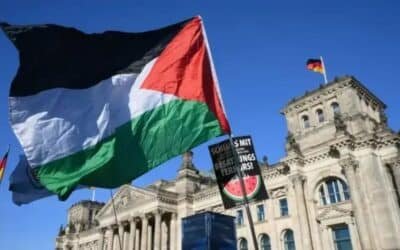
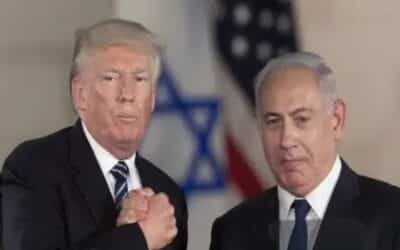
Fast-forward to today, and the echoes are deafening. Protests over Khamenei’s killing have already triggered immediate fallout: the Pakistan Stock Exchange plummeted over 2,000 points in the first 48 hours, fueled by fears of regional escalation and border closures. Daily losses from trade disruptions—at the Taftan border and on major highways like the M-2 and Shahrah-e-Faisal—hover at PKR 15–20 billion. The digital economy, a lifeline for IT and freelance sectors, faces $20 million to $30 million in daily hits from internet throttles and social media blackouts aimed at curbing coordination. These measures, while intended to maintain order, highlight the security dilemmas: protests that block vital arteries invite chaos, endangering lives and livelihoods. Amidst Iran-Israel tensions, such domestic polarization—stirred by external events—risks advancing Israeli objectives of fragmenting Muslim-majority societies, turning brother against brother and weakening Pakistan’s global stance.
JUT IN: UNCIP offices in Skardu and Gilgit reportedly torched during mass protests in Gilgit-Baltistan.#GilgitBaltistan #Khamenei #Iran pic.twitter.com/ltMnhqVSRu
— Ghulamuddin (GD) (@GD_Alisher) March 1, 2026
These episodes underscore a harsh truth: destructive protests don’t challenge injustices; they compound them. Infrastructure ruins raise reconstruction costs, diverting funds from education and healthcare. Security lapses invite exploitation by militants or foreign agents, while economic shatters—totaling billions across these events—perpetuate poverty cycles. By repeating this history, Pakistanis inadvertently aid polarizing agendas, such as Israel’s reported efforts to sow discord in the region, distracting from core issues like economic resilience and unity.
You May Like To Read: The Aesthetics of Power: Surgery, Scrutiny, and the Sharif Wedding
It’s time for reflection and reform. Peaceful, constructive dialogue can voice grievances without self-sabotage. As one economist noted amid the 2007 riots, “We burn our own house to spite the neighbor.” For a stable, prosperous Pakistan, let’s learn from the past—not relive it.
Check out our latest video: