

Major Raja Aziz Bhatti Shaheed, the 4th recipient of Nishan-e-Haider, Pakistan’s highest military award, is a symbol of valour. His name is remembered in Pakistan’s military history not only as an example of courage but for his tactical prowess in the 1965 Indo-Pakistani War. His shahadat is usually quoted as an exemplary case of personal sacrifice playing itself out as part of a wider military strategy, i.e., the defense of a vital sector at all costs. Maj Aziz embodied the very essence of the oath that every army officer takes when he defends his motherland despite a certain threat to his own life. His conduct in the Burki sector of the Lahore front became a legendary story for generations of officers to come.
Armed Forces of #Pakistan, CJCSC & Services Chiefs pay glowing tribute to Major Raja Aziz Bhatti Shaheed, Nishan-e-Haider (NH), on his 58th Shahadat Anniversary today. #PakistanArmy #Pakistan #COAS #ISPR
Major Raja Aziz Bhatti (NH) Shaheed is the shining star of the 1965 War… pic.twitter.com/QesLO8gopA
— Pakistan Armed Forces News 🇵🇰 (@PakistanFauj) September 11, 2023
The Strategic Importance of the Lahore Front
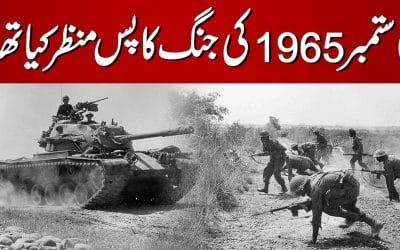
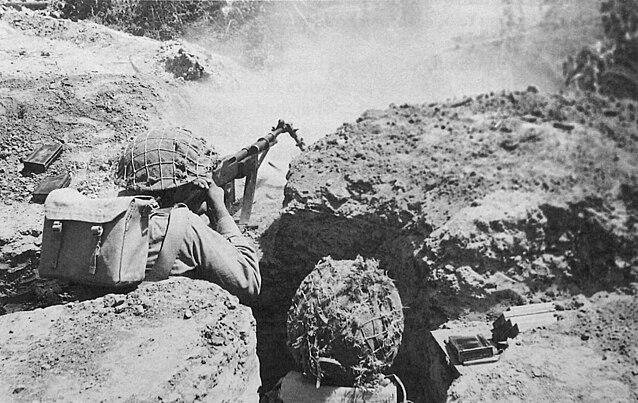
India had designs to capture the city of Lahore in the 1965 war, a fact they made no secret of. Their dreams of having tea at Lahore gymkhana, to their utmost disappointment, would never materialize. Lahore was not only a large population hub. It was also a strategic nerve and its fall would have been disastrous not only militarily but also psychologically. The defense of this sector was therefore of the utmost importance. Major Aziz Bhatti’s company was posted to hold a forward position close to the Burki village on the Bambanwala-Ravi-Bedian Link Canal. It was a natural defensive area. The canal provided the last line of defense before Lahore. The Indian troops were not only numerically superior but also had more armor. They made repeated attempts to breach this canal. Major Bhatti and his troops of the 17th Punjab Regiment came under relentless artillery and tank fire. The military strategy was simpler but risky: defend the position at all costs. There was no space for retreat, and surrender was completely out of question. Abandoning this position meant giving an open invitation for the enemy to enter Lahore.
Martyrdom as Military Strategy
Major Aziz Bhatti’s response to the six-day battle, lasting from 6 to 12th September 1965, was more than a testament to his courage. It was the most basic but important aspect of defensive military tactics: Never leave your post. Despite being under constant fire, Maj. Aziz refused to pull back his troops or take cover. For five days and five nights, he led his men’s defenses from the front. He used to move between trenches often, inspiring his soldiers and readjusting their positions. He could have maintained this defensive position from a safer, backward post, but chose to stand at the front. This was a strategic move.
View this post on Instagram
He had to become a role model and boost morale through his presence among his company. These men were pitted against a numerically superior enemy force. His steadfast determination itself became his tactical move. Due to his bravery and courage in the face of imminent death, he kept the Indian forces at bay for days. He not only successfully stopped them from crossing the canal but also gained precious time for the rest of the Pakistani units to solidify their defenses and mobilize reinforcements. His stand was a tactical delaying action that brought a strategic shift on the entire Lahore front. On 12th September 1965, Major Aziz Bhatti was observing enemy movement along the canal from a trench. It was on this day that he was struck by an Indian tank shell. He embraced martyrdom, but his sacrifice was not in vain. The 17th Punjab Regiment had successfully defended against each attack and had not given an inch of ground to the enemy. India never managed to cross the canal. Major Raja Aziz Bhatti (Shaheed) was awarded Pakistan’s highest military award, the ‘Nishan-e-Haider’.
You May Like To Read:
- The Tragedy of Gyari Avalanche: No Soldier Left Behind
- Origins of Siachen Conflict and the Ambiguity of Demarcation
Legacy and Symbolism
Major Aziz Bhatti’s martyrdom was a symbol of selflessness, sacrifice, and bravery for both the Pakistani armed forces and the country. The tale of his martyrdom spread like wildfire among all ranks and files. It was not only the defense of a position but had gradually become a mythic narrative of courage and strategic obstinacy. Military academies in Pakistan, as well as around the world, learn about him and exemplify him as a legend of strong leadership and unflinching determination. Maj Aziz’s story contains all the markers of a legend as well as a simple but effective military tactic: Each position is valuable, regardless of the price. His act of sacrifice has defined the image of military professionalism and unflinching devotion to the defense of the nation. It was yet another reassurance of the fact that courage and resolve can bring down an enemy with numerical and technological supremacy. His martyrdom is the very representation of the Pakistan Army’s long-standing culture and tradition of making the ultimate sacrifice for national sovereignty. His legacy has persisted in motivating soldiers across generations to hold duty, honor, and country in the highest esteem.
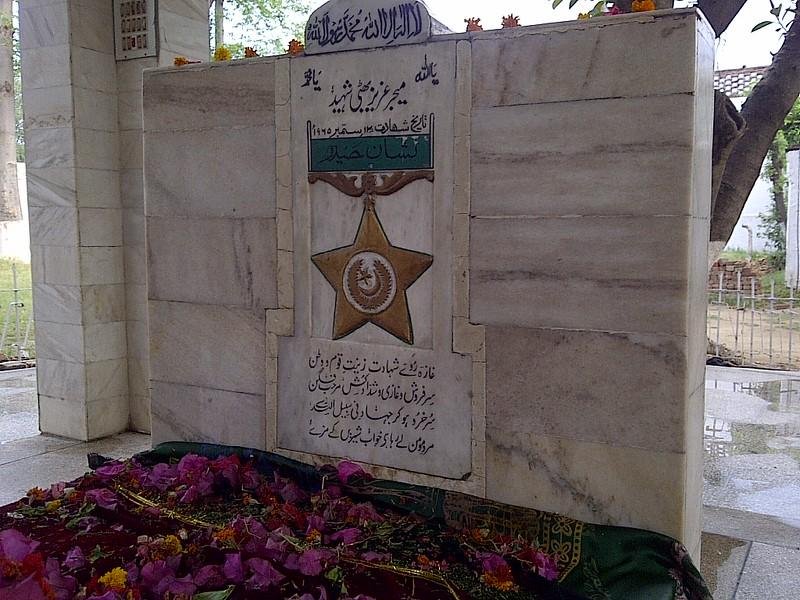
Source: meemainseen
The words on the headstone read as:
غازۂ رُوۓ شھا د ت زینتِ قوم و وطن
سرفروش و غازی و شدّاد کُش مرحب فگن
سرخرو ہـو کے جہـادِ فی سبیل اللّـہ سے
مردِ مومن لے رہا ہے خوابِ شیریں کے مزے
rouge on the face of Shahadat, pride of the country and the nation
Are these fearless warriors, a strike of their sword wipes out the mightiest of foes
this one who came out victorious in the struggle for the cause of ALLAH
is lying here in the delight of the afterlife dream