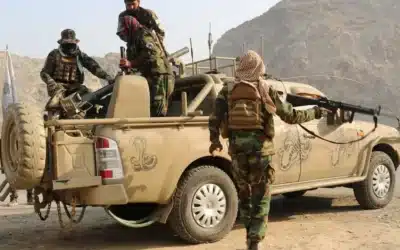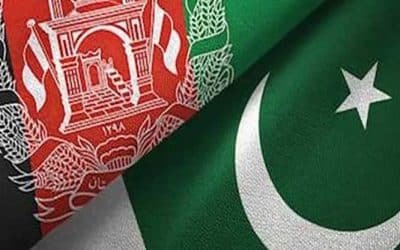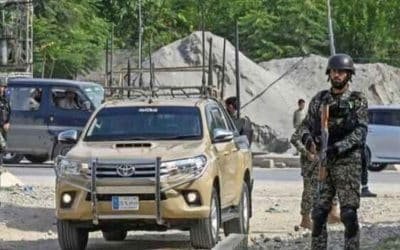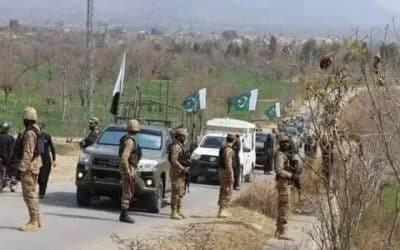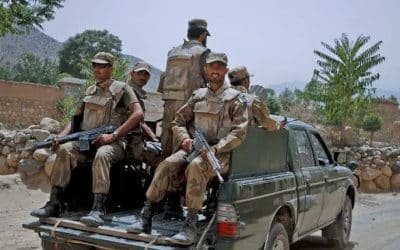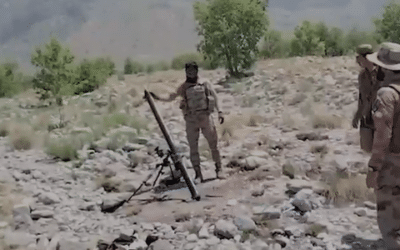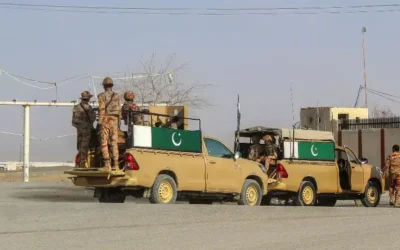




ISLAMABAD — Pakistan’s military on Friday issued some of its starkest accusations yet against Afghan authorities, alleging that Afghan security forces have repeatedly opened fire on Pakistani border posts to facilitate Terrorist Infiltration into the country. The claims were made by Inter-Services Public Relations (ISPR) Director General Lt Gen Ahmed Sharif Chaudhry in a detailed briefing to journalists, a recording of which was released Friday evening.
The remarks come at a time of heightened tensions between Islamabad and Kabul, renewed cross-border militant activity, and the breakdown of recently attempted counterterrorism dialogue between the two sides.
Border Fire to Aid militant infiltration
Lt Gen Chaudhry said Afghan forces were not only failing to curb cross-border terrorism but were actively enabling it.
“Borders are always mutually guarded,” he told reporters. “But on the other side is such a country whose posts first engage your posts through fire, and an exchange begins — and then they have them (terrorists) pass through the gaps in between.”
According to him, the terrain along the Pak-Afghan frontier, particularly in terrorism-prone districts, remains largely ungoverned from the Afghan side. “Go to Tirah, Khyber; you will not find any governance. Neither courts, nor departments responsible for law enforcement or writ of the government.”
Pakistan shares a 2,600-km border with Afghanistan, much of it rugged and divided across dozens of tribes. The DG ISPR noted that 29 tribes straddle both sides of the border, complicating control of movement, smuggling networks, and militant infiltration.
Limitations of Border Fencing and Calls for Greater Investment
Responding to public criticism on how terrorists and smugglers manage to enter Pakistan despite border fencing, Lt Gen Chaudhry said fences alone cannot hermetically seal borders.
“What you call a fence has no value in military terms if it is not covered by observation or fire,” he said. He explained that many military posts are located 15–25 kilometres from the frontier, and establishing fortified posts every 2–5km, coupled with drone surveillance, would require massive resources and manpower.
He drew comparisons with the U.S.–Mexico border, arguing that even the world’s wealthiest states cannot entirely seal frontiers.
A Deepening Terror–Crime Nexus
Highlighting the resurgence of the Tehreek-i-Taliban Pakistan (TTP), the DG ISPR warned that the militant organisation’s networks on both sides of the border were increasingly intertwined with smuggling rings and organised crime.
He said coordinated attacks on Pakistani army and Frontier Corps posts were carried out specifically to facilitate smuggling convoys. “They attack the posts and have smugglers’ vehicles pass from below,” he said, adding that non-custom-paid vehicles form a critical part of the terror-crime nexus.
With nearly half a million unregistered vehicles operating in certain regions, he questioned why provincial authorities were failing to curb their movement. “Why are they not stopping it? Whose responsibility is this?”
You May Like To Read: Cybersecurity Act 2025 Vital for National Security, Says IT Minister
Breakdown of Pakistan–Afghanistan Dialogue
The DG ISPR also addressed the collapse of recently attempted counterterrorism talks with Afghan officials. He said Pakistan presented ample evidence of TTP presence and activity inside Afghanistan — evidence the Afghan side “could not deny.”
Islamabad is open, he said, to third-party verification mechanisms to prevent cross-border attacks. Citing the U.S. Special Inspector General for Afghanistan Reconstruction (SIGAR), he added that more than $7.2 billion worth of American military equipment left behind after the 2021 U.S. withdrawal has since fallen into the hands of Afghan groups.
“The Afghan Taliban have been unable to convert themselves into a state after 2021,” he said. “They are patronising various non-state actors — country-specific and region-specific.”
Groups allegedly operating from Afghanistan include the TTP (which Pakistan designates as Khawarij), ETIM, Al Qaeda, Daesh, and others.
“Our problem is not with the Afghans. Our problem is with the Afghan Taliban regime,” he stressed, recalling commitments made in the 2020 Doha agreement that Afghan soil would not be used for terrorism.
Repatriation of Illegal Migrants and Security Policy
As part of its broader security push, Pakistan has repatriated 971,604 undocumented migrants this year, including nearly 240,000 in November alone, he said. This marks a sharp rise compared to 366,704 repatriations in 2024.
Sharp Words for India
Lt Gen Chaudhry also addressed what he described as India’s attempt to “sell defeat as victory,” referencing statements by the Indian army chief regarding the May border conflict.
“Seven jets were downed, 26 locations were attacked, and S-400 batteries were lost in that ‘trailer’,” he said. “I think now he wants to watch a full horror film.”
He further warned that any country supplying military equipment to the Afghan Taliban should assume such weapons may ultimately reach terrorist groups.
Foreign-Based Social Media Interference
The DG ISPR displayed examples of social media accounts based outside Pakistan that he said were involved in inciting unrest inside the country. Many of the accounts posting about Balochistan, he noted, were located abroad.
“They are concocting a narrative against the state, the army, and national leadership,” he said.
Gaps in Counter-Terror Governance in KP
Pakistan’s counterterror response, Lt Gen Chaudhry said, requires strengthened implementation of the National Action Plan across all tiers — provincial, divisional, and district.
He highlighted the importance of non-kinetic engagement with communities through jirgas, school visits, and local outreach. “We feel this is missing in Khyber Pakhtunkhwa,” he said.
He added that 949 uplift projects were underway in 35 districts and stressed the need to curb Iranian diesel smuggling, which he described as a major source of terror financing.
67,000 Counter-Terror Operations Since January
The DG ISPR revealed that 4,910 intelligence-based operations (IBOs) had been conducted since November 4 — averaging 233 a day — resulting in the killing of 206 militants.
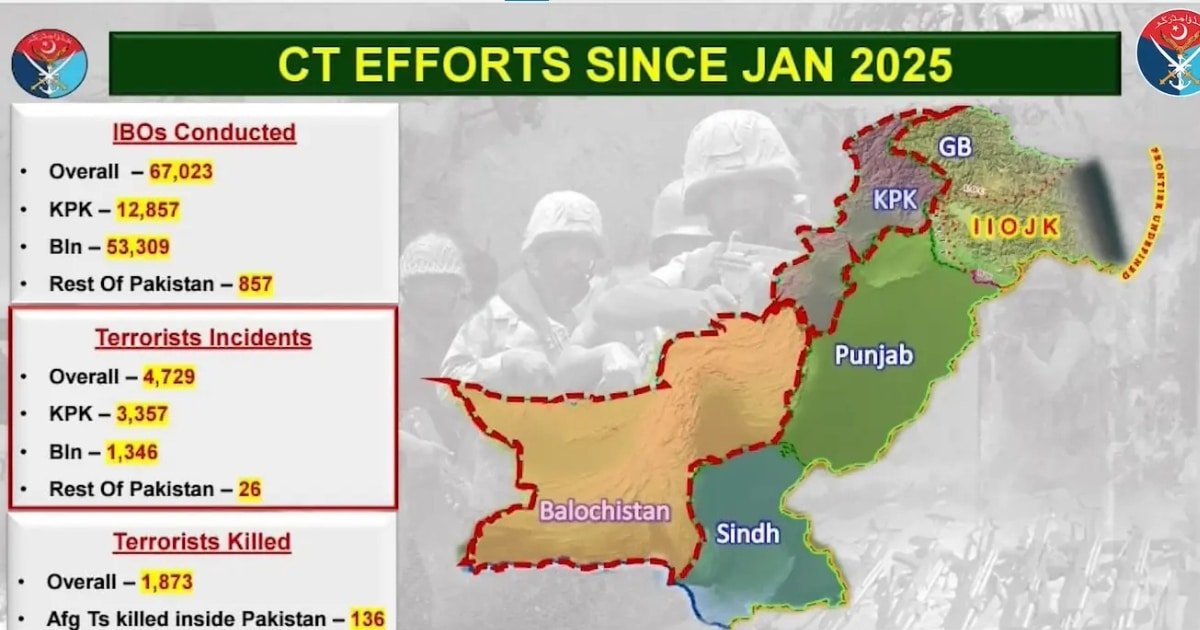
Since January, 67,023 IBOs have been carried out nationwide: more than 53,000 in Balochistan, over 12,800 in KP, and around 850 in other regions. Pakistan recorded 4,729 terrorist incidents this year — primarily in KP (3,357) and Balochistan (1,346).
“In our view, the only good terrorist is a dead terrorist,” Lt Gen Chaudhry said bluntly.
The military spokesperson’s remarks underline the deepening security challenges facing Pakistan — from cross-border militancy and regional geopolitics to internal administrative gaps — as Islamabad reassesses its relationship with Kabul and accelerates its counterterrorism operations across the country.