




In the modern digital world, information is a powerful tool. But in the wrong hands, it can be a weapon. Disinformation, hacking, and data theft can harm people and weaken countries. For Pakistan, protecting digital space is now part of national security.
From fact-checking tools to cybersecurity training, Pakistanis have the power to defend themselves online. All it takes is awareness, discipline, and the right technology.
Tools That Spot Fake Content
One of the best ways to fight disinformation is to catch it early. Pakistan’s journalists, researchers, and students use free and paid tools to check the truth of viral posts.
InVID is a browser plugin that helps users verify videos and images. It can find the original source of a clip, detect edits, and check if the media has been used before in another context.
Google Reverse Image Search and TinEye are useful for spotting recycled images. If a photo claiming to show a “recent protest in Islamabad” appears in search results from 2015 or from another country, it’s a clear sign of manipulation.
Basic Cybersecurity for Every Pakistani
Good cybersecurity is like locking your front door. You can’t stop every thief, but you can make it harder for them.
- Strong Passwords – Use long passwords with letters, numbers, and symbols. Avoid birthdays or easy guesses.
- Two-Factor Authentication (2FA) – Always turn it on for your email, social media, and banking accounts.
- Update Devices – Keep phones, laptops, and apps updated to fix security holes.
- Beware of Links – Don’t click on strange links sent by email, WhatsApp, or SMS.
- Public Wi-Fi Risks – Avoid banking or private logins when using public Wi-Fi.
The Pakistan Telecommunication Authority (PTA) regularly issues alerts about phishing scams and fake job offers. Following these tips can stop hackers from stealing sensitive information.
Protecting Personal Data
Data is valuable. If stolen, it can be used for fraud, blackmail, or propaganda. Pakistan has seen major breaches. In 2023, the National Cyber Emergency Response Team (PKCERT) warned that login details of millions of Pakistanis were leaked online.
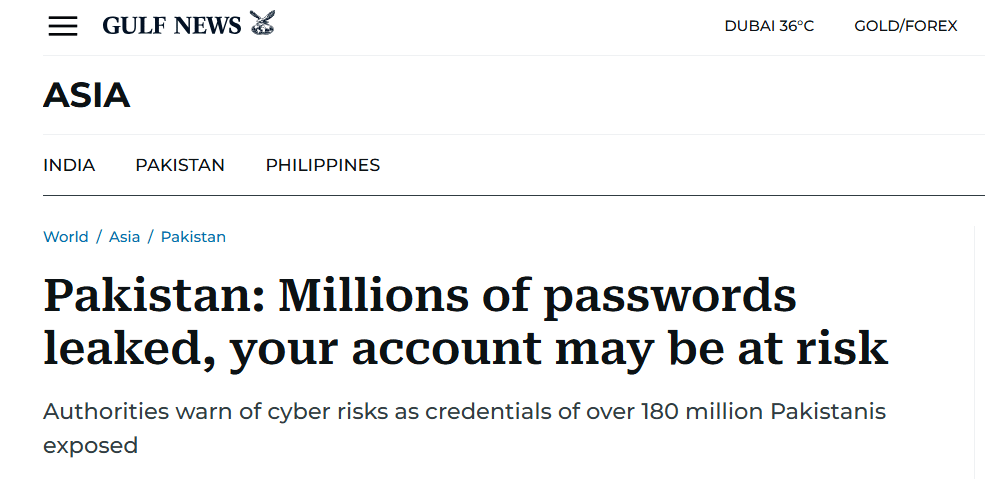
Source: Gulf News
To protect your data:
- Limit what you share on social media.
- Read app permissions before installing them.
- Avoid using the same password for multiple accounts.
When a CNIC scan is needed for verification, make sure the service is legitimate. Fake portals often pose as banks or government sites to steal identity data.
AI in Digital Defense
Artificial Intelligence (AI) is not only used to create fake content, but it can also fight it. AI-powered systems can scan social media for suspicious patterns, bot activity, and deepfake videos.
In 2024, Pakistani researchers from NED University worked on AI tools that detect fake news headlines by analyzing writing style and image mismatches. These systems could soon be used by journalists and fact-checkers nationwide.
Government Efforts to Secure Pakistan’s Digital Space
The Pakistani government has taken steps to boost cybersecurity.
- NADRA Cyber Defenses – NADRA has upgraded its data encryption to protect CNIC records from hacking attempts.
- PKCERT – Acts as the first responder to major cyber incidents, working with banks, telecom companies, and state agencies.
- PECA (Prevention of Electronic Crimes Act) – Gives legal tools to punish cybercriminals.
In 2022, PKCERT stopped a large phishing attack targeting government employees. The fake emails claimed to be from the Finance Division but were traced to servers abroad.
Fighting Disinformation in Local Languages
Many false stories spread in Urdu, Pashto, Sindhi, and Balochi. This makes them harder to detect for global fact-checkers. Local-language AI systems can help catch such misinformation early.
In 2023, activists in Balochistan worked with community radio stations to debunk fake rumors about security operations. Speaking directly to villagers in local dialects prevented panic and distrust.
You May Like To Read:
- Separatist Movements and the War of Narratives (IW9)
- The Role of Journalism, Fact-Checking, and Ethical Media
- Language and Identity: How Cultural Nuances Amplify Disinformation
Personal Digital Hygiene
Digital hygiene means keeping your online habits safe and clean. This includes:
- Logging out of public computers.
- Using antivirus software.
- Checking privacy settings on social media every few months.
A single careless click can give hackers access to private chats, photos, or financial accounts.
Cybersecurity for Businesses
Small and medium businesses in Pakistan are also at risk. A cyberattack on a company can leak customer data and damage trust. The State Bank of Pakistan has issued guidelines for secure banking systems, including employee cybersecurity training.
During 2022, hackers targeted several Pakistani e-commerce stores. The breach was traced to weak website passwords. Stronger security policies could have prevented the losses.
Building a Culture of Cyber Awareness
For Pakistan to be safe online, cybersecurity must become part of everyday life. Just as people lock their homes, they should protect their digital spaces. Schools, workplaces, and mosques can hold awareness sessions.
Community leaders can explain how disinformation and hacking threaten not just individuals, but the whole country.
Cybersecurity and digital defense are no longer optional; they are essential. Every Pakistani, from students to business owners, plays a role in protecting the nation’s online space.
By using fact-checking tools like InVID, practicing strong password habits, and staying alert to scams, citizens can stop disinformation before it spreads. AI systems, government cyber teams, and awareness programs add extra layers of protection.
The internet will always have threats. But a digitally aware population, backed by strong state measures, can turn Pakistan into a country where truth travels faster than lies, and hackers find no easy targets.