



Pakistan’s longstanding relationship with the International Monetary Fund (IMF) sits at the intersection of economic necessity and foreign policy strategy. Since joining the IMF in 1950, Pakistan has entered into 25 financial arrangements, highlighting a pattern of repeated economic crises and dependence on outside funding. While the IMF’s assistance provides crucial financial stability and technical expertise, it also imposes economic conditions that affect national policies, raising important questions about sovereignty, independence, and foreign policy control.
#Pakistan’s defence budget has nearly doubled in five years, but with mounting debt and #IMF strings, is it building strength or just treading water? : @sushantsareen https://t.co/SCtw3N5SU9
— ORF (@orfonline) July 18, 2025
Economic Dependence on the IMF
The IMF has served as a critical backer for Pakistan during times of economic distress. Through its financial assistance programs, the Fund helps Pakistan meet its immediate balance of payment needs, avoid default, and restore macroeconomic stability.
Key IMF Assistance to Pakistan
| Type of Support | Year | Amount (USD) | Purpose |
|---|---|---|---|
| Extended Fund Facility | 2025 | $1 billion (latest tranche) | Long-term structural reform and macro stability |
| Stand-By Arrangement (SBA) | 2008 | $7.6 billion | Response to the global financial crisis |
| Rapid Financing Instrument | 2020 | $1.4 billion | Emergency support during COVID-19 |
In July 2024, the IMF approved a $7 billion aid package for Pakistan. This included a $1 billion disbursement released in May 2025, bringing the total funds received under this program to about $2 billion. The package aims to promote fiscal discipline, reduce inflation, and stimulate growth in a country dealing with rising debt, energy shortages, and limited exports.

IMF Reforms and Structural Adjustments
IMF assistance is never without strings. Pakistan has had to commit to a series of economic reforms over the years, including:
- Rationalizing subsidies
- Increasing tax revenue
- Privatizing inefficient state-owned enterprises
- Broadening the tax base
- Controlling inflation and interest rates
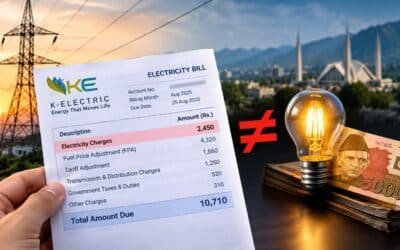
These reforms are often necessary but politically challenging. In many cases, the burden falls more heavily on the lower and middle classes. Public anger frequently follows IMF-led reforms, especially when they lead to higher electricity rates, increased fuel prices, and cuts in government spending.
IMF and Foreign Policy Implications
The IMF’s role in Pakistan is not purely economic. Its influence often intersects with Pakistan’s foreign policy interests.
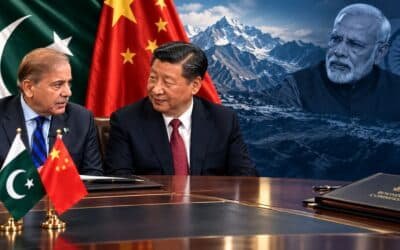
Pakistan’s geographic position as a bridge between South Asia, Central Asia, and the Middle East gives it geostrategic value. The IMF’s continued engagement with Pakistan underscores its broader strategic importance, particularly in the context of regional stability, China’s Belt and Road Initiative (CPEC), and U.S. counterterrorism interests.
IMF conditions often go beyond economics. For example, trade liberalization or transparency requirements may influence Pakistan’s trade policies with its neighbors, such as India, Afghanistan, or Iran. Similarly, emphasis on reducing defense spending—although rarely explicit—can indirectly shape national priorities.
India raised concerns about the IMF’s 2025 plan to give $1 billion to Pakistan, pointing to unclear use of funds, especially given the ongoing border tensions. The IMF, however, insisted that the money was only for economic reform milestones.
Challenges Facing Pakistan
Despite IMF support, Pakistan continues to face serious, recurring economic problems.
Major Economic Indicators (2025)
| Indicator | Value |
|---|---|
| Public Debt | Over 70% of GDP |
| Inflation Rate | 18% |
| Foreign Reserves | ~$9 billion |
| Tax-to-GDP Ratio | Below 10% |
| Unemployment Rate | Estimated 9-10% |
The persistently low tax base, high energy import bill, and weak industrial output have all contributed to Pakistan’s recurring need for external support. Critics argue that the IMF has not significantly contributed to Pakistan’s transition to self-sustaining growth. Rather, it has helped paper over short-term gaps without transforming long-term fundamentals.
Types of IMF Assistance Used by Pakistan
- Rapid Financing Instrument (RFI)
- Used in April 2020 during the COVID-19 pandemic
- Pakistan received around $1.4 billion
- Aimed at countering the economic slowdown due to lockdowns and global trade disruptions
- Stand-By Arrangement (SBA)
- Initiated in November 2008, during the global financial crisis
- Disbursed nearly $7.6 billion
- Helped Pakistan stabilize reserves and manage inflation
- Extended Fund Facility (EFF)
- Ongoing since 2019, expanded in 2024–2025
- Total package: $7 billion
- Focused on deep structural reforms
Public Perception and Sovereignty Concerns
A significant part of the Pakistani population is skeptical of IMF programs. The belief is that IMF-supported reforms result in austerity, job losses, and higher poverty levels. This leads to political opposition and hesitation among policymakers to fully carry out reforms.
There are also concerns about sovereignty. Critics argue that IMF oversight diminishes Pakistan’s ability to make independent economic and foreign policy decisions. Policymakers often walk a tightrope, balancing reform commitments with domestic political pressures and foreign policy objectives.
Pakistan’s relationship with the IMF is both necessary and complex. On one side, the IMF offers a vital safety net that prevents default and enforces financial discipline. On the other side, relying on IMF funding has entrenched Pakistan in a cycle of short-term solutions and ongoing dependency. The current challenge is to use the breathing room provided by IMF programs to push for more comprehensive institutional reforms, expand the tax base, and cut reliance on foreign debt while retaining enough policy independence to navigate regional and global politics on its own terms.