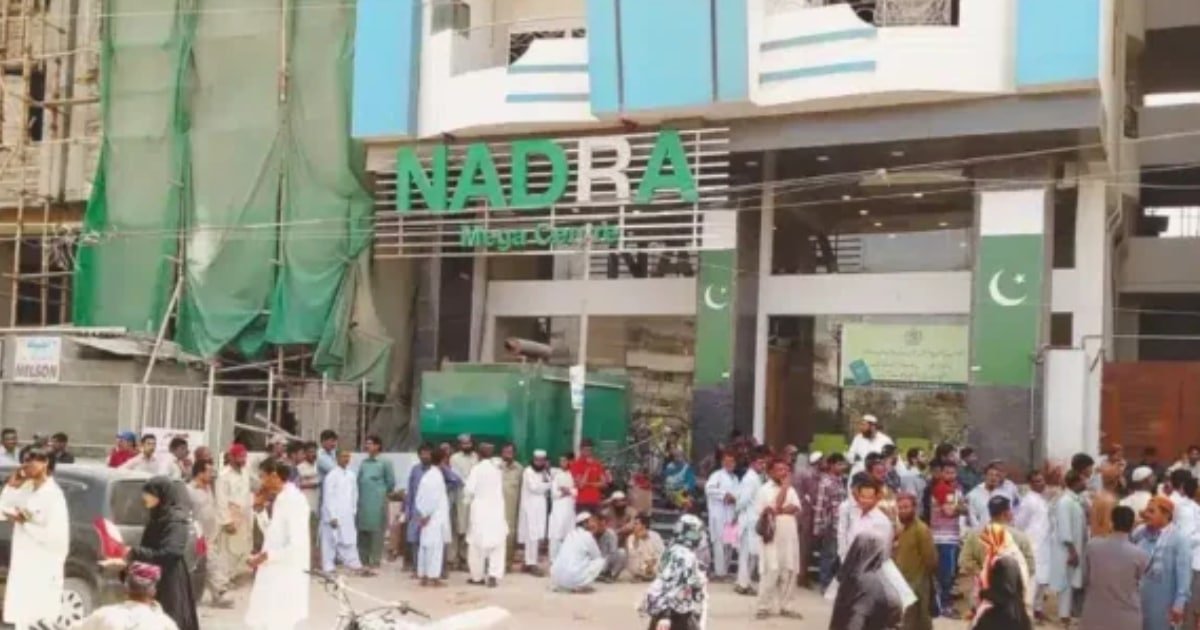





PESHAWAR — The Peshawar High Court (PHC) has issued a significant 13-page detailed judgment regarding the blocking of Computerized National Identity Cards (CNICs), specifically targeting families who had previously “admitted” to having foreign origins before verification boards.
The bench, comprising Justice Wiqar Ahmad and Justice Dr. Khurshid Iqbal, disposed of five identical petitions on Wednesday, February 4, 2026, establishing a 90-day deadline for NADRA to resolve these cases.
The “Surrender” vs. “Nationality” Distinction
The court’s ruling centers on a legal distinction: making a statement before a verification board is not the same as a legal renunciation of citizenship.
- Inchoate Orders: The court observed that NADRA had blocked CNICs based on verbal or written admissions before “Regional Verification Boards” during amnesty schemes. However, the Authority failed to produce a formal cancellation order from the Director General of NADRA (as required under Section 18 of the NADRA Ordinance).
- Admission Error: One petitioner, Daulat Khan Khilji, admitted he had surrendered his nationality simply to “teach a lesson” to his disobedient children from a previous marriage, only to realize the act stripped his current wife and children of their educational and civil rights.
- The Ruling: The PHC declared that such admissions do not automatically equate to the relinquishment of nationality under the Citizenship Act, 1951.
The Pathway to Restoration: Section 19
The court has provided a clear roadmap for affected families to reclaim their status:
- Application to NADRA: Families must approach the Director General (DG) of NADRA.
- Section 19 Certificate: Under Section 19 of the Citizenship Act, 1951, where a doubt exists regarding a person’s citizenship, the Federal Government (via NADRA) can grant a certificate confirming they are a citizen.
- 90-Day Deadline: NADRA has been ordered to conclude these verifications within 90 days of the application being filed.
- Written Orders: If NADRA finds a petitioner is not a citizen, it must issue a formal, written order of cancellation rather than just “blocking” the card digitally.
You May Also Like: Persistent Shortage Drives Kite and String Prices Sky-High in Lahore
The “Ration Card” Context
The judgment touches upon a recurring issue in the region where local families reportedly obtained Afghan Refugee (PoR/ACC) cards during periods of hardship to avail themselves of food rations and humanitarian aid.
- The Stance: The court noted that if a family can prove citizenship by descent (e.g., land records prior to 1979 or predecessors’ CNICs), a temporary refugee card for survival does not displace their fundamental rights as Pakistani citizens.
Could nadra clarify and give information that how many such clearance certificate have been issued from RHO Sargodha,concerned Zonal office(s) and DLC clearance certificate to applicants following of Deputy director Local government Sargodha instructions.
— Wali Suliman Khel (@walikhan934) December 13, 2025
Actionable Next Step for Affected Families
| Step | Action Required |
| 1. Apply | Submit a formal application to the Regional Head Office (RHO) of NADRA requesting a Section 19 Certificate. |
| 2. Evidence | Attach land records, birth certificates, or CNICs of blood relatives to establish “citizenship by descent.” |
| 3. Timeline | If no decision is reached within 90 days, the family can re-approach the High Court for a contempt of court or mandamus order. |