



Tehran, Iran — The United States and Israel face serious accusations of committing war crimes in Iran following a series of airstrikes that have killed hundreds of civilians and damaged vital civilian infrastructure, including a major water desalination plant and a park used by emergency responders.
Iranian officials and the Red Crescent Society have formally asked the International Criminal Court to launch an investigation, citing more than 6,600 civilian structures damaged or destroyed since the conflict began. The latest incidents include a deadly “double-tap” strike in Najafabad that killed 19 civilians and emergency workers, and an attack on a desalination facility on Qeshm Island that cut off fresh water to 30 villages.
These developments have intensified international concern over the human cost of the ongoing Middle East conflict, with calls growing for full compliance with international humanitarian law.
Key Highlights
- Iranian Red Crescent Society formally requests International Criminal Court investigation into alleged war crimes by US and Israel.
- “Double-tap” airstrike in Najafabad kills 19 civilians and rescue workers at a traffic services office.
- US strike on Qeshm Island desalination plant leaves 30 villages without fresh water.
- Separate strike on Zibashahr Park in Shiraz destroys emergency medical base, killing 20 including three medical workers.
- Over 7,900 residential units, 1,600 commercial units, 32 medical centres and 65 schools damaged across Iran.
- Switzerland urges de-escalation and full adherence to international law.
The strike in Najafabad unfolded in a particularly disturbing manner. Local authorities reported that fighter jets first hit a municipal traffic and driving services office on Sunday morning. As residents and emergency teams rushed to help the wounded, a second missile struck the same location minutes later. Akbar Salehi, the security deputy of Isfahan Governorate, described the attack as deliberate and linked it directly to US and Israeli forces. The Iranian Red Crescent Society documented the scene and included it in their submission to the International Criminal Court, part of a broader dossier alleging systematic targeting of civilian life.
In southern Iran, the situation grew even more critical after a strike on the freshwater desalination plant on Qeshm Island. The facility supplied drinking water to dozens of villages, and its destruction has left thousands of families struggling for basic needs. Foreign Minister Abbas Araqchi strongly condemned the action, calling it “a blatant and desperate crime” against civilian infrastructure. “Attacking Iran’s infrastructure is a dangerous move with grave consequences,” he posted on social media, warning that such moves could further destabilize the region.
Iranian ambassador to the United Nations accuses US, Israel of committing a “war crime” in Iran, saying their attacks killed more than 100 children at a school
Live updates 👇 https://t.co/unQkWJpzKG pic.twitter.com/T8gzzi4Kcs
— TRT World (@trtworld) February 28, 2026
A separate investigation by New Lines Magazine into the March 5 strike on Zibashahr Park in Shiraz has raised fresh questions about targeting decisions. Satellite imagery and verified videos show that the attack completely destroyed a base for emergency medical responders inside the park, killing 20 people and injuring 30. Three medical workers were among the dead. Strikingly, a known military installation belonging to an Islamic Revolutionary Guard Corps unit stood only 200 meters away and remained untouched. Experts who reviewed the evidence expressed disbelief that such precision weapons could miss a military target by that distance.
Adil Haque, a professor of the law of armed conflict at Rutgers University, told the magazine the choice of target was “a bit inexplicable.” Wes Bryant, a former Pentagon targeting chief, added that modern munitions make accidental misses of this magnitude extremely rare. The pattern of damage has been documented by multiple sources. A CNN forensic analysis found that strikes on military and police facilities in Tehran also damaged at least three nearby hospitals. In Lamerd, Fars Province, a missile hit a sports hall during a training session, killing 18 people, most of them teenage girls.
The US & Israel launched an egregious, unwarranted act of aggression against Iran by indiscriminately targeting Iranian cities. In just one single case, they targeted a primary school in #Minab, Hormozgan Province, killing and maiming tens of innocent young girls.
This is a… pic.twitter.com/UfcHtBWd4m
— Esmaeil Baqaei (@IRIMFA_SPOX) February 28, 2026
Dr Pir Hossein Kolivand, president of the Iranian Red Crescent Society, compiled extensive field data for the ICC submission. His report lists 7,943 residential units, 1,617 commercial units, 32 pharmaceutical and medical centres, and 65 educational institutions damaged or destroyed. Switzerland’s Federal Department of Foreign Affairs issued a strong statement expressing deep concern and calling for immediate de-escalation and strict adherence to international law. The Swiss government also updated its travel advisory for the region.
These accusations come at a time when the conflict has already claimed hundreds of civilian lives and disrupted essential services across Iran. The Iranian Red Crescent’s formal request to the International Criminal Court marks a significant step, providing detailed evidence and urging an independent probe into whether the strikes violated the principles of distinction and proportionality under international humanitarian law.
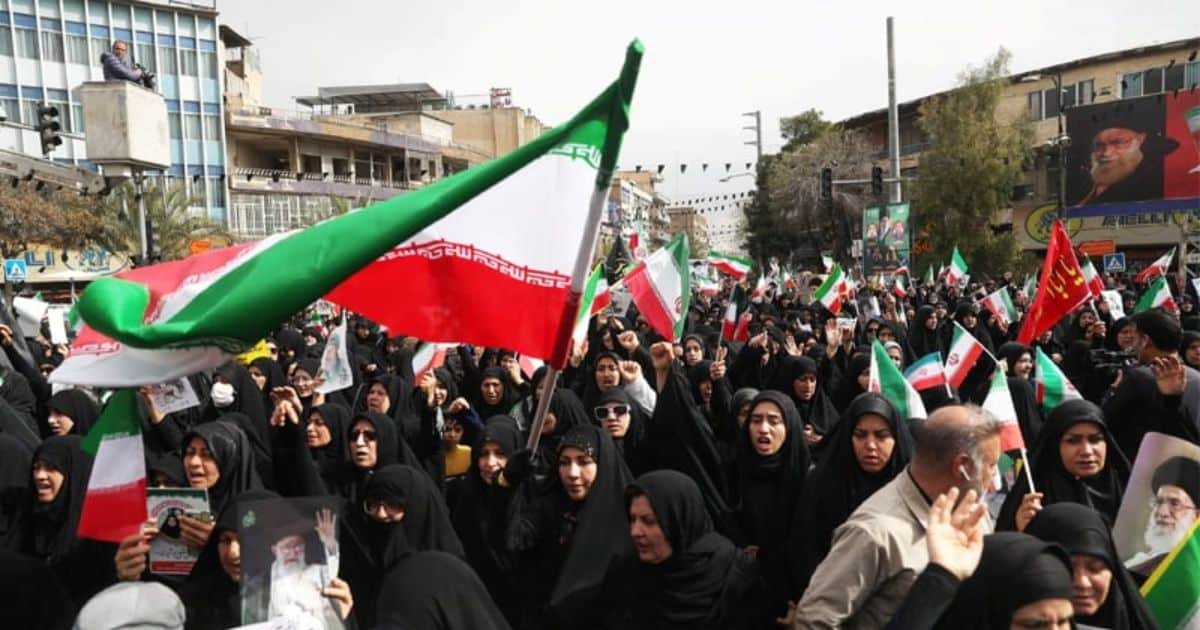
The human suffering is evident in the funerals taking place in cities like Shiraz and Isfahan, where families mourn loved ones who were simply going about their daily lives or responding to emergencies. Reports from humanitarian organizations paint a picture of widespread disruption — hospitals struggling with damaged facilities, schools closed, and entire villages without clean water.
As the situation continues to evolve, the international community watches closely. The calls for accountability and de-escalation reflect a growing consensus that protecting civilian lives must remain the priority in any conflict. Pakistan, which has consistently advocated for peaceful resolution of disputes in the region, continues to monitor developments with deep concern for the people of Iran and the broader implications for regional stability. The hope remains that diplomatic efforts will prevail and prevent further loss of innocent lives in this tragic chapter.
You May Like To Read: